
The Barakah Nuclear Power Plant in Abu Dhabi's Al Dhafra region — the only nuclear facility in the Arab world. Photo: Unsplash
I. The Strike at Barakah
Sunday morning in Abu Dhabi began with air raid sirens. Three drones crossed the UAE's western border from the direction of Saudi Arabia and, beyond it, Iraq. Air defenses intercepted two. The third got through. It struck an electrical generator outside the inner perimeter of the Barakah Nuclear Power Plant in Al Dhafra, igniting a fire that forced Unit 3 of the four-reactor complex onto emergency diesel generators — the last power source before loss-of-coolant scenarios begin to compound. [Times of Israel]
No group claimed responsibility. The UAE did not publicly name a perpetrator, though presidential adviser Anwar Gargash wrote on X that the attack represented "a dangerous escalation, whether carried out by the principal perpetrator or one of its agents" — diplomatic code for Iran or its proxy network. Iran has repeatedly targeted the UAE with drones and missiles throughout the US-Israel war that began February 28, and continued doing so even after a ceasefire took effect on April 8. [BBC]
The $20 billion Barakah plant, built with South Korean assistance and operated by Korea Electric Power Corporation (KEPCO), went online in 2020 as the first nuclear power station in the Arab world. Its four APR-1400 reactors generate 5.6 gigawatts, supplying roughly a quarter of the UAE's electricity. A KEPCO official told Yonhap news agency that "it does not appear that there was a direct attack on the nuclear plant we manage and operate. It seems a fire broke out at other power facilities on the outskirts." That distinction — between the reactor buildings and the infrastructure that keeps them safe — is precisely what makes this incident unprecedented. A nuclear plant was not struck. The systems that keep a nuclear plant from becoming a hazard were. [CNBC]
"I express my grave concern about military activity threatening nuclear facilities. This is unacceptable. Such activities must cease immediately." Rafael Mariano Grossi, IAEA Director General
The International Atomic Energy Agency's use of "grave concern" is not casual. In the lexicon of nuclear diplomacy, it signals that a threshold has been crossed. The IAEA confirmed that emergency diesel generators were powering Unit 3 and called for "maximum military restraint" around any nuclear facility. The UAE's Federal Authority for Nuclear Regulation said the fire did not affect plant safety and all units were operating normally. No radiological release occurred. No one was injured. This time. [Al Jazeera]

The drone that penetrated UAE defenses struck the power infrastructure serving Barakah, not the reactor itself. The distinction may not hold next time. Photo: Unsplash
II. The Four-Hour Plan
Hours after the Barakah strike, Donald Trump walked into the White House briefing room and did something no modern president has done: he publicly described, in operational detail, a bombing plan for another country, complete with a timeline and a deadline. [ABC News]
"We have a plan because of the power of our military, where every bridge in Iran will be decimated by 12 o'clock tomorrow night, where every power plant in Iran will be out of business, burning, exploding, and never to be used again," Trump told reporters. "I mean, complete demolition by 12 o'clock. And it will happen over a period of four hours if we want it to."
He set the deadline: 8 PM ET Tuesday. That gives Iran roughly 32 hours from the time of his remarks. When a reporter asked if this was his "final deadline," Trump said: "Yeah." [ABC News]
The specificity was chilling. Not "military options" or "all necessary measures" — the usual euphemisms. "Every bridge." "Every power plant." "Complete demolition." "Four hours." "By 12 o'clock." A president of the United States described, on camera, a plan to annihilate the civilian energy and transportation infrastructure of a nation of 88 million people in the span of an evening. [The Times]
ABC News Chief White House Correspondent Mary Bruce asked whether destroying Iran's energy infrastructure would be "punishing Iranians for the actions of the regime." Trump's response: "They would be willing to suffer that in order to have freedom." He added, without evidence, "We've had numerous intercepts, 'Please keep bombing.'" [ABC News]
Trump's Public Bombing Plan - Key Details
- Deadline: 8 PM ET Tuesday, May 19, 2026
- Timeline: 4-hour bombardment window
- Targets described: "Every bridge" and "every power plant" in Iran
- Described outcome: "Complete demolition" by midnight
- Language used: "Stone ages," "burning, exploding, and never to be used again"
- War crime question: "I'm not worried about it"
- Civilian impact claim: Iranians "would be willing to suffer" for freedom
III. The War Crime Question
When reporters pressed Trump on whether destroying civilian power plants could constitute a war crime, the president was blunt. "I'm not worried about it," he said. "You know what's a war crime? Having a nuclear weapon. Allowing a sick country with demented leadership have a nuclear weapon, that's a war crime." [ABC News]
The legal community disagrees. Amnesty International warned last month that intentionally attacking civilian infrastructure such as power plants "could amount to a war crime." Erika Guevara-Rosas, Amnesty's Senior Director of Research, Advocacy, Policy and Campaigns, stated: "Even in the limited cases that they qualify as military targets, a party still cannot attack power plants if this may cause disproportionate harm to civilians. Given that such power plants are essential for meeting the basic needs and livelihoods of tens of millions of civilians, attacking them would be disproportionate and thus unlawful under international humanitarian law, and could amount to a war crime." [The Independent]
White House press secretary Karoline Leavitt, pressed on the issue last week, told reporters: "Of course, this administration and the United States Armed Forces will always act within the confines of the law." The gap between Leavitt's formulation and Trump's explicit description of destroying "every power plant" and "every bridge" in Iran is not subtle. One is legal process language. The other is a threat of infrastructural annihilation. [ABC News]
Iran's deputy foreign minister, Kazem Gharibabadi, responded on X: if the US attacks power plants, Iran would deliver "a decisive, immediate, and regret-inducing response." Iran's senior armed forces spokesperson Abolfazl Shekarchi warned that if Trump's threats were carried out, Washington would "face new, aggressive, and surprise scenarios, and sink into a self-made quagmire." [CNBC]
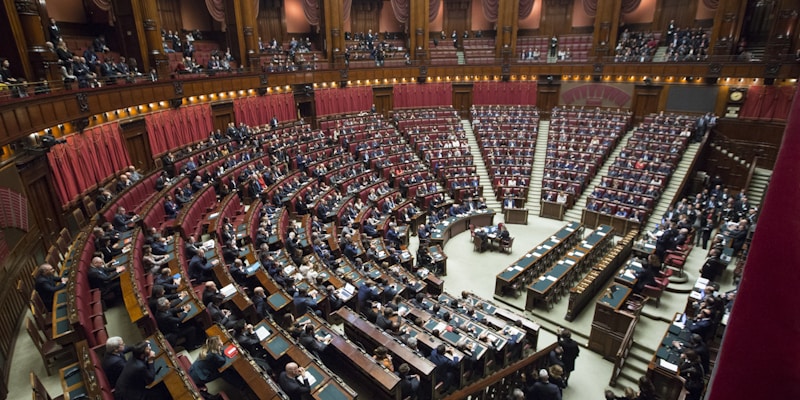
The White House briefing room, where a president publicly described a four-hour plan to destroy another nation's infrastructure. Photo: Unsplash
IV. The Islamabad Accord - The Last Card
While Trump was describing bombing plans on camera, behind the scenes Pakistan's army chief, Field Marshal Asim Munir, was working the phones "all night long," according to a source close to diplomatic efforts. Munir held separate calls with Vice President JD Vance, US special envoy Steve Witkoff, and Iran's foreign minister Abbas Araghchi. The result is a framework being called the "Islamabad Accord" — a two-tier proposal that includes an immediate ceasefire and the reopening of the Strait of Hormuz, with 15 to 20 days to finalize a broader settlement. [The Independent]
"All elements need to be agreed today," the source said. The initial understanding would be structured as a memorandum of understanding finalized through Pakistan, the sole communication channel in the talks. Final in-person negotiations would take place in Islamabad. The proposal for a permanent agreement reportedly includes Iran forgoing the development of nuclear weapons, receiving relief from sanctions, and the release of frozen assets. [The Independent]
Iran did not accept the mediators' ceasefire proposal. Instead, Tehran submitted a 10-point counter-response that a US official described as "maximalist," according to Axios reporter Barak Ravid. The official said it was unclear if the response would allow moving forward to a diplomatic solution. Iran's foreign ministry spokesperson Esmaeil Baghaei said negotiations were "incompatible with ultimatums and threats to commit war crimes" and that Iran would release its formal response "in due time." [The Independent]
Iran's demands, as reported by semi-official Iranian media, include: an immediate end to the war on all fronts (including Israeli attacks on Hezbollah in Lebanon), a halt to the US naval blockade of Iranian ports, guarantees of no further attacks on Iran, compensation for war damage, and an emphasis on Iranian sovereignty over the Strait of Hormuz. Washington's reported counter-demands include Iran keeping only one nuclear site in operation and transferring its stockpile of highly enriched uranium to the US. [BBC]
Trump told Axios that the US is in "deep negotiations" with Iran, suggesting there was a "good chance" of success, before adding: "If they don't make a deal, I am blowing up everything over there." The same sentence contained a peace overture and an annihilation threat. This is the negotiating environment. [The Independent]
US Demands
Reopen Strait of Hormuz. Dismantle nuclear program (shifted to 20-year suspension). Transfer enriched uranium. One nuclear site only. End proxy attacks.
Iran's 10-Point Demands
End war on ALL fronts (including Lebanon). Lift US naval blockade. No further attacks guarantee. War damage compensation. Iranian sovereignty over Hormuz. Sanctions relief. Release of frozen assets.
V. The Gulf Erupts
The Barakah strike did not happen in isolation. Saudi Arabia separately confirmed that it intercepted and destroyed three drones that entered its airspace from Iraq on the same day. The Saudi defense ministry warned it would take "the necessary operational measures to respond to any attempt to violate its sovereignty and security." Kuwait and Qatar condemned the Barakah attack. India's Ministry of External Affairs expressed "deep concern." [Times of India]
The UAE's response was ferocious. The foreign ministry "condemned in the strongest terms the unprovoked terrorist attack" and said it "will not tolerate any threat to its security and sovereignty under any circumstances." It reserved "the right to respond to any threats" and stressed that "the targeting of peaceful nuclear energy facilities is a flagrant violation of international law, the UN charter, and the principles of humanitarian law." This is the language a state uses when it is preparing the legal justification for retaliation. [Times of India]
Three scenarios for the Barakah attack remain plausible. The first: direct Iranian launch. Iran has the drone capability and the motive, as the UAE hosts US military bases used in the conflict. The trajectory from the "western border" could be consistent with launch points in southern Iran. The second: Iranian-backed Iraqi militias. These groups operate from Iraqi territory, and the drones' approach from the western border fits this profile. Saudi Arabia confirmed its intercepted drones came from Iraqi airspace on the same day. The third: Houthi involvement from Yemen. The Houthis claimed to have targeted Barakah during its construction in 2017 and have the capability, though their typical approach vectors come from the south. [Times of Israel]

Gulf energy infrastructure - the most targeted class of assets in a conflict where drones have redefined threat calculus. Photo: Unsplash
VI. Oil at $112 and the Hormuz Squeeze
The Strait of Hormuz has been effectively closed for 80 days. Twenty percent of the world's oil and liquefied natural gas passes through it. Iran controls the waterway and has kept it shut since the war began, in retaliation for US and Israeli attacks. The US has responded with its own blockade of Iranian ports, redirecting 81 commercial vessels and disabling four to ensure compliance, according to US officials. [CNBC]
On Monday, Brent crude climbed above $112 a barrel — a 2% jump driven by the Barakah strike, Trump's ultimatum, and the continued Hormuz closure. This is the highest price since the early weeks of the conflict. The US Energy Information Administration assumes the strait will remain shut through late May, and Morgan Stanley has warned of significant market strains if it stays closed into June. [Economic Times]
Ebrahim Azizi, who heads the Iranian parliament's national security committee, said on Saturday that Tehran had prepared a mechanism to manage traffic through the strait along a designated route that would be unveiled "soon." This is not the same as reopening it. Managed access would give Iran ongoing leverage — a toll booth on the world's most important shipping lane, staffed by the very country the US is threatening to bomb. [CNBC]
The economic damage compounds daily. Shipping companies have rerouted around the Cape of Good Hope, adding weeks and millions in costs per voyage. Insurance rates for Gulf transit have skyrocketed. Smaller economies dependent on imported energy — Pakistan, Bangladesh, several African nations — face balance-of-payments crises. The Hormuz closure is not a regional problem. It is a global price shock happening in slow motion, and every day it continues, the pressure on both sides intensifies. [Transport Topics]

The Strait of Hormuz carries 20% of global oil. It has been closed for 80 days. Photo: Unsplash
VII. The Nuclear Precedent
Barakah is not the first nuclear facility struck in conflict. Iran has repeatedly claimed its Bushehr nuclear power plant came under attack during this war, though no direct damage to its Russian-operated reactor or radiological release was confirmed. During the Russia-Ukraine war, the Zaporizhzhia Nuclear Power Plant — Europe's largest — was occupied, shelled, and periodically disconnected from the grid, with IAEA monitors documenting repeated near-misses. [Times of Israel]
But the Barakah strike is different in kind. A drone caused a fire at an operating nuclear plant and forced a reactor onto emergency diesel generators. The IAEA's "grave concern" signals that the agency recognizes a threshold was crossed. Nuclear plants are designed with defense-in-depth: multiple redundant systems, each capable of preventing catastrophe if the one before it fails. Emergency diesel generators are the third or fourth layer of that defense. When they activate, it means every layer above has been disrupted. The fact that they worked as designed does not change the fact that the scenario in which they are needed occurred at all. [The Deep Dive]
If nuclear facilities become legitimate military targets, or even acceptable collateral damage, the global nuclear safety regime built over 70 years of Cold War management collapses. The principle that nuclear plants are off-limits during armed conflict is one of the few norms that the United States, Russia, China, and every nuclear-armed state has formally agreed to uphold. It is enshrined in IAEA resolutions, the Geneva Conventions' Additional Protocol I, and the 2005 Amendment to the Convention on the Physical Protection of Nuclear Material. The Barakah strike did not cause a radiological disaster. But it demonstrated that in a sufficiently intense conflict, the norms protecting nuclear facilities are only as strong as the air defenses around them. [Al Jazeera]
VIII. What Happens at 8 PM Tuesday
Trump has pushed back deadlines before. His initial 10-day deadline to Iran was set to expire on Monday before he moved it to 8 PM Tuesday. He told reporters "the clock is ticking" while simultaneously claiming negotiations were "going fine." This is the pattern: escalate publicly, negotiate privately, extend when the deadline arrives without a deal. [ABC News]
But this time, the escalation is different. A public description of a four-hour bombing plan with specific targets and specific timelines is not rhetoric. It is a threat that, if carried out, would destroy the civilian infrastructure of a country of 88 million people. Iran's power grid, its bridges, its transportation network — these are not military assets. They are the systems that keep water treatment plants running, hospitals powered, food supply chains moving. "Complete demolition" would not just disable a military. It would disable a society. [The Independent]
Four scenarios exist as the deadline approaches.
Scenario One: Another extension. Trump extends the deadline again, claiming progress in negotiations. The Islamabad Accord provides enough of a framework to justify buying time. This is the most likely outcome, based on the pattern of the past 10 weeks. It is also the outcome that most erodes the credibility of every subsequent deadline.
Scenario Two: A limited deal. Iran agrees to reopen the Strait of Hormuz under a managed access mechanism in exchange for a partial lifting of the US naval blockade. Both sides claim victory. The war continues at a lower intensity. Diplomats call it progress. Thousands are still dead. This is the second most likely outcome.
Scenario Three: Trump carries out the threat. US forces launch a massive strike on Iranian infrastructure. Iran responds with "surprise scenarios" — which could mean attacks on US bases, expanded proxy operations, cyberattacks on critical infrastructure, or escalation against Israel via Hezbollah. The regional war that has been contained for 80 days goes fully hot. Oil could spike to $150 or higher. This is unlikely but not impossible, and its consequences would be catastrophic beyond calculation.
Scenario Four: The ceasefire holds. Both sides agree to the Islamabad Accord framework. A 15-20 day negotiation window opens. Hostilities pause. The strait reopens under international monitoring. The hardest questions — Iran's nuclear program, compensation, Hezbollah — are deferred. This is the best outcome and the hardest to achieve, because it requires both sides to accept less than they have publicly demanded. [The Independent]
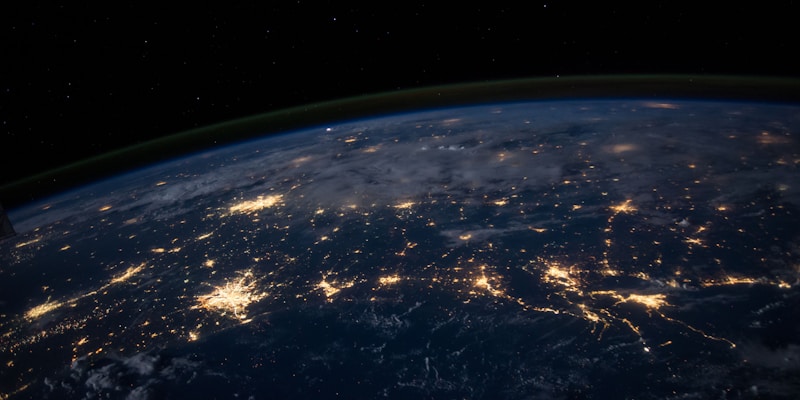
88 million people live in Iran. Their power grid, bridges, and hospitals are now on a negotiation deadline. Photo: Unsplash
IX. The View from Tehran
Iran's leadership does not behave like a government that believes it is 32 hours from annihilation. It has rejected ceasefire proposals, submitted maximalist counter-demands, and maintained control of the Strait of Hormuz — the single most powerful piece of leverage any country in this conflict possesses. Iranian officials have been consistent in their messaging: no capitulation, no submission to ultimatums, and a promise of escalation if attacked. [BBC]
Iranian foreign ministry spokesperson Esmaeil Baghaei called negotiations "incompatible with ultimatums and threats to commit war crimes." Iran does not believe that Washington is ready for a permanent ceasefire, and will not accept being pressured to accept deadlines, a senior official told Reuters. This posture — defiant, maximalist, unyielding — is either genuine resistance or an extraordinarily risky negotiating strategy. If it is genuine, Trump's deadline will pass without a deal. If it is strategy, Iran is betting that Trump will extend again, as he has before, because the cost of bombing is higher than the cost of waiting. [The Independent]
The risk is asymmetrical. If Iran blinks and accepts a deal, it loses face but avoids destruction. If Trump blinks and extends, he loses credibility but avoids a war whose consequences are unknowable. If neither blinks, the consequences fall on everyone. [NBC News]
X. The Wider War
The Iran deadline does not exist in a vacuum. On the same day as the Barakah strike, Ukraine launched one of its largest drone attacks on Russia, with nearly 600 drones killing at least four people near Moscow. Israel and Lebanon agreed to a 45-day extension of a ceasefire that has failed to end clashes. Israeli strikes targeted eastern and southern Lebanon on Sunday, state media reported, despite the truce. [France 24]
Three conflicts — Iran, Ukraine, Lebanon — are running on overlapping timelines, each with its own ceasefire or negotiation process, each stalling or fragmenting under the weight of demands that neither side can accept without appearing to have lost. The global security architecture that was designed to manage these situations — the UN Security Council, the IAEA, the Geneva Conventions — is present but not decisive. The IAEA can express "grave concern." Amnesty International can warn of war crimes. The UN can call for restraint. None of these institutions can stop a drone, a deadline, or a four-hour bombing plan. [CNBC]
Trump spoke with Israeli Prime Minister Benjamin Netanyahu on Sunday, the Times of Israel reported. He held talks with Chinese President Xi Jinping this week without securing an indication that China would help resolve the conflict. Pakistan remains the sole mediator, its army chief working the phones through the night. The USS Gerald Ford returned from the Iran war after its longest deployment since Vietnam. The military infrastructure for massive strikes is in place. The diplomatic off-ramp exists but narrows with each hour. [France 24]

32 hours. That is what remains between the current moment and a presidential deadline with no visible off-ramp. Photo: Unsplash
Conflict Timeline - Critical Next 48 Hours
- Monday, May 18: Iran reviews Islamabad Accord. Trump holds national security meeting. Markets react to $112 oil.
- Tuesday, May 19: Trump meets top national security advisers on military options. 8 PM ET deadline expires.
- If no deal by deadline: Trump has described a 4-hour bombing plan targeting all Iranian power plants and bridges.
- If deal reached: 15-20 day negotiation window. Hormuz reopening. Ceasefire extension. Hardest issues deferred.
- Lebanon front: 45-day ceasefire extension agreed but clashes continue. Israel striking Hezbollah positions.
- Ukraine front: 600-drone attack on Moscow killed 4. Largest assault on Russian territory in over a year.
The next 32 hours will determine whether the Iran war escalates to a scale that makes the past 80 days look like a prologue, or whether the Islamabad Accord provides enough of a ladder for both sides to climb down. The Barakah strike has already crossed a nuclear safety threshold. Trump's four-hour plan has crossed a rhetorical threshold that may be impossible to uncross. Iran's 10-point response has crossed a negotiating threshold that signals either confidence or fatal miscalculation.
At 8 PM ET on Tuesday, the clock runs out. What happens next is either the most significant diplomatic breakthrough of the decade or the most destructive military operation since the invasion of Iraq. There is no middle option that has been described in public. The president has not left himself one. [ABC News]