Microsoft + Constellation Energy
20-year, 835 MW PPA to restart Three Mile Island. Restart pulled forward to 2027. $1B DOE loan closed. This is not an ESG announcement. Microsoft needed 835 MW on a timeline utilities could not meet.
Anthropic locked down 220,000 GPUs from SpaceX. DeepSeek V4 proved frontier capability costs pennies. DeepMind staff unionized over Pentagon contracts. The grid is cracking. This is what it all means - and what comes next.

Photo: Dlanor S / Unsplash
Sometime around May 6, 2026, the AI industry stopped being about models and started being about power. Not influence. Not market share. Actual, physical, megawatt-scale electrical power. And compute. And the willingness of 98% of a research lab's staff to unionize rather than build weapons.
The first ten days of May 2026 delivered four storylines that, taken alone, would each define a quarter. Together, they describe a structural inflection - a moment where the cost of intelligence, the infrastructure required to produce it, the labor politics inside the labs, and the nation-state competition around it all collapsed into a single, observable frame.
Here is what happened, why it matters, and where the second-order effects land.
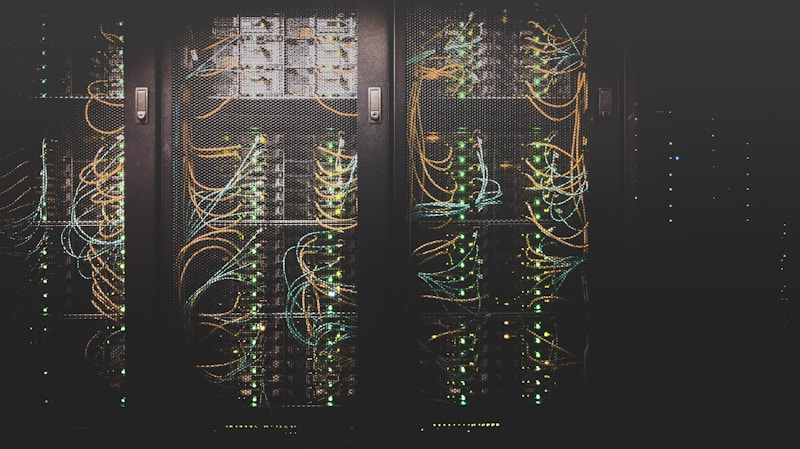
Photo: Taylor Vick / Unsplash
On May 6, Anthropic announced a deal with SpaceX that gives it access to the entirety of Colossus 1 - SpaceX's flagship AI data center in Memphis, Tennessee. The facility houses more than 220,000 NVIDIA GPUs, spanning H100, H200, and next-generation GB200 accelerators, drawing over 300 megawatts of power. CNBC confirmed the arrangement. The immediate, visible impact: Anthropic doubled Claude Code rate limits for all paid plans overnight, and Opus API Tier 1 input throughput jumped 1,500%. [CNBC] [AIToolsRecap]
This is not a normal cloud computing contract. This is a company that owns a supercomputer - one built by a rival AI lab's parent entity, no less - leasing its entire capacity to another AI lab. Elon Musk's xAI built Colossus for xAI's own models. Now Anthropic, which competes directly with xAI, is running on it.
The deal is a bet on two things. First, that compute is the binding constraint on frontier model capability, and whoever locks in the most of it fastest wins the next generation. Second, that the relationship between xAI and Anthropic is less adversarial than the relationship between either lab and OpenAI - or perhaps that Musk simply values the revenue more than he fears the competition.
But the deal also exposes a deeper structural truth. Colossus 1 was built in Memphis because that is where power was available - TVA territory, cheap baseload, relatively permissive siting. The facility is not connected to a traditional data center interconnection queue. It is behind the meter, at the source of generation. This is not accidental. It is the new pattern.

Photo: Jeswin Thomas / Unsplash
On April 24, DeepSeek shipped V4 - a two-model family released under MIT license. DeepSeek-V4-Pro is a 1.6-trillion-parameter Mixture-of-Experts model that activates 49B per token, with a native 1-million-token context window. DeepSeek-V4-Flash is a leaner 284B/13B-active variant for production workloads. Both are open-weight. Both run at prices that make Western frontier models look like luxury goods. [NerdLevelTech] [Dev.to]
Let that price comparison sink in. DeepSeek V4-Pro costs roughly one-seventh of what Claude Opus 4.7 or GPT-5.5 charge for the same unit of intelligence. And it matches them on agentic coding benchmarks. NIST's CAISI evaluation - the US government's own assessment - rates DeepSeek V4's capabilities as lagging the frontier by about 8 months. Eight months. In an industry moving at this speed, that is essentially the present. [NIST]
DeepSeek V4 was not the only Chinese model to arrive in a burst. Four labs released open-weights coding models in a 12-day window: Z.ai's GLM-5.1, MiniMax M2.7, Moonshot's Kimi K2.6, and DeepSeek V4. None cost more than a third of Western frontier APIs. All matched frontier capability on agentic engineering tasks. This is not a trend. It is a regime change. [AIToolsRecap]
There is a geopolitical dimension that cannot be ignored. DeepSeek V4 was trained partially on Huawei Ascend chips - not NVIDIA hardware. This is the first publicly confirmed frontier-class model trained on Chinese accelerators at scale. The export control regime designed to keep China's AI capabilities years behind has instead catalyzed an alternative hardware ecosystem. The chips are not as good. But they are good enough, and they are improving faster than anyone predicted. The implications stretch beyond AI: if Chinese accelerators can train frontier models today, the entire premise of chip export restrictions as a lever for maintaining technological supremacy starts to wobble. You cannot embargo your way to a permanent compute advantage when the target has both the talent and the industrial base to build around the restriction. [AIToolInsight]
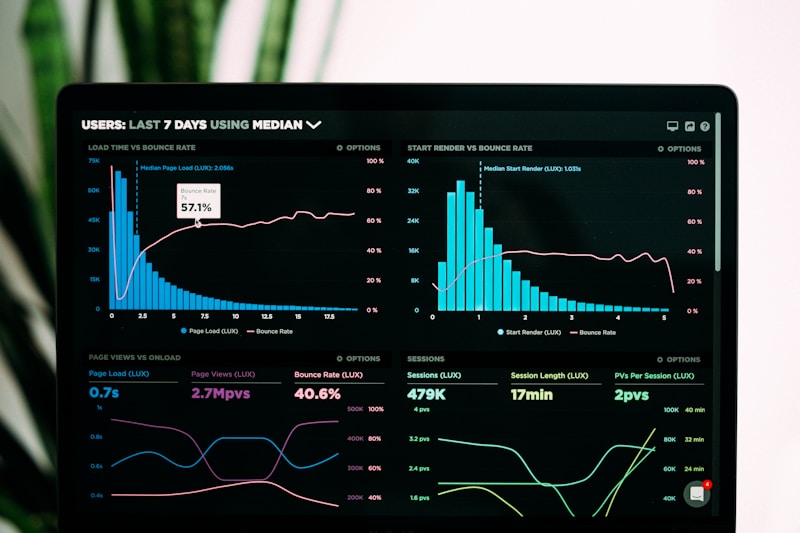
Photo: Luke Chesser / Unsplash
On May 1, Microsoft Agent 365 became generally available. This is not a model launch. It is infrastructure - specifically, the infrastructure that determines who gets to run AI agents inside an enterprise, what those agents are allowed to do, and how their behavior is audited. Priced at $15 per user per month, Agent 365 gives every AI agent an Entra identity, governs them through Defender and Purview, and manages them through Intune. It works across Azure, AWS Bedrock, and Google Cloud. [Microsoft] [NerdLevelTech]
This is the move that will age better than any model release. The question in enterprise AI is no longer "which model is best?" It is "how do I govern the 47 agents my employees are already running, most of which I did not authorize, several of which have access to sensitive data, and none of which I can currently audit?" Agent 365 answers that question. It makes Microsoft the identity and governance layer for the agentic AI era the same way Active Directory made it the identity layer for the client-server era.
The competitive landscape confirms the shift. Salesforce's Agentforce dominates wherever a CRM is the system of record. ServiceNow AI Agents own ITSM and adjacent enterprise workflows. Each platform wins in its native ecosystem. But Microsoft owns the general-purpose knowledge-work environment - email, documents, meetings, chat - which is where the vast majority of enterprise AI agents will actually run. Giving those agents Entra IDs with conditional access policies is more mature than anything competitors currently offer. [Andrew.ooo]

Photo: Clay Banks / Unsplash
On May 9, 98% of Google DeepMind's UK staff voted to join the Communication Workers Union and Unite. This is the first union at any major AI research lab. The trigger: Google's classified Pentagon AI contract, which includes language allowing the use of DeepMind models for "any lawful purpose" - language that employees interpreted, correctly, as covering military applications. [Wired] [Fortune]
The vote was not close. Ninety-eight percent is not a protest. It is a mandate. Staff are demanding that Google walk back the Pentagon deal and cease work with the Israeli military. But the power that employees once held to kill such contracts - Google's 2018 internal revolt over Project Maven - has eroded significantly. Google is bigger now. The contracts are larger. The revenue dependencies are more entrenched. And the geopolitical landscape has shifted: the US Commerce Department's CAISI now has vetting agreements with Google DeepMind, Microsoft, xAI, OpenAI, and Anthropic. Pre-deployment government evaluation of frontier models is no longer optional for labs that want federal contracts. [The Guardian]
This is the structural tension that will define the next phase of AI development. The researchers who build frontier models do not want them used for war. The nation-states that fund the compute increasingly require that they be available for war. There is no clean resolution to this. The union is a symptom, not a solution. And it raises a question that no lab has publicly answered: what happens when the next model improvement is classified before it ships? When the Pentagon's evaluation agreement includes deployment restrictions that conflict with open publication? The CAISI framework is voluntary today. It will not stay voluntary. The day it becomes mandatory is the day the open research model that built this industry collides with the secrecy model that governs weapons development.

Photo: Pok Rie / Unsplash
While the model releases and corporate deals dominated headlines, the physical infrastructure underpinning all of it continued to buckle. The US interconnection queue now holds roughly 2,600 GW of generation and storage waiting to connect to the grid - approximately twice the installed capacity of the existing US grid. Median interconnection timelines for new data center load have stretched from two years a decade ago to five to twelve years now. Industry trackers report that roughly 50% of global data centers are facing completion delays primarily attributable to power constraints. As much as half of the 240 GW of planned US data center capacity may not be built on its current timeline. [Hybr] [EnkiAI]
This is not a future problem. It is a current constraint that is already reshaping corporate strategy. Hyperscalers have responded by bypassing the grid entirely. Over the last twelve months, they have signed more than 10 GW of nuclear power contracts:
Combined, this is more than 10 GW of contracted nuclear capacity in a single year - roughly the total nuclear generation of a mid-sized country. Every hyperscaler nuclear deal is effectively a bet that the grid stays broken long enough to make behind-the-meter co-location the dominant siting pattern. [IEEE Spectrum]
The backlash is building. In Q1 2026 alone, 54 local moratorium actions against data center siting passed. Maine enacted the first state-wide data center ban. Both Bernie Sanders and Ron DeSantis - an unlikely coalition by any standard - have called for data center limits on ratepayer-cost grounds. The politics are cross-cutting: rural communities oppose data centers for water and power consumption, suburban communities oppose them for noise and property values, and progressive coalitions oppose them for carbon reasons. When Sanders and DeSantis agree on something, the political center of gravity has shifted. [Good Jobs First]
On May 5, the US Department of Defense confirmed AI model vetting agreements with Google DeepMind, Microsoft, xAI, OpenAI, and Reflection. Anthropic was notably excluded. The exclusion appears connected to ongoing litigation and to Anthropic's public stance on responsible deployment, which the Pentagon reportedly viewed as an operational risk. [AIToolsRecap]
This creates a new kind of market segmentation. AI labs now sort into three categories:

Photo: Carlos Muza / Unsplash
Strip away the narratives and here are the structural numbers from May 2026:
Microsoft's Global AI Diffusion Report, released May 10, found that 17.8% of the world's working-age population now uses AI in some form. The UAE leads at 70.1%. US software developer employment is at a record high despite layoff headlines. The IT sector shed 13,000 jobs in April, with AI cited as the top reason for two consecutive months. These numbers tell a coherent story: AI is not replacing workers in aggregate. It is reallocating them, concentrating demand in roles that complement automation, and eliminating roles that are purely procedural. [AIToolsRecap]
Three things are now predictable with high confidence:
Compute lock-in accelerates. Anthropic's SpaceX deal is not the last of its kind. Every frontier lab is now in a compute arms race that cannot be won through traditional cloud procurement. The interconnection queue makes utility-scale power a 5-12 year wait. Behind-the-meter nuclear and site-co-located generation are the only paths that scale. Expect more data center deals that look like real estate plays, more nuclear PPAs from companies that previously had no energy footprint, and more acquisitions of industrial sites with existing power infrastructure.
Inference pricing collapses further. DeepSeek V4 at $3.48 per million output tokens is not the floor. It is the ceiling of the new pricing regime. The launch promo drops it to $0.87. When four Chinese labs can match frontier capability at one-seventh the price, Western labs face an impossible choice: maintain margins and lose volume, or cut prices and erode the revenue base that funds the next training run. The labs that win will be the ones that build moats elsewhere - in enterprise governance (Microsoft), in distribution (Google), or in compute arbitrage (Anthropic).
Labor politics become AI politics. The DeepMind unionization is not a one-off. As AI labs become dual-use infrastructure providers for nation-states, the researchers who build the models will increasingly find themselves in conflict with the institutions that fund them. The 98% vote at DeepMind is a signal: technical talent cares about the application domain. When that domain is military, the friction will not resolve through HR policies or internal ethics boards. It will resolve through collective action, legislative intervention, or talent departure to non-military labs.
The first two weeks of May 2026 compressed what might have been a year's worth of structural shifts into fourteen days. Anthropic locked down more compute than any private entity has ever controlled. DeepSeek proved that frontier capability does not require frontier pricing. Microsoft positioned itself as the governance operating system for the agentic era. DeepMind staff drew a line on military AI. And the physical infrastructure that all of this depends on continued to buckle under the strain.
The common thread is convergence. The model layer, the infrastructure layer, the governance layer, and the labor layer are no longer separate conversations. They are the same conversation, happening at the same time, with the same stakes. The companies that understand this - that see Anthropic's compute deal and DeepSeek's pricing and Microsoft's governance play as interconnected components of a single system - will make better decisions than the ones that treat them as independent events.
The grid will not get fixed in time. The pricing will not stabilize upward. The union will not dissolve. And the Pentagon will not stop buying. These are the constraints within which the next chapter of AI will be written. The question is not whether they shape the outcome. It is who adapts fastest. The labs that treat compute as a real estate problem, pricing as a competitive weapon, governance as infrastructure, and labor politics as a strategic risk will navigate this convergence. The ones that still think of themselves as research organizations will find out, the hard way, that they have become defense contractors with better PR.