$2 Billion ETF Bid Meets $344 Million Iran Freeze: Bitcoin at the Crossroads
The institutional bid is real. The exit liquidity it provides is also real. At $80,000, which side wins?

Bitcoin consolidates above $77,000 as April's 13.6% gain puts it on track for the best month in a year. Photo: Unsplash
Bitcoin holds $77,394 on Friday night. Fourteen percent up this month. The best monthly run in a year. Eight straight days of ETF inflows totaling $2.1 billion. USDT supply surging past $149 billion after months of stagnation. On the surface, this looks like a market finding its footing after the longest losing streak since 2018.
Under the surface, something else is happening. Short-term holders are selling into the rally at three times the rate that has marked every local top this year. The DOJ just dropped its probe into Fed Chair Jerome Powell, clearing the path for Kevin Warsh, a man with crypto assets in his portfolio, to take the reins of monetary policy. Tether froze $344 million in USDT linked to Iran as part of a US Treasury campaign called "Economic Fury." Wisconsin became the fourth state to sue prediction market platforms in two weeks. And a researcher just won 1 BTC for breaking a 15-bit elliptic curve key on quantum hardware, a 512x improvement over the previous public demonstration.
The market is at a specific structural point. The ETF bid is pushing price up. Short-term holders are using that bid to get out. The question is not whether Bitcoin goes to $80,000. It is whether $80,000 holds or gets sold into the same way every local top has been sold this cycle.

Wall Street's ETF machines keep feeding Bitcoin demand while on-chain metrics flash distribution signals. Photo: Unsplash
Section 1: The $2.1 Billion ETF Bid and Who Is Really Buying
U.S. spot Bitcoin ETFs have logged eight consecutive days of inflows totaling $2.10 billion through April 23, per SoSoValue. That is the longest streak since the nine-day October 2025 run that took Bitcoin to its $126,000 all-time high. On April 23 alone, $223.21 million flowed in, with BlackRock's IBIT carrying roughly 75% of the load at $167.49 million. Fidelity's FBTC was the only meaningful outflow at $16.93 million.
Bitcoin has climbed from $68,000 to $77,000 during this period, a 12% move that has coincided almost perfectly with the ETF bid returning. Cumulative ETF net inflows since launch now sit at $58 billion. Total assets have hit $102 billion, which represents 6.5% of Bitcoin's market capitalization. That is a structural shift in how price discovery works. When BlackRock's IBIT speaks, the market listens.
But the ETF data only tells one side of the story. The other side lives on-chain. A Glassnode report from earlier this week showed that Bitcoin just reclaimed its "True Market Mean" at $78,100, which tracks the average cost basis of actively transacted supply. That is the first time that level has been reclaimed since mid-January, and historically marks the transition from bear-market conditions to something more constructive.
The problem is the next level. The Short-Term Holder Cost Basis sits at $80,100. That is the average entry price for anyone who bought in the last 155 days. A move above it would push more than 54% of recent buyers into profit. In every prior instance of this cycle, that threshold has coincided with local top formation as short-term holders use the rally to break even and exit. This is the second time the structure has set up, and it broke down the first time.
Short-term holder realized profit has already spiked to $4.4 million per hour, per Glassnode. The $1.5 million threshold has preceded every local top year-to-date. The current reading is three times that. Translation: people are already selling into strength. The ETF bid is absorbing it for now, but the moment those inflows slow, the distribution pressure will be exposed.
"That level matters structurally because heavy institutional overhead supply sits just above it," said Adam Haeems, head of asset management at Tesseract Group. Whether BTC can break through will depend on what drives the move and who is doing the buying. Moves driven mainly by short covering tend to fade once momentum cools, while a breakout backed by sustained institutional demand can mark a more durable shift.
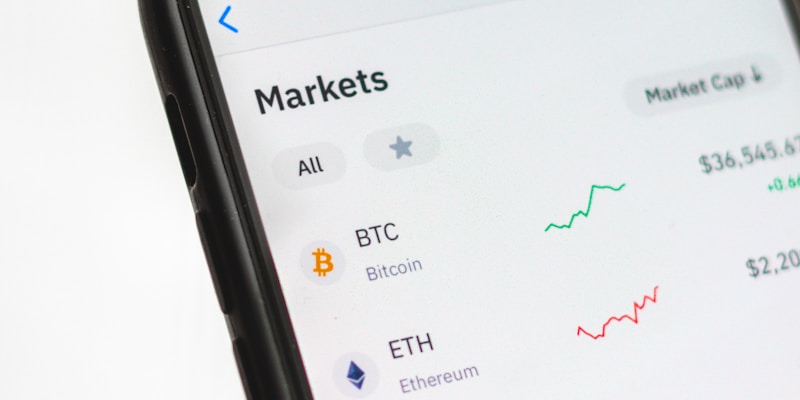
Bitcoin futures open interest fell over 6% in 24 hours, pointing to leverage unwinding as prices stalled below $80,000. Photo: Unsplash
Section 2: $5 Billion USDT Growth Fuels the Rebound
There is a crypto-specific driver behind this move that the ETF data does not fully capture. The supply of Tether's USDT, the largest and most popular stablecoin, has surged to just under $150 billion, adding about $5 billion over the past two weeks after months of stagnation.
Stablecoins are the fuel for crypto markets. They represent the capital that traders use to buy digital assets. When USDT supply expands, it signals new money entering the system. When it contracts or stagnates, the market runs on fumes. Analysts often interpret stablecoin growth as a cue for capital flowing to the crypto market, a healthy signal for asset prices.
The timing is notable. USDT supply was flat through the first quarter of 2026, even as Bitcoin dropped from its January highs. The expansion started in mid-April, roughly coinciding with the ETF inflow streak. The two data points together, expanding stablecoin supply plus institutional ETF buying, paint a picture of fresh capital entering the market rather than just leverage being reapplied.
Bitcoin is up about 13.6% in April, putting it on track for its best monthly performance in a year, according to CoinGlass data. The rebound follows a brutal stretch: crypto markets logged their longest losing streak since 2018, posting consecutive monthly declines from October through February. This month's recovery is the first sign that the downtrend may be over, or at least pausing.
The broader macro backdrop has improved as well. U.S. equities have staged a strong recovery, with the S&P 500 and Nasdaq climbing back to record highs after briefly slipping into correction territory earlier this year. Strong corporate earnings and resilient equity markets are helping offset concerns about higher energy costs and geopolitical risks from the Iran conflict.
Jasper de Maere, OTC trader at Wintermute, put it bluntly: "The equities and crypto markets seem to have stopped caring about intricate headlines on the conflict's direction. This shows a certain level of fatigue and potentially complacency." Markets have been absorbing Iran war headlines for over a month. The initial shock is gone. Whether that complacency is justified is a different question entirely.
Section 3: Tether's $344 Million Iran Freeze and "Economic Fury"
While Bitcoin rallies, the infrastructure it runs on is being weaponized. The U.S. Treasury Department confirmed Friday that a $344 million cryptocurrency freeze is part of its latest effort to disrupt financial networks tied to Iran. Treasury Secretary Scott Bessent said in an X post that the Treasury's Office of Foreign Assets Control (OFAC) is sanctioning multiple crypto wallets linked to Iran, resulting in the freeze of $344 million in cryptocurrency.
"We will follow the money that Tehran is desperately attempting to move outside of the country and target all financial lifelines tied to the regime." - Treasury Secretary Scott Bessent
The freeze follows action taken Thursday by stablecoin issuer Tether, which blacklisted two blockchain addresses on Tron holding $344 million in USDT. The move was linked to the Treasury's broader campaign dubbed "Economic Fury," which targets both traditional front companies and digital asset flows connected to Iran's sanctions evasion.
A U.S. official told CoinDesk that the sanctioned wallets showed material links to the Iranian regime, including transactions with Iranian exchanges and routing through intermediary addresses connected to wallets associated with the Central Bank of Iran. According to the Treasury Department, Iran's central bank has been leaning into digital assets to try to mask its cross-border transactions.

The $344M freeze on Tron is the largest single stablecoin sanctions action to date, raising questions about centralization in "decentralized" systems. Photo: Unsplash
This is significant for several reasons. First, $344 million is not a rounding error. It is a material amount of liquidity removed from the market, even if temporarily. Second, it demonstrates that stablecoins, despite their libertarian branding, are fully subject to state power. Tether can freeze any wallet on Tron with a single transaction. The decentralization narrative collapses at the point where a single issuer controls the mint and freeze functions. Third, it sets a precedent. If the U.S. government can direct Tether to freeze $344 million linked to Iran, it can direct Tether to freeze wallets linked to any sanctioned entity. The infrastructure of crypto is being integrated into the apparatus of state power in real time.
The Treasury also sanctioned Hengli Petrochemical (Dalian) Refinery Co. on Friday, accusing the China-based independent refineries of playing a major role in Iran's oil economy. The dual approach, targeting both the oil trade and the crypto flows, signals that the sanctions net is tightening from multiple directions simultaneously.
For crypto markets, the implications are clear. Stablecoins are not safe havens from state action. They are extensions of the fiat system with blockchain wrappers. The same U.S. dollar hegemony that crypto was designed to bypass now flows through USDT, USDC, and every other dollar-pegged token. The irony is structural.
Section 4: Warsh's Path to the Fed Just Cleared
The next Federal Reserve chair may determine whether Bitcoin's rally holds or folds. On Friday, President Trump's Department of Justice dropped its investigation of Fed Chair Jerome Powell, clearing a path for Kevin Warsh's confirmation. The DOJ had been investigating Powell for cost overruns in a Fed building project, and Republican Senator Thom Tillis had promised to block Warsh's confirmation as long as the probe continued.
U.S. Attorney for the District of Columbia Jeanine Pirro said the DOJ asked the Fed's inspector general to look into the renovation situation and issue a report. "I have directed my office to close our investigation as the IG undertakes this inquiry," Pirro wrote on X. "Note well, however, that I will not hesitate to restart a criminal investigation should the facts warrant doing so."
The market read this immediately. On Kalshi, prediction betting on Warsh's confirmation before May 15 shot up from about 30% odds to more than 80% after the news broke. That is a massive move in political prediction markets and signals that traders expect the confirmation to happen quickly now that the Tillis block is removed.
Why does this matter for Bitcoin? Warsh has crypto-world assets in his portfolio, according to financial disclosures. Trump has relentlessly blamed Powell for maintaining overly high interest rates. Warsh was chosen to remedy that. During his confirmation hearing this week, Warsh insisted he would act independently of White House direction, but the market is pricing in a more dovish Fed under his leadership.
Senator Elizabeth Warren, the ranking Democrat on the Senate Banking Committee, was not buying it. "This is just an attempt to clear the path for Senate Republicans to install President Trump's sock puppet Kevin Warsh as Fed chair," Warren said in a statement. "Let's be clear what the Justice Department announced today: They threatened to restart the bogus criminal investigation into Fed Chair Powell at any time while failing to drop their ridiculous criminal probe against Governor Lisa Cook."
The Fed's April meeting is the next test. If Bitcoin can hold its gains through that event, the $79,000 resistance level could turn into support, opening the door for a higher trading range. If flows fade, Bitcoin may slip back into the $75,000 to $77,000 range. The Warsh confirmation calculus is now central to that equation.

The Federal Reserve's next chair could reshape crypto's regulatory landscape. Warsh's confirmation odds jumped from 30% to 80%+ in hours. Photo: Unsplash
Section 5: Prediction Markets Under Siege
While Bitcoin finds its footing, the prediction market industry is fighting a multi-front legal war. Wisconsin became the fourth state this month to sue prediction market platforms, filing complaints in Dane County against Kalshi, Coinbase, Polymarket, Robinhood, and Crypto.com.
The legal question is straightforward: are prediction market contracts financial instruments under the Commodity Futures Trading Commission, or bets under state gambling law? The answer determines whether a fast-growing market operates under a single federal rulebook or gets carved up across 50 states under the jurisdiction of local gaming regulators. And it is almost certainly headed to the Supreme Court.
Wisconsin's Attorney General Josh Kaul was direct: "Thinly disguising unlawful conduct doesn't make it lawful." The state's complaint highlights the platforms' own marketing language. Kalshi's Instagram ads claim the platform is "The First Nationwide Legal Sports Betting Platform." Polymarket calls itself "a platform where people can bet on the outcome of future events." State prosecutors are using the companies' own words against them.
The CFTC is pushing back. The federal regulator has been suing states that seek to curtail prediction markets, arguing that its jurisdiction preempts state gambling law. The CFTC just added New York to its growing list of counter-suits. New York had moved earlier this week to target platforms run by Coinbase and Gemini.
The industry's defense rests on federal preemption. Kalshi has argued that its contracts are swaps listed on a regulated exchange and therefore fall under the CFTC's exclusive jurisdiction. That position received a boost earlier this month when the Third Circuit sided with the company, treating the regulator's decision not to block the contracts as effectively settling the jurisdictional question.
State courts are not convinced. Nevada called the contracts "indistinguishable" from gambling. New York AG Letitia James said "each contract is a bet." The conflict is irreconcilable at the lower court level. This is heading to SCOTUS.
For crypto, the stakes extend beyond prediction markets. The same legal framework that governs whether event contracts are bets or financial instruments could ripple into DeFi derivatives, tokenized prediction protocols, and any platform that allows users to take positions on real-world outcomes. The regulatory architecture being built right now will shape crypto's relationship with the U.S. legal system for a decade.
Section 6: Morgan Stanley Wants to Be the Reserve Manager for Every Stablecoin
Morgan Stanley has made a move that could reshape the stablecoin industry's backbone. The firm's investment management arm, MSIM, announced the launch of the Stablecoin Reserves Portfolio, a government money market fund designed specifically for stablecoin issuers who need a regulated, safe place to store the reserves backing their tokens.
Here is the simple version: when a company issues a stablecoin, it must hold real dollars in reserve to back every token created. For every blockchain-based dollar issued, a real dollar must exist somewhere safe and accessible. Morgan Stanley's new fund is that place.
The fund, trading under ticker MSNXX, invests only in the safest and most liquid instruments: U.S. Treasury bills and repurchase agreements backed by those same government securities. It targets a $1 net asset value, meaning every dollar put in is worth exactly the same when taken out. Daily liquidity means issuers can withdraw on any business day without penalty.
"We are pleased to deliver a new investment solution to the marketplace that seeks to address the needs of stablecoin issuers. The significant increase in stablecoin issuers as well as the growing number of assets held in stablecoins represents an evolving portion of the marketplace that is ripe for future growth." - Fred McMullen, co-head of global liquidity, Morgan Stanley Investment Management
The timing is deliberate. The GENIUS Act, the Guiding and Establishing National Innovation for U.S. Stablecoins Act, is currently moving through Congress. If passed, it would legally require stablecoin issuers to back their tokens with high-quality liquid assets such as Treasury bills and cash-like instruments held in regulated vehicles. Morgan Stanley is positioning to capture that reserve management business before it becomes mandatory.
This is not Morgan Stanley's first crypto move. The firm recently launched the Morgan Stanley Bitcoin Trust (MSBT), a cryptocurrency ETP designed to track Bitcoin, with BNY Mellon providing custody and fund administration. It also introduced tokenized DAP Class shares of its Institutional Liquidity Funds Treasury Securities Portfolio in partnership with BNY, enabling blockchain-based mirrored records.
The broader picture is clear. Wall Street is not just dipping its toes in crypto. It is building the infrastructure to own the plumbing. Reserve management, custody, ETF administration, tokenized funds. The same banks that dismissed Bitcoin as a bubble in 2017 are now positioning themselves as essential intermediaries in the stablecoin economy. The question is whether stablecoin issuers, who built their businesses on the promise of disintermediation, will hand the keys to Morgan Stanley willingly.

Morgan Stanley's Stablecoin Reserves Portfolio targets the $316B stablecoin market ahead of the GENIUS Act's reserve requirements. Photo: Unsplash
Section 7: Quantum Threat Moves from Theory to Hardware
The quantum attack Bitcoin has spent years treating as tomorrow's problem just got a little less theoretical. Independent researcher Giancarlo Lelli won Project Eleven's 1 BTC Q-Day Prize on Friday after breaking a 15-bit elliptic curve key on publicly accessible quantum hardware, deriving a private encryption key from its public counterpart.
The bounty is worth roughly $78,000 at current prices. It is said to be the largest public demonstration of the attack class that could one day threaten Bitcoin, Ethereum, and most major blockchains. The previous public break was a 6-bit demonstration by Steve Tippeconnic in September 2025 using IBM's 133-qubit quantum computer. Lelli's 15-bit result expanded that by a factor of 512 in seven months.
Fifteen bits is not 256 bits. Bitcoin uses 256-bit elliptic curve security. A 15-bit key has a search space of 32,767 possibilities, tiny by comparison. The prize was designed to measure whether quantum attacks on real cryptography-based products are moving from white papers into public hardware experiments. They are.
Project Eleven CEO Alex Pruden noted that the winning submission came from an independent researcher working on cloud-accessible hardware, not a national laboratory or a private quantum chip. "The resource requirements for this type of attack keep dropping, and the barrier to running it in practice is dropping with them," Pruden said.
A Google Research paper last month put the cost of a full 256-bit attack below 500,000 physical qubits, down from earlier estimates in the millions. The trajectory is clear even if the timeline is uncertain. The concern is sharpest for wallets whose public keys are already visible on-chain. Project Eleven estimates roughly 6.9 million Bitcoin sit in such addresses, about one-third of total supply, including Satoshi Nakamoto's estimated 1 million Bitcoin untouched since the network's earliest years.
Bitcoin developers have proposed migration paths including BIP-360, a Bitcoin Improvement Proposal that would add quantum-safe address types. Ethereum, Tron, StarkWare, and Ripple have each published post-quantum transition plans. The industry is no longer ignoring the problem. But the gap between acknowledging a threat and deploying a solution across a $1.5 trillion network is measured in years, not months.
Section 8: India's e-Rupee Push and the BRICS CBDC Chess Game
While U.S. regulators fight over prediction markets and stablecoin reserves, India is pushing its central bank digital currency through the welfare system. The Reserve Bank of India is running about 10 pilot programs routing portions of the country's roughly $80 billion welfare apparatus through the e-rupee, Reuters reported Thursday.
In Maharashtra's Phulenagar village, farmers are receiving programmable subsidies covering up to 80% of drip-irrigation costs, spendable only at approved vendors. A separate pilot in Gujarat aims to onboard all 7.5 million households eligible for subsidized food by June. The idea is simple: programmable money that can only be spent at approved locations reduces leakage and corruption in subsidy distribution.
The push underscores a core challenge for CBDCs globally: usage. The e-rupee has grown to about 10 million users from roughly 7 million earlier this year, but cumulative transactions since its December 2022 introduction total just $3.6 billion. India's Unified Payments Interface processes about $300 billion each month. The gap between CBDC existence and CBDC adoption remains vast.
Early adoption efforts have at times been engineered. Several major banks, including HDFC, Kotak Mahindra, and Axis Bank, credited employee salaries into CBDC wallets to help the system surpass 1 million daily transactions in December 2023, a milestone that did not persist. Forced adoption is not the same as organic adoption.
The geopolitical dimension is where this gets interesting. The Reserve Bank of India has urged the government to advance a proposal for linking CBDCs across the economies of Brazil, Russia, India, China, and South Africa at the bloc's 2026 summit, aiming to streamline cross-border trade and reduce reliance on the U.S. dollar. That ambition carries political risk. President Trump has threatened tariffs on BRICS countries pursuing alternatives to the dollar and has already imposed duties on Indian imports tied in part to its purchases of Russian crude.
The CBDC race is not just about technology. It is about monetary sovereignty. India wants the e-rupee to be a tool for reducing corruption domestically and a lever for reducing dollar dependence internationally. The U.S. wants to maintain the dollar's reserve currency status. Both objectives cannot be fully achieved simultaneously. The tension will only escalate as the BRICS summit approaches.
Section 9: Bitmine, Ethereum Foundation, and the ETH Treasury Race
The corporate Ethereum accumulation race continues. Bitmine Immersion Technologies (BMNR) announced it is purchasing 10,000 ETH from the Ethereum Foundation for $23.87 million, adding to its growing position as the largest digital asset treasury firm after the bitcoin-centric Strategy (MSTR).
The terms of the over-the-counter transaction were finalized Friday. ETH currently trades at around $2,310, some 3% lower than the sale price in the transfer. The proceeds will support the Ethereum Foundation's operations, including protocol research, ecosystem development, and grants.
Bitmine, helmed by Fundstrat CIO Thomas Lee, bought over 100,000 ETH last week, bringing its holdings to 4.97 million ETH, according to its Monday report. Its total assets stood at $12.9 billion, making it the largest public holder of Ethereum and the second-largest public digital asset treasury trailing only Strategy's Bitcoin holdings. Bitmine is trying to accumulate 5% of ETH's supply, which would translate to roughly 6 million tokens.
The Ethereum Foundation's willingness to sell directly to Bitmine is notable. It provides the Foundation with operating capital while simultaneously supporting a public company's treasury strategy. The alignment of interests is clear: Bitmine gets its ETH, the Foundation gets its funding, and the market gets a signal that institutional Ethereum accumulation is a real corporate strategy, not just a Bitcoin thing.
Whether this is good for Ethereum's decentralization narrative is a separate question. One company holding 5% of a blockchain's native token creates concentration risk. If Bitmine's stock price crashes, or if it decides to liquidate, the selling pressure on ETH would be significant. The same critique applies to Strategy's Bitcoin holdings. The corporate treasury model for crypto is working right now because prices are recovering. It has not been stress-tested in a sustained downturn.
The Setup
Bitcoin sits at $77,394. The ETF bid is real. The USDT liquidity expansion is real. The macro improvement is real. But short-term holders are selling at three times the rate that has marked every local top. Funding on Bitcoin perpetuals is still negative, meaning shorts are paying longs, which creates the conditions for a short squeeze but also means the market is not yet in a euphoric state.
The next test is the April Fed meeting. If ETF inflows continue through that event, $79,000 could turn from resistance into support. If flows fade, Bitcoin slips back to $75,000 to $77,000. Warsh's confirmation path is now open, which could accelerate the timeline for a more dovish Fed. The $80,100 short-term holder cost basis is the line in the sand. Above it, 54% of recent buyers are in profit. History says they sell.
Meanwhile, the infrastructure beneath the market is being reshaped by forces that have nothing to do with price action. Tether's $344 million freeze for Iran sanctions. Morgan Stanley building the reserve management layer for stablecoins. States suing prediction markets while the CFTC sues them back. India pushing CBDCs through welfare programs while preparing a BRICS challenge to dollar hegemony. Quantum attacks moving from theory to hardware experiments.
The market is not just at a price crossroads. It is at a structural crossroads. The institutions are here. The regulations are coming. The quantum threat is advancing. The question for anyone holding Bitcoin at $77,000 is not whether it goes to $80,000. It is whether the system that Bitcoin runs on in 2026 is the same system it ran on in 2021. It is not. And that changes the risk calculus in ways that no chart can capture.
Trade the setup. Watch the flows. And remember: the ETF bid provides exit liquidity for short-term holders just as efficiently as it provides entry for long-term ones. Which side you are on matters more than which side is winning right now.