


3. Trump Rejects Iran's Proposal: "Just Give Up"
President Trump has rejected Iran's latest diplomatic proposal, according to multiple reports, pushing the two sides further apart as the conflict enters its 62nd day. The proposal, delivered through intermediaries earlier this week, represented what Tehran described as its most significant concession since the war began.
Trump's response was characteristically blunt. "Iran can't get their act together. They don't know how to sign a nonnuclear deal. They better get smart soon!" he posted on Truth Social, alongside an illustration of himself holding an assault rifle with the caption "NO MORE MR. NICE GUY!"
White House spokesperson Anna Kelly said the US was still engaging with Iran on negotiations but would "not be rushed into making a bad deal." The sticking points remain as fundamental as they were on day one:
1. Iran's nuclear programme and uranium stockpile
2. The US blockade of Iranian ports
3. Release of $20 billion in frozen Iranian assets
4. Tehran's demand for $270 billion in war reparations
On the Iranian side, Parliament Speaker Mohammad Bagher Ghalibaf dismissed the US blockade's effectiveness in defiant terms. No oil wells have "exploded" under the blockade, he argued, saying the measures have only driven up global prices - hurting the West more than Iran. He accused US Treasury Secretary Scott Bessent of acting on "junk advice" regarding the sanctions policy.
Iran's military, meanwhile, said its restraint so far had been "intended to give diplomacy a chance" - a formulation that carries an implicit threat: the patience has limits. Iran's storage capacity may cover only about 20 days of output before production cuts become necessary, according to Kpler analyst Muyu Xu, with a higher chance of acceleration into May. (Al Jazeera)
The geopolitical pressure on both sides is intensifying from outside. Russian President Vladimir Putin warned Trump in a phone call not to resume attacks on Iran, calling the decision to extend the ceasefire "the right one," according to Kremlin aide Yury Ushakov. Qatar's Ministry of Foreign Affairs cautioned against the possibility of a "frozen conflict" where the Strait of Hormuz becomes a permanent pressure card with periodic violent flare-ups.
4. $25 Billion and Counting: Hegseth's Congressional Showdown
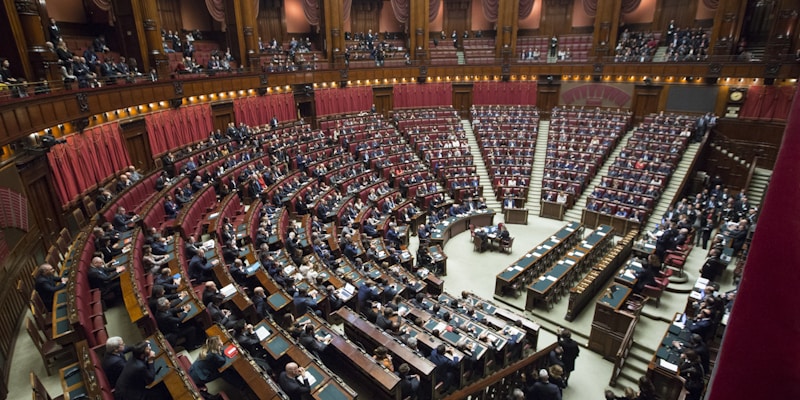
US Defense Secretary Pete Hegseth faced six hours of questioning under oath on Wednesday before the House Armed Services Committee - his first testimony since the war began. The session was combative from the opening minutes.
Defense Department chief financial officer Jules Hurst revealed that the war has cost the United States $25 billion so far. Most of that spending has gone toward munitions and equipment replacement, Hurst said, with a full cost assessment to be provided later. The Pentagon is requesting a $1.5 trillion defense budget for the coming fiscal year, which would mark the largest expansion in military spending since World War Two.
Chairman of the Joint Chiefs of Staff Gen Dan Caine told the committee the budget "represents a historic down payment for future security" that would allow the US to stay ahead of fast-evolving technology. (BBC)
Democrats were unsparing. "You have been lying to the American public about this war from day one, and so has the president," said California Representative John Garamendi, telling Hegseth that Trump was "stuck in a quagmire" of another Middle East war.
Hegseth fired back. "Your hatred for President Trump blinds you," he told Garamendi, calling the characterisation "reckless." He said the "biggest adversary we face" was the "defeatist words" of Democrats and some Republicans. At one point, he told a congressman: "Shame on you."
"When someone tells me for 47 years that they want to kill us, I think I am going to take them at their word. I support our efforts to make sure that Iran never has a nuclear weapon." - Rep. Carlos Gimenez (R-FL)
Some lawmakers pressed Hegseth on the Minab school strike early in the conflict. According to Iranian officials, that air strike killed 168 people, including approximately 110 children, during what the US said was an operation targeting a nearby military facility. Hegseth deflected detailed questions, citing ongoing reviews. (BBC)
The hearing underscored the political fault lines the war has exposed in Washington. Republicans largely defended the campaign as necessary to prevent Iranian nuclear capability. Democrats characterised it as a "war of choice" launched without congressional authorisation, with costs mounting daily in both dollars and global economic damage. The same panel will appear before the Senate Armed Services Committee on Thursday.

5. Strait of Hormuz: The Chokepoint That Controls the World
Approximately one-fifth of the world's energy normally passes through the Strait of Hormuz. For 62 days, that flow has been severely disrupted. Iran imposed its blockade in retaliation for US-Israeli airstrikes at the start of the conflict, threatening to attack any vessel attempting transit. The US responded with its own blockade of Iranian ports, effectively creating a mutual stranglehold: Iran cannot export oil, and the world cannot import it from the Gulf.
The economics are straightforward and brutal. With Hormuz effectively closed, the supply of crude oil to global markets has been reduced by roughly 3 to 4 million barrels per day - the portion that normally transits the strait from Iran, Iraq, Kuwait, the UAE, and Saudi Arabia via tanker. Markets have absorbed part of this shock through strategic reserves and alternative routes, but the margin is thin and getting thinner.
The CENTCOM plan to potentially seize part of the strait and reopen it by force reflects a calculation in Washington that the economic cost of the blockade to the global economy - and to US consumers facing record petrol prices - may eventually exceed the political cost of a ground operation. The Axios report's description of troops on the ground, if accurate, would represent the most significant escalation since the initial air campaign in March.
Iran, for its part, views the strait as its primary leverage. Without the threat to Hormuz, Tehran has little bargaining power against a military alliance that has already demonstrated air superiority and the willingness to strike infrastructure. The mutual blockade is a stalemate by design: neither side can fully win, and neither side can afford to back down.
The broader regional picture compounds the pressure. OPEC is reportedly in "crisis mode" following the UAE's decision to exit the organisation, a move widely interpreted as an effort to distance Abu Dhabi from the chaos and preserve its own export routes outside Hormuz. Saudi Arabia and Iraq have increased pipeline flows that bypass the strait, but capacity is limited. (Al Jazeera)
Pakistan, meanwhile, has opened road trade routes into Iran as an alternative supply line, a pragmatic response to the Hormuz closure that underscores how the blockade is reshaping regional logistics in real time. (Al Jazeera)
~20% of global energy normally transits Hormuz
3-4M barrels/day disrupted by closure
~20 days of Iranian oil storage remaining at current output
UAE has exited OPEC amid the crisis
Pakistan has opened road trade routes into Iran

6. The Frozen Conflict: Day 62 and No Deal in Sight
Two months since the US and Israel launched a joint surprise attack on Iran, the conflict has entered a phase that analysts are increasingly calling a "frozen war." The April 8 ceasefire paused active hostilities, but no permanent deal exists. Military options remain on the table. The Strait of Hormuz remains blocked. Negotiations produce proposals that are rejected within hours.
"Iran cannot afford to have its ports blocked indefinitely and neither can the US maintain an indefinite blockade of Iran," said Mehran Kamrava, an expert on Iran at Georgetown University in Qatar. "For the time being, we might see a short-term frozen conflict, but this cannot continue for several months or years." (Al Jazeera)
The American foreign policy think tank Quincy Institute estimated that Washington's costs over just the first month of the war were already in the tens of billions. At $25 billion for 60 days, the annualised cost approaches $150 billion - before accounting for the economic damage from oil price spikes, supply chain disruptions, and inflation that the war has accelerated worldwide.
The Trump administration has also weaponised financial infrastructure. US authorities have seized nearly $500 million in Iranian crypto assets under "Operation Economic Fury," a campaign designed to cut off Tehran's access to digital financial networks and further squeeze its ability to fund operations and imports. (Al Jazeera)
Qatar's warning about a "frozen conflict" is rooted in recent history. The Korean War, India-Pakistan over Kashmir, the Ukraine conflict since 2014 - frozen conflicts tend to stabilise into a permanent state of tension that periodically flares into violence. The difference with Hormuz is scale. A frozen conflict that holds 20% of global energy hostage is not regional. It is systemic.
The ceasefire itself is fragile. Israel continues operations in Lebanon, where attacks have killed more than 20 people in the last two days. Israeli forces intercepted a Gaza-bound civilian aid flotilla in international waters near Crete on Tuesday, seizing 22 of 58 vessels in what a press officer described as a possible "kidnapping on the high seas." Lebanon's President Joseph Aoun has urged Israel to fully implement a ceasefire before beginning direct talks. Bahrain has revoked the citizenship of 69 people for allegedly supporting Iranian attacks, drawing condemnation from Tehran. (Al Jazeera, BBC)
The war's tentacles extend in every direction. Saudi Arabia, the UAE, and Qatar are balancing between their US security partnerships and their dependence on open waterways. China is positioning its EV industry as a beneficiary of the oil crisis. European leaders are discussing activating the EU's mutual defence clause, Article 42.7, as US reliability as a security partner comes under strain. (Al Jazeera)
7. Global Ripple: From UK Petrol to Asian Markets to Pakistan's Road Routes
The economic damage from 62 days of Hormuz disruption is not theoretical. It is measurable, compounding, and accelerating.
In the United Kingdom, the RAC reports that petrol has risen 24 pence per litre since the war began. Diesel has surged 46 pence. The government has publicly warned that energy, food, and flight prices will continue climbing. For a country already battling inflation, the Iran war is a compounding shock that no fiscal policy can fully offset.
Across Asia, the impact is even more acute. Almost the entire Asia-Pacific region depends on oil imports, and much of that supply comes from the Middle East. Al Jazeera's Barnaby Lo, reporting from Seoul, noted that South Korea's 1.4% market drop on Thursday reflected not just oil prices but the fundamental vulnerability of import-dependent economies to a prolonged Hormuz closure.
China, characteristically, is positioning for advantage. State media has highlighted the country's rapid EV transition as a strategic asset in the oil crisis - "flying cars and 5-minute charges" was how one Chinese outlet framed the opportunity. If oil stays expensive permanently, the logic goes, China wins the energy transition by default. (BBC)
Pakistan's decision to open road trade routes into Iran is a glimpse of the workarounds emerging around the Hormuz blockade. When sea lanes close, land routes open. When official channels stall, grey markets flourish. The global trade system is remarkably adaptable - but adaptation takes time, and the economic damage accumulates during the transition.
In the United States, petrol prices have reached a four-year high. The White House meeting with energy executives suggests the administration is aware that consumer anger over fuel costs could become a political liability faster than the strategic benefits of the blockade can materialise. The Pentagon's $25 billion figure, revealed under oath, gives Democrats a concrete number to attack. "War of choice" is a phrase that sticks when it comes with a price tag.
Trump is also weighing a reduction of US troops in Germany amid tensions with Berlin, according to reports, adding another layer of uncertainty for NATO allies already questioning American commitment. European leaders discussing Article 42.7 of the EU treaty - the bloc's mutual defence clause - signals a continent beginning to contemplate security arrangements that do not depend on Washington. (Al Jazeera)
And then there is OPEC. The UAE's exit from the cartel, announced on Day 61, is the most significant structural change in global oil governance in decades. If Abu Dhabi can export outside Hormuz via its east coast pipeline and Fujairah terminal, it has less reason to participate in production quotas that constrain its revenue while the war constrains its neighbours. OPEC without the UAE is a weaker OPEC. A weaker OPEC means less coordinated supply management. Less coordinated supply management means more volatility.
$500M in Iranian crypto assets seized by US ("Operation Economic Fury")
$270B in war reparations demanded by Tehran
$20B in frozen Iranian assets disputed in negotiations
$1.5T US defense budget requested for next fiscal year
4-year high for US petrol prices
What Comes Next
The CENTCOM strike plans are not orders. They are options prepared for a president who must weigh military escalation against economic self-destruction. The oil market's reaction to the mere report of their existence - a 7% spike - tells its own story about how fragile the current equilibrium has become.
Trump faces a narrowing window. Every day the blockade continues, American consumers pay more at the pump. Every day the blockade continues, Iran's oil storage creeps closer to capacity, forcing production cuts that will take months to reverse even if a deal is reached. Every day the blockade continues, the "frozen conflict" metastasises into a permanent feature of the global economy.
The alternative - a "short and powerful" strike on Iranian infrastructure - carries its own cascade of risks. Iran has promised retaliation for any attack. Its missile capabilities, while degraded by the initial US-Israeli campaign, remain substantial. A ground operation to seize part of Hormuz would place American troops in one of the most heavily contested waterways on Earth, adjacent to a nation of 88 million people with a history of asymmetric warfare stretching back decades.
Day 62. No deal. Rising costs. Hardening positions. The war is not ending. It is settling in.