Iran's Hormuz Toll Economy Goes Live: First Revenue Hits Central Bank
The Islamic Republic has moved from threatening tolls to collecting them. Iran's deputy speaker confirmed the first revenues from Strait of Hormuz transit fees have been deposited into the Central Bank. Three ships seized in 24 hours. The US Navy secretary just walked out the door. The toll economy is no longer theoretical. It is operational.

Commercial shipping through the Strait of Hormuz has been severely disrupted since the start of the US-Iran war. Now Iran is monetizing the passage. (Unsplash)
For weeks, the Strait of Hormuz has been the world's most dangerous waterway. Warships from a dozen nations patrol its narrow channels. Drones circle overhead. Mines lurk beneath the surface. Both Iran and the United States run competing blockades, each intercepting commercial vessels that fail to meet their criteria for safe passage. Ships have been seized, attacked, and turned back. Oil prices have swung wildly on every headline.
But something changed on April 23, 2026. Iran stopped merely threatening to charge tolls and started collecting them.
Hamidreza Haji Babaei, the deputy speaker of Iran's parliament, announced that the first revenues collected from tolls imposed on ships using the Strait of Hormuz have been deposited into the Central Bank account. The announcement, reported by Tasnim News Agency, marks the formal birth of what analysts are calling the Hormuz Toll Economy - a system where the world's most critical oil chokepoint becomes a revenue instrument for a state under siege.
Babaei did not disclose who paid the toll, how much was collected, or which vessels were involved. The BBC cannot independently verify the claim. But the declaration itself is the story. Iran has moved from the theoretical to the operational. The toll booth is open.
The Toll Structure: Variable Rates, No Transparency

Tanker traffic through Hormuz has dropped dramatically since the war began. Those still transiting now face a new cost. (Unsplash)
Another senior Iranian MP, Alireza Salimi, offered more detail - though still no numbers. Speaking to Tasnim, he said: "I have heard from reliable sources that Iran has collected fees from ships passing through the Strait of Hormuz." Salimi added that the amount varies "depending on the type and amount of cargo and the level of risk they carry, and Iran determines how and to what extent these fees are collected. We determine the rules."
This is a variable pricing model with no external oversight. Iran assesses the cargo, the risk profile, and sets the fee unilaterally. There is no published schedule. No appeals process. No international arbitration. Shipping companies face a simple calculus: pay the toll and risk US interdiction, or avoid Hormuz entirely and add thousands of nautical miles and millions of dollars to each voyage.
Before the current ceasefire, Iran said it had limited passage to "friendly" countries. There were reports of tolls being discussed, but no confirmation of collection. In late March, Iran's embassy in India explicitly denied claims that Tehran was charging vessels $2 million to pass through. That denial is now moot. The tolls are real, the money is in the bank, and the precedent is set.
- Revenue has been deposited into Iran's Central Bank
- Rates vary by cargo type, volume, and "risk level"
- Iran sets all rules unilaterally - no published fee schedule
- No independent verification of amounts or payers
- Previously denied: Iran's embassy in India said in March that no tolls were being charged
- Reports before the war suggested fees of approximately $2 million per ship
Trump's Dilemma: Interdict or Ignore?

Trump instructed the Navy to interdict any vessel that paid a Hormuz toll. Now someone has paid. (Unsplash)
On April 12, US President Donald Trump posted on Truth Social that he had instructed the US Navy to "seek and interdict every vessel in international waters that has paid a toll to Iran." His warning was unequivocal: "No one who pays an illegal toll will have safe passage on the high seas."
That statement created a trap for any shipping company considering the toll route. Pay Iran, get through Hormuz, but risk seizure by the US Navy. Do not pay Iran, and face the IRGC's definition of what constitutes "unauthorized" passage - which on April 23 meant having commandos board your vessel, as the crews of MSC Francesca and Epaminondas discovered.
White House Press Secretary Karoline Leavitt said on Wednesday that the US does not consider Iran's seizure of two ships in the Strait of Hormuz to be a violation of the ceasefire. "These were not US ships, these were not Israeli ships," she said. That statement is significant. It signals that the US is tolerating Iranian aggression against third-party vessels - at least for now - to preserve the ceasefire and the diplomatic track.
But what happens when a shipping company pays the toll and the US Navy intercepts them? Trump has painted himself into a corner. Every vessel that pays Iran becomes a target of US interdiction. But interdicting a Greek-owned cargo ship that paid a transit fee is an act of economic warfare against an ally. Greece's Foreign Minister Giorgos Gerapetritis already confirmed that the Epaminondas, a Greek-owned vessel, was attacked. The diplomatic fallout from actually seizing a toll-paying vessel would be enormous.
Days before the interdiction order, Trump had suggested the US and Iran could levy fees on the strait as a "joint venture." That idea went nowhere, but it revealed a conceptual gap in the administration's position: if the US can blockade, why can't Iran toll? Both are assertions of control over an international waterway. Both extract economic value from the chokepoint. The difference is legitimacy, and in the Horn of Africa, the Gulf of Aden, and every contested waterway on the planet, legitimacy is in the eye of the beholder.
The Ship Seizures: IRGC Commandos Board Three Vessels

Three cargo ships were attacked or seized in the Strait of Hormuz within 24 hours. (Unsplash)
The toll announcement did not come in a vacuum. On April 23, Iran confirmed it had seized two cargo ships in the Strait of Hormuz for "inspection." The IRGC Navy released a statement saying the ships were "operating without authorisation" and committed "repeated violations," accusing them of trying to leave the strait "in secret" and tampering with navigation systems.
Iranian news outlet Tasnim, which is affiliated with the IRGC, broadcast dramatic footage of Iranian commandos raiding the two vessels. The ships, MSC Francesca and Epaminondas, both reported damage from the attacks. A third vessel, the UAE-owned Euphoria, was also attacked eight nautical miles west of Iran, according to maritime security firm Vanguard. No damage or injuries were reported on Euphoria.
MarineTraffic tracking data analyzed by BBC Verify showed that Euphoria dropped anchor near a port in the United Arab Emirates after the attack. The Greek-owned Epaminondas was confirmed attacked by Greece's foreign minister, though he could not confirm Iranian seizure. The IRGC warned it is "monitoring" movements through the strait and vowed "firm" action against "violators."
The timing is not coincidental. The seizures serve a dual purpose: enforcement and demonstration. Iran is showing that it can not only charge for passage but also punish those who attempt to transit without permission. The commando footage broadcast on Tasnim is propaganda, but it is also a business card. The message to global shipping is unambiguous: pay the toll, follow our rules, or we board your ship.
The Navy Secretary Walks: Phelan Out, Cao In

Navy Secretary John Phelan departed "effective immediately" on the same day Iran announced toll collection. (Unsplash)
On the same day Iran announced its first toll revenue, the Pentagon announced that Navy Secretary John Phelan is leaving the Trump administration "effective immediately." Navy Undersecretary Hung Cao will serve on an acting basis.
The Pentagon provided no reason. But US media reported that Phelan's departure came after tension with Defense Secretary Pete Hegseth over the implementation of Trump's shipbuilding initiative. Phelan, a civilian with no prior military service, was a major donor to Trump's campaign who was sworn in as Secretary of the Navy in March 2025.
Phelan is the latest in a long line of senior military departures. Hegseth has fired more than a dozen senior military officers since entering the Pentagon, including the chief of naval operations and the Air Force's vice chief of staff. Army Chief of Staff Randy George was asked to step down just weeks ago. Two other Army officials, Gen David Hodne and Maj Gen William Green, have also been removed.
The timing is uncomfortable. The US Navy is executing a blockade of Iranian ports, managing the interdiction of toll-paying vessels, protecting commercial shipping in contested waters, and dealing with the strategic implications of a toll-collecting adversary - all while losing its civilian leader with no notice and no explanation. Hung Cao, a 25-year Navy veteran who ran an unsuccessful Senate campaign in Virginia in 2024, takes the helm at a moment of extraordinary operational complexity.
Andrew Peek, a former State Department deputy assistant secretary, told the BBC that the president had been clear about wanting to expand the country's merchant and civilian fleet. "Eventually, somebody was going to take the fall for the lack of movement on that," Peek said. He estimated shipbuilding disputes accounted for about 30% of the ouster, with the remaining 70% being a simple preference for someone Trump "likes and trusts better."
The Economic Cascade: Who Pays the Toll?

Global oil markets have been volatile since the war began. The toll system adds a new layer of cost and uncertainty. (Unsplash)
The IEA chief said on April 23 that the world faces "the biggest energy security threat in history." That statement, extraordinary in its bluntness, reflects the compounding reality of the Hormuz crisis. It is not just that ships cannot get through. It is that the ships that do get through now pay a tax to a nation under US blockade, while risking US naval interdiction on the other side.
China is already paying the price. BBC correspondent Laura Bicker reported from Foshan and Guangzhou that costs for Chinese manufacturers have gone up around 20% since the Hormuz crisis intensified. Fabric traders in Guangzhou, home to the world's largest fabric market, say that higher oil prices are hitting them hard because their trade depends on cheap and steady petrochemical supplies. "It means fewer orders," one trader said. Some customers are refusing to pay more and fabric is piling up in warehouses.
The head of Swedish tanker firm Stena Bulk, CEO Erik Hanell, told the BBC there is "no prospect" of the company's vessels passing through the Strait of Hormuz at the moment. "Before we would take actions like that, we definitely need guarantees of security passing through the shipping lane from both Iran and the US," Hanell said. Only a peace deal could create the conditions for commercial shipping to resume.
The toll system adds a perverse incentive structure to this paralysis. If enough ships pay the toll, Iran accumulates revenue that funds its war effort and its survival under blockade. If the US intercepts toll-paying ships, it alienates the very shipping companies and nations that the global economy depends on. If nobody transits, the global economy suffocates. There is no clean exit from this architecture.
Islamabad: The Empty Hotel

Islamabad's diplomatic quarter remains sealed off for peace talks that have yet to begin. The hotel is ready. The delegations are not. (Unsplash)
The ceasefire extension announced by Trump on April 21 was supposed to create space for a new round of peace talks in Islamabad. Parts of the Pakistani capital remain sealed off. Signs are still up. The hotel where talks were expected to take place is empty, ready for delegations that have not arrived.
Air Force Two was ready to fly Vice President JD Vance to Islamabad. It never took off. Special envoy Steve Witkoff and Trump's son-in-law Jared Kushner flew to Washington from Miami instead of heading to Pakistan. Iran never officially committed to attending.
Pakistan's Prime Minister Shehbaz Sharif, who has invested considerable diplomatic capital in brokering these talks, posted on social media that Pakistan would "continue its earnest efforts for negotiated settlement of the conflict." But the optimism has faded. The BBC's diplomatic correspondent Paul Adams described the atmosphere in Islamabad as one of "gloomy realisation" that the opportunity may have slipped away.
Iran's chief negotiator, Mohammad Bagher Ghalibaf, said on Wednesday that it is "not possible" for the Strait of Hormuz to be opened due to "the blatant violations of the ceasefire" by the US and Israel. President Masoud Pezeshkian added: "Breach of commitments, blockade and threats are main obstacles to genuine negotiations."
Trump's Truth Social post announcing the ceasefire extension said Iran's regime is "seriously fractured, not unexpectedly." For a president who has claimed to have achieved regime change, this was an admission that Washington may not know who is in charge in Tehran. Mojtaba Khamenei, the new Supreme Leader, has not been seen in public since his appointment in early March. The IRGC operates as a parallel government. The negotiating team of Ghalibaf and Foreign Minister Abbas Araghchi appears to have assumed greater prominence, but their authority is unclear and contested.
Iran-US Ceasefire Timeline
- April 8: Two-week ceasefire announced via Pakistan mediation. Trump says Strait of Hormuz must reopen. Iran says Lebanon is included; US and Israel disagree.
- April 9: Iran warns ships without permission "would be targeted and destroyed."
- April 11: Vance and Araghchi meet in Islamabad. 21 hours of talks. Both sides remain far apart.
- April 12: Trump announces blockade of Iranian ports. Threatens interdiction of toll-paying vessels.
- April 17: After Lebanon ceasefire, Iran briefly opens Hormuz. Closes it again, citing US blockade.
- April 19: Trump says representatives will return to Pakistan. Iran says it has not decided whether to attend.
- April 21: Trump extends ceasefire indefinitely. No new deadline.
- April 23: First toll revenue deposited in Central Bank. Three ships seized. Navy secretary departs. Talks stalled.
Source: BBC News, Al Jazeera, Reuters
The Toll as Weapon: Strategic Implications
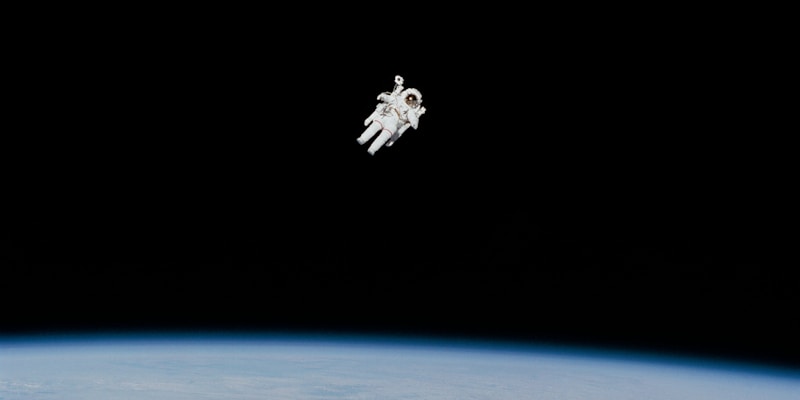
The Strait of Hormuz is 21 nautical miles wide at its narrowest point. Around 20% of the world's oil passes through it. (Unsplash)
The deposition of toll revenue into the Central Bank is more than a financial transaction. It is a strategic statement. Iran is saying: we control this waterway, we can monetize it, and we can do so even under US blockade and international sanctions.
This has implications that extend far beyond the current conflict. If the toll system persists, it creates a template for any state that controls a critical chokepoint. The Bab el-Mandeb strait, the Suez Canal, the Malacca Strait, the Turkish Straits - every narrow waterway that global trade depends on could theoretically become a toll collection point if the controlling state faces sufficient pressure or simply decides to extract rent.
The principle of freedom of navigation, which the US Navy has enforced since the Second Barbary War in 1815, is being directly challenged. Not by a peer competitor with a blue-water navy, but by a sanctioned, war-damaged state with speedboats, drones, and a willingness to board commercial vessels. The asymmetry is the point. Iran does not need to defeat the US Navy to control Hormuz. It needs only to make transit expensive and dangerous enough that commercial shippers calculate the toll is cheaper than the alternative.
Brian Katulis, a senior fellow at the Middle East Institute, told the BBC that Trump's ceasefire extension "begs the question about how he can deal with the economic pain that Americans are experiencing and the political pain he's experiencing from his base." The toll system deepens that pain. Every dollar paid to Iran is a dollar that funds the adversary. Every ship that avoids Hormuz adds cost to the global supply chain. Every intercepted vessel creates a diplomatic incident.
Andrew Peek framed the strategic landscape starkly: "The strategic disadvantage at the moment is that Iran has decided that the measure of victory has become control of the Strait of Hormuz." The toll is not a side effect of that strategy. It is the strategy.
What Comes Next: Three Scenarios
The question is not whether ships will pay the toll. The question is what happens when they do. (Unsplash)
The birth of the Hormuz Toll Economy opens three plausible paths forward, each with its own escalation dynamics.
Scenario 1: The Toll Normalizes
Shipping companies quietly pay the toll, routing through Hormuz with IRGC approval. The US tolerates it rather than interdict allied vessels. Iran accumulates revenue. The toll becomes a de facto cost of doing business, like piracy insurance in the Gulf of Aden or Suez Canal transit fees. This is the path of least resistance and maximum embarrassment for the US. It means Iran won the economic war for Hormuz even while losing the kinetic one.
Scenario 2: US Enforces the Interdiction Threat
The US Navy seizes a vessel that paid the Iranian toll. The ship's flag state protests. Insurance markets panic. Shipping companies pull out of Hormuz entirely. Oil prices spike above $120. The global economy takes a hit that makes the current disruption look modest. Diplomatic relations with Greece, India, China, and other major shipping nations deteriorate. The US achieves its principle at enormous economic cost.
Scenario 3: The Toll Triggers a Crisis
A toll-paying ship is interdicted by the US, then boarded by the IRGC, or vice versa. A naval confrontation erupts between US and Iranian forces over a commercial vessel. The ceasefire collapses. Full-scale military operations resume. The Strait of Hormuz closes entirely. Oil hits $150 or higher. The global economy enters recession territory. This is the worst-case scenario, and the toll system makes it structurally more likely because it creates a specific trigger point - the toll-paying ship - where US and Iranian enforcement mechanisms physically collide.
The Human Cost: Lebanon, Journalists, and the Ceasefire That Isn't

Journalist Amal Khalil, killed in an Israeli strike in southern Lebanon on April 23. Lebanon's PM accused Israel of war crimes. (Unsplash)
While the world's attention focuses on Hormuz, the war's other fronts continue to burn. On April 23, Israeli air strikes in southern Lebanon killed journalist Amal Khalil and wounded freelance photographer Zeinab Faraj. Lebanon's prime minister accused Israel of war crimes, saying that "targeting journalists, obstructing access to them by relief teams, and even targeting their locations again after these teams arrive constitutes described war crimes."
The Lebanese health ministry said the IDF "pursued" Khalil and Faraj after they took refuge in a nearby house from an initial strike, then "targeted the house where they had sought shelter." When a Lebanese Red Cross ambulance arrived, Israeli forces directed a stun grenade and gunfire toward it, preventing it from reaching the wounded, the ministry said.
The IDF denied targeting journalists and said it identified two vehicles that had "departed from a military structure used by Hezbollah." But Reporters Without Borders executive director Clayton Weimer described it as "callous disregard, on top of what appears to be a deliberate and targeted killing of a journalist." The Committee to Protect Journalists said it was "outraged" and that the repeated strikes and obstruction of medical access "constitute a grave breach of international humanitarian law."
Khalil had been the target of an "Israeli death threat" in 2024, local media reported, which warned her to leave southern Lebanon. Two other journalists were killed in separate Israeli strikes in Lebanon earlier in April.
Lebanon and Israel are scheduled to hold a second round of talks in Washington on April 23, despite the violence. The first round on April 14 was the first diplomatic meeting between the two nations since 1993. A 10-day ceasefire was agreed on April 16, though Netanyahu said Israeli troops would remain 10km into southern Lebanon despite it.
The Global Ledger: Who Wins, Who Loses
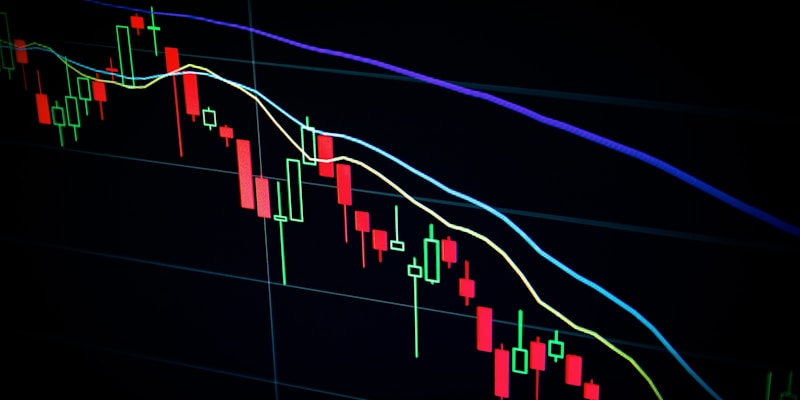
The toll economy creates winners and losers that do not map neatly onto the military conflict. (Unsplash)
The Hormuz Toll Economy does not distribute its costs evenly. The winners and losers are not who you might expect from the military map.
Winners: Iran, which gains revenue and leverage. Alternative route operators - the East Africa pipeline, the Yanbu terminal in Saudi Arabia, the Sumed pipeline in Egypt - which see increased traffic and can raise their own fees. The tanker market, where day rates for vessels willing to transit Hormuz have reportedly tripled. Electric vehicle manufacturers, particularly Chinese firms that exported 350,000 EVs in March alone, a 140% year-on-year increase.
Losers: Global shipping companies, caught between two blockades with no safe passage guarantee. Chinese manufacturers, already facing 20% cost increases and declining orders. European consumers, facing sustained high energy prices with no relief in sight. The principle of freedom of navigation itself, which has underpinned global trade since the end of the Second World War. And the thousands of workers in export-dependent economies who cannot absorb another price shock.
The BBC's Laura Bicker reported from China's Guangdong province that the mood has shifted from defiance to resignation. Workers in Foshan, many over 40 and from rural provinces, described desperation as factory orders dry up and costs rise. "No-one understands what our life is like," one said. "We work and work and have no life."
A year ago, during the US-China trade war, there was defiance on the streets of Guangzhou. Now there is resignation. The toll economy extracts its deepest costs not from governments or oil companies, but from the people who make the goods the world buys and who have no margin left to absorb another shock.
"The strategic disadvantage at the moment is that Iran has decided that the measure of victory has become control of the Strait of Hormuz." Andrew Peek, former State Department deputy assistant secretary, BBC interview, April 23, 2026
The Clock and the Calendar
Trump's ceasefire extension is open-ended. White House Press Secretary Karoline Leavitt said Trump is "satisfied" with the ongoing US naval blockade and "understands Iran is in a very weak position." She added: "The cards are in President Trump's hands right now."
But the toll system changes the meaning of "weak position." Iran's military is degraded. Its leadership is fractured. Its cities have been bombed. Its nuclear facilities have been struck. Its economy is under blockade. And yet it is collecting revenue from one of the world's most important waterways, because it still controls the physical terrain that matters.
Trump told Fox News host Martha MacCallum that there is "no time pressure" on the Iran ceasefire. That is a strategic choice, not an accident. The open-ended extension gives the blockade time to bite. It gives Iran's "pragmatists" time to outmaneuver hardliners, as Leavitt put it. And it avoids a return to full-scale military action that Americans are weary of and that could destabilize markets further.
But "no time pressure" also means no urgency. And in the absence of urgency, the toll system consolidates. Every ship that pays the toll normalizes it. Every day the US does not enforce its interdiction threat weakens it. Every dollar that enters Iran's Central Bank from Hormuz transit fees proves that the blockade, the bombs, and the diplomatic pressure have not eliminated Iran's most powerful leverage point.
The war is approaching the two-month mark. The ceasefire has no deadline. The talks have no date. The tolls have no published rate. The interdiction has no enforcement. The Navy has no civilian leader. The Strait of Hormuz has no normal traffic. The global economy has no certainty.
What it does have is the world's newest revenue stream: a toll booth on the most dangerous waterway on Earth, operated by a state under siege, defended by commandos on speedboats, tolerated by a superpower that threatened to shut it down and hasn't.
The money is in the bank. The pin is half-pulled.
Sources: BBC News, BBC Persian, Al Jazeera, Tasnim News Agency, Reuters, Committee to Protect Journalists, Reporters Without Borders, MarineTraffic, IEA
← Back to BLACKWIRE