BAMAKO / BEIRUT / ISLAMABAD - April 26, 2026
Three Fronts, One Weekend: Mali's Defense Minister Killed in Coordinated Assault, Hezbollah Ceasefire Crumbles, Iran Talks Collapse
MaliLebanonIranWarGeopolitics
Three separate wars converged on a single weekend in April 2026, each escalating within hours of the other. In Mali, a coordinated jihadist-separatist assault killed Defense Minister Sadio Camara in a suicide truck bombing at his residence. In Lebanon, Israel's fragile ceasefire with Hezbollah disintegrated as strikes killed 14 people in a single day. In Islamabad, the last best chance for US-Iran diplomacy evaporated when Donald Trump cancelled a delegation trip, declaring Tehran had "no one in charge." Three fronts. One weekend. No ceasefire holds.

Conflict escalation across multiple fronts - April 2026. Photo: Unsplash
Mali: The Minister Dies at His Door
Sadio Camara, Mali's defense minister and one of the most visible figures in the military junta that seized power in 2020, was killed when a vehicle laden with explosives rammed the gate of his residence in Kati, a major military base outside the capital Bamako. The blast collapsed his home and destroyed a nearby mosque where worshippers had gathered for evening prayers. At least three of Camara's family members also died, according to French media and agency reports quoting his relatives.
Government spokesman Issa Ousmane Coulibaly read a statement on state television confirming Camara had "exchanged fire with the attackers and succeeded in neutralising some of them" before succumbing to his wounds in hospital. The statement called the attack a "vehicle-borne suicide attack" carried out by militants affiliated with Jama'at Nusrat al-Islam wal-Muslimin, or JNIM, the al-Qaeda-linked coalition that has operated across the Sahel for years.

Kati, outside Bamako, has been a key military installation in Mali's counter-insurgency operations. Photo: Unsplash
Camara was not just a functionary. He was part of the inner circle that overthrew Mali's civilian government in 2020, promising to restore security against the very insurgencies that now killed him. His death is a devastating symbolic and operational blow to a junta that staked its entire legitimacy on the promise of defeating armed groups. The message from JNIM is unmistakable: not even the man running your military is safe inside his own home.
The Kati Attack Was Not Isolated
The bombing in Kati was one component of what analysts are calling the largest coordinated jihadist attack in Mali in years. Simultaneously, fighting erupted across the country in multiple locations:
- Kati (near Bamako): Suicide truck bombing of the defense minister's residence. The military headquarters town was under direct assault.
- Gao (northern Mali): Clashes reported between government forces and separatist fighters from the Azawad Liberation Front (FLA).
- Kidal (far north): The FLA launched a major assault on Kidal, the city that served as the de facto capital of the Tuareg separatist movement for over a decade before Malian forces and Russian mercenaries recaptured it in late 2023. By Sunday, FLA spokesman Mohamed Elmaouloud Ramadane declared Russian mercenaries were "permanently withdrawing from Kidal" and that "Kidal is now free." The Malian military has not confirmed this claim.
- Sevare and Mopti (central Mali): JNIM fighters attacked both cities simultaneously, spreading government forces thin across a front that stretched from the capital's doorstep to the Algerian border.
Ulf Laessing, head of the Sahel programme at the Konrad Adenauer Foundation in Mali, told the BBC the assault appeared to be "the largest co-ordinated jihadist attack on Mali for years." This was not a raid. It was a campaign.
"An agreement was reached between the Azawad forces and the Russian elements of the Africa Corps with a view to ensuring their secure withdrawal from the fighting." - FLA spokesman Mohamed Elmaouloud Ramadane
The Russian Factor
The reported withdrawal of Russian mercenaries from Kidal marks a significant development. After French forces and UN peacekeepers withdrew from Mali following the 2020 and 2021 coups, the junta turned to Russian private military contractors, reportedly from the Africa Corps, to fill the security vacuum. The loss of Kidal, if confirmed, would represent the most visible Russian military reversal in the Sahel since Wagner forces suffered heavy casualties fighting JNIM in 2023 near the Algerian border.
The FLA field commander involved in the assault told the BBC the group had been preparing for months: "Our main goal now is to control Gao and then Timbuktu will be easy to fall." This is not aspirational rhetoric. Gao is Mali's largest northern city and a key logistics hub. If the FLA can take it, the entire northern two-thirds of Mali could slip from government control.

Mali's military junta relied heavily on Russian mercenaries after expelling French and UN forces. Photo: Unsplash
Junta leader General Assimi Goita, the man who seized power promising to end the insurgency, was reportedly moved to a secure location after his own home was targeted during the attacks. When the head of state is evacuated from his residence and the defense minister dies fighting at his doorstep, the word "crisis" is insufficient. The state itself is under siege.
UN Secretary-General Antonio Guterres condemned the "acts of violence" and expressed "solidarity with the Malian people." West Africa's regional bloc ECOWAS, from which Mali, Niger, and Burkina Faso have all withdrawn after their respective coups, issued its own condemnation. African Union Commission Chair Mahmoud Ali Youssouf said he was following the situation with "deep concern." Statements, not solutions.
Lebanon: A Ceasefire in Name Only
While Mali burned, the ceasefire between Israel and Hezbollah - extended just two days earlier by three weeks after negotiations in Washington - continued to fray at the edges until it tore open completely.
On Saturday, Israeli strikes on a truck and a motorbike in Yohmor al-Shaqeef in the Nabatieh district killed four people. Two more died and 17 were injured in an attack on Safad al-Battikh in the Bint Jbeil district. By Sunday, the death toll climbed to 14, including two children and two women, with 37 injured across southern Lebanon.

Southern Lebanon under sustained Israeli strikes despite the formal ceasefire extension. Photo: Unsplash
The Israeli Defense Forces issued evacuation warnings for several villages in southern Lebanon, telling residents they "must evacuate" immediately and that staying would be "endangering their life." Israel continues to occupy large swathes of southern Lebanon and has been carrying out what human rights organizations describe as large-scale demolitions of civilian infrastructure in its self-declared buffer zone.
Prime Minister Benjamin Netanyahu was blunt. At a government meeting, he said the IDF was "active, and it is acting with force" in Lebanon, and that Hezbollah's actions were "disintegrating the ceasefire." He described Israel's rules of engagement as "freedom of action, not only to respond to attacks, which is obvious, but to thwart immediate threats and also to neutralise emerging threats."
"We are acting vigorously according to the rules we agreed upon with the United States, and incidentally, with Lebanon as well. This means freedom of action." - Israeli Prime Minister Benjamin Netanyahu
The "ceasefire," then, is a semantic construct. Under its terms, Israel retains "the right to take all necessary measures in self-defence, at any time, against planned, imminent, or ongoing attacks." This is not a ceasefire in any meaningful sense. It is a temporary reduction in the frequency of strikes combined with an expansive self-defence clause that permits essentially any military action Israel chooses to take.
The Body Count Under a "Ceasefire"
Since the ceasefire took effect on April 16, both sides have reported continuous violations. Hezbollah has fired rockets and launched explosive drones toward Israel. Israel has conducted near-daily strikes on what it calls "Hezbollah military structures" in southern Lebanon. An Israeli strike on Wednesday killed journalist Amal Khalil, who worked for a Lebanese newspaper, and injured freelance photographer Zeinab Faraj. The IDF said it did not target journalists. The Media Freedom Coalition, co-chaired by the UK and Finland, called attacks on journalists in Lebanon "unacceptable."
On Sunday, a 19-year-old IDF soldier was killed and six others were injured by a Hezbollah drone attack in Lebanon. Hezbollah also launched three drones toward Israel, all intercepted by Israel's air force before crossing the border. Netanyahu responded by ordering the military to "vigorously attack Hezbollah targets." The strikes intensified immediately.
The math of this "ceasefire" is grim: at least 20 people killed in Lebanon since April 16, with Israel conducting strikes every single day. Meanwhile, Hezbollah continues rocket and drone launches at regular intervals. Both sides accuse the other of violating the agreement. Both are correct. The agreement was designed to fail because it permits both sides to continue exactly what they were doing before it was signed.

International press freedom groups condemned attacks on journalists covering the conflict in Lebanon. Photo: Unsplash
Iran: The Diplomacy That Wasn't
While bombs fell in Mali and Lebanon, the diplomatic track on the US-Iran conflict hit a wall. On Friday, the White House announced that special envoy Steve Witkoff and Jared Kushner would travel to Islamabad for talks with Iranian officials. By Saturday, Trump cancelled the trip, posting on Truth Social that there was "tremendous infighting and confusion" within Iran's leadership and that "nobody knows who is in charge, including them."
"We have all the cards, they have none!" Trump wrote. "If they want to talk, all they have to do is call!!!"
Iran's Foreign Minister Abbas Araghchi had been in Islamabad for talks with Pakistani mediators, part of a regional tour that included Oman and would continue to Moscow for a meeting with Vladimir Putin. Araghchi described his Pakistan visit as "fruitful" and said he had "shared Iran's position concerning a workable framework to permanently end the war on Iran." But he added he had "yet to see if US is truly serious about diplomacy."
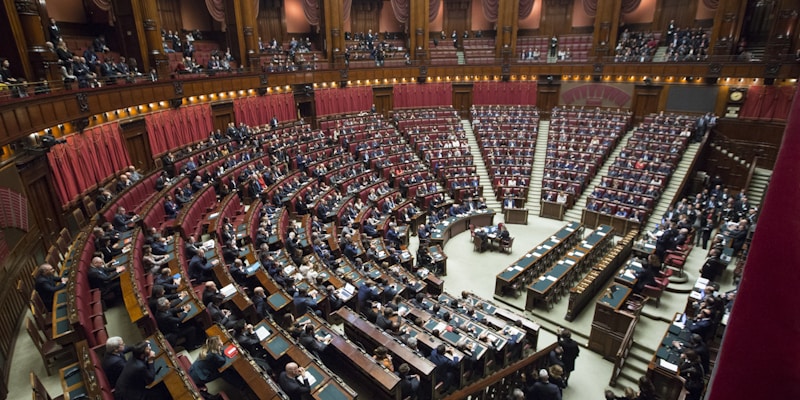
Pakistan-mediated talks between the US and Iran collapsed before they began. Photo: Unsplash
The gap between the two sides is structural, not procedural. Washington demands Iran halt its nuclear program and stop restricting shipping through the Strait of Hormuz. Tehran demands an end to US and Israeli military strikes and the lifting of the naval blockade that now chokes Iranian oil exports. Iran's President Masoud Pezeshkian said Tehran remained open to talks but that "breach of commitments, blockade and threats are main obstacles to genuine negotiations."
Trump's decision to cancel the delegation had immediate strategic consequences. The US has increased its naval presence in the Strait of Hormuz to block Iranian oil exports, through which roughly a fifth of the world's oil supply passes. Iran has restricted passage through the strait in response. The longer the standoff continues, the tighter the squeeze on global energy markets and the greater the risk of a miscalculation at sea that could trigger a direct military confrontation.
Meanwhile, Iran's economy is being reshaped by the war. The government has partly reversed a currency decision for basic items and is tapping into the country's sovereign wealth fund, signaling that the economic pressure from the blockade and strikes is beginning to bite internally. War is not just fought with missiles. It is fought with rial, with shipping lanes, with sovereign reserves.
Ukraine: The War That Keeps Burning
And then there is the war that never stops. On the same weekend, Russia launched its largest drone attack in days against Ukraine, firing over 600 drones and cruise missiles across the country. Five people died in Dnipro when an apartment building was struck. Two more were killed in Chernihiv. Odesa and Kharkiv were also targeted.
Ukrainian President Volodymyr Zelensky said the attack lasted "practically all night." British Typhoon jets were scrambled from Romania when Russian drones were detected near the border, though the UK Ministry of Defence clarified that no drones were shot down by British aircraft and that no Russian drones entered Romanian airspace.
Ukraine responded with some of its longest-range drone strikes yet, hitting targets in Yekaterinburg, almost 1,000 miles from the Ukrainian border. Six people were injured. A separate drone targeted an industrial facility in Chelyabinsk, though local officials said it was intercepted.

At least seven people were killed in Russian strikes across Ukraine overnight. Photo: Unsplash
On Friday, Zelensky met Saudi Arabia's Crown Prince Mohammed bin Salman for the second time in recent months, discussing air defense cooperation and joint military production. The Gulf states have a renewed interest in Ukraine's drone warfare expertise since coming under Iranian attack in recent weeks. The irony of geopolitics: a country under daily bombardment is now exporting warfare knowledge to nations that have their own reasons to fear the same threat.
Russia's Ministry of Defence claimed it shot down 127 drones over more than a dozen regions. The Russian state-linked TASS news agency also claimed Russian forces had taken control of Bochkove, a village in the Kharkiv region near the Ukrainian border. Ukraine has not commented on the claim, and it has not been independently verified.
The Global Pattern: Escalation Without Resolution
What connects these four conflicts is not just timing. It is the structural similarity of their failure modes. In each case, diplomatic frameworks exist on paper but lack enforcement mechanisms. Mali's junta promised security and delivered the opposite. The Hezbollah ceasefire permits both sides to keep fighting. The Iran ceasefire extension was used as cover for a blockade. Ukraine's "peace talks" have produced no peace.
The common thread: ceasefires that are not ceasefires, negotiations that are not negotiations, and diplomatic processes that serve as performance art while the killing continues.
In Mali, the state's response was to declare a nationwide alert, impose a curfew in Bamako from 21:00 to 06:00, and promise the violence would "not go unanswered." The junta's military confirmed fighting was continuing in Kidal, Kati, and other parts of the country. In other words, the response to the largest coordinated attack in years was the same response that has failed for six years: more patrols, more checkpoints, more promises.

The conflicts are structurally linked: failed ceasefires, broken negotiations, and the absence of enforcement. Photo: Unsplash
In Lebanon, Netanyahu's response to a failing ceasefire was to order more strikes. In Iran, Trump's response to stalled diplomacy was to cancel the diplomacy. In Ukraine, Putin's response to the impasse is more drones. Escalation is the only language any of these actors speak fluently.
The consequences cascade across borders. Iran's economic crisis, driven by the Hormuz blockade, increases domestic pressure on Tehran, which makes it less likely to concede in negotiations. Israel's continued strikes in Lebanon risk drawing Iran into a wider confrontation. Mali's instability sends refugees across the Sahel, destabilizing already fragile neighbors. Ukraine's drone exports to Gulf states create new military entanglements that could pull those states into conflicts they were trying to avoid.
What Comes Next
Mali: The death of the defense minister creates a power vacuum within the junta at the exact moment when the military faces its most serious coordinated challenge in years. If the FLA holds Kidal and pushes toward Gao, northern Mali could fragment into a patchwork of separatist and jihadist-controlled territories, reversing years of counter-insurgency gains and potentially triggering a broader regional crisis involving neighboring Niger and Burkina Faso, both also under military rule and facing their own insurgencies.
Lebanon: Netanyahu's order for "vigorous" attacks, combined with the 14 deaths on Sunday, suggests the ceasefire's final collapse is a matter of days, not weeks. Hezbollah's drone attack that killed an IDF soldier makes it politically impossible for Israel to de-escalate without appearing weak. The most likely trajectory is a return to full-scale conflict, with the question being whether it remains contained to southern Lebanon or expands into Beirut and beyond.
Iran: Araghchi's visit to Moscow on Monday will determine whether there is any diplomatic path left. If Russia signals willingness to pressure Iran toward a deal, there may be a narrow window. If Putin sees the US-Iran conflict as useful distraction from Ukraine, he will encourage intransigence. The oil market, which has been volatile since the Hormuz blockade began, will be the first indicator of which direction this goes.
Ukraine: The war grinds on with no resolution in sight. Zelensky's outreach to Gulf states is pragmatic but signals that Ukraine is looking for new patrons as Western support shows signs of fatigue. The Russian claim on Bochkove, if verified, represents continued incremental gains in the Kharkiv sector. Neither side has the capacity for a decisive breakthrough, and neither side is willing to accept the terms the other would demand for peace.
Timeline: April 26-27, 2026
Analysis: When All Ceasefires Are Fiction
April 2026's convergence of crises reveals a global pattern: the architecture of conflict resolution has been hollowed out. Ceasefires are declared but not enforced. Negotiations are announced but not conducted. Mediators are engaged but not empowered. The result is a world where violence escalates without constraint because the diplomatic tools that once imposed limits have been stripped of their enforcement mechanisms.
In Mali, a military government that overthrew a civilian regime on the promise of security has now lost its defense minister to the very insurgents it claimed to defeat. The presence of Russian mercenaries, brought in to fill the gap left by departing French and UN forces, has not prevented the collapse. In fact, the reported withdrawal from Kidal suggests the mercenaries may be part of the problem rather than the solution.
In Lebanon, a ceasefire that permits both sides to continue killing each other is not a ceasefire. It is a temporary reduction in the rate of death, which is cold comfort to the families of the 14 people killed on Sunday alone. The agreement's self-defence clause is so broadly written that any military action can be justified under it. This is not a design flaw. It is the design.
In Iran, the cancellation of the Islamabad talks reveals a fundamental asymmetry in how the two sides view the conflict. For Trump, the talks were a lever to extract concessions. When it became clear that Iran would not concede on nuclear enrichment or the Hormuz blockade without corresponding US concessions, the leverage vanished. Araghchi's diplomatic tour through Islamabad, Muscat, and Moscow suggests Iran is building a coalition of partners rather than seeking direct US engagement. Whether Putin will see this as an opportunity to deepen ties with Tehran or extract concessions of his own remains the key variable.
The structural lesson of this weekend is simple and bleak: when every ceasefire has an escape clause, every negotiation has a walk-away option, and every diplomatic process is designed to fail gracefully rather than succeed, the result is not peace. It is war with better public relations.

The architecture of conflict resolution has been hollowed out across multiple fronts. Photo: Unsplash
Sources
- BBC News - Mali Defence Minister Sadio Camara killed as country hit by rebel attacks
- BBC News - Trump cancels US envoys' trip to Pakistan for talks on Iran war
- BBC News - Netanyahu orders army to 'vigorously attack' Hezbollah in Lebanon
- BBC News - Israeli strikes kill 14 in Lebanon amid ongoing ceasefire
- BBC News - Seven dead in major Russian attack on Ukraine
- BBC News - Armed groups launch coordinated attacks across Mali
- Al Jazeera - Mali's Defence Minister Sadio Camara killed during coordinated attacks
- Al Jazeera - Hormuz standoff rolls on as Israel-Hezbollah truce rocked by fighting
BLACKWIRE | War & Conflict Desk | Published April 27, 2026 | Field report from Bamako, Beirut, and Islamabad