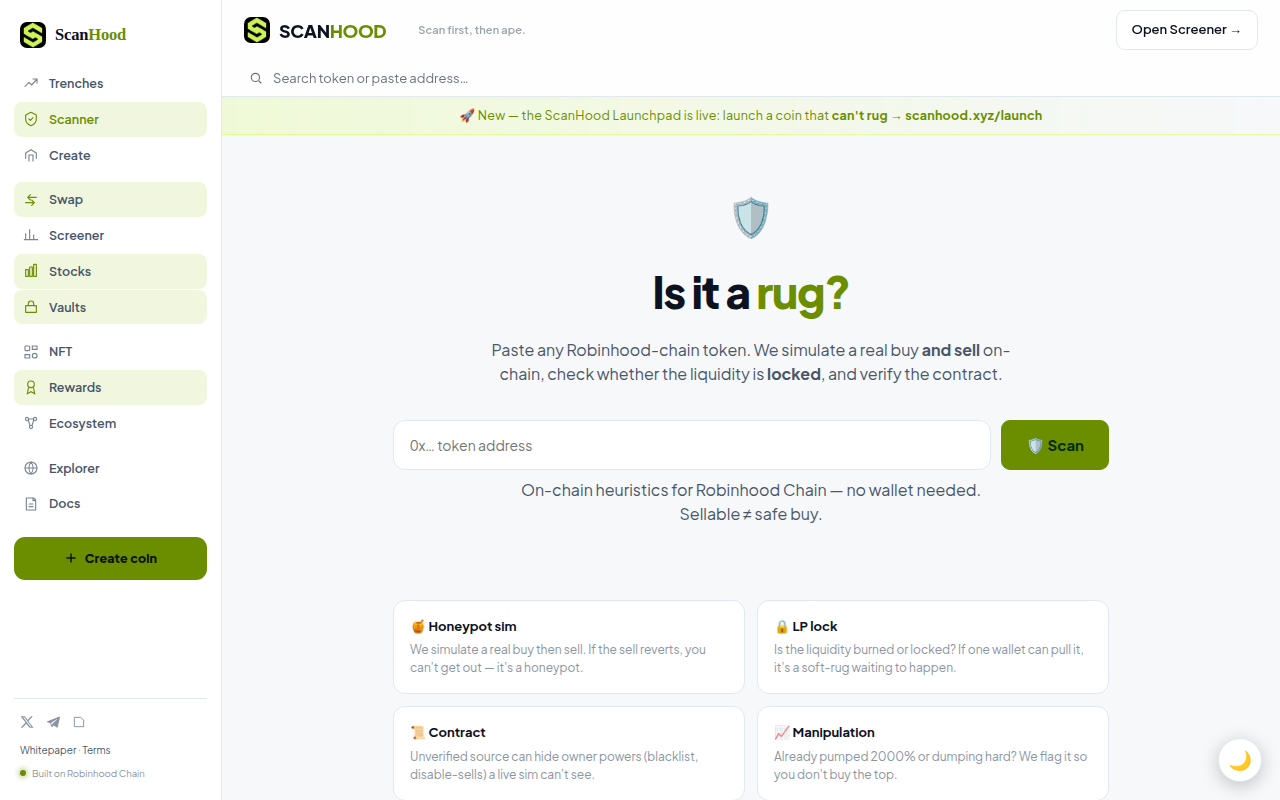
ScanHood's live scanner data reveals a staggering 7.2% failure rate among Robinhood-Chain tokens, with 471 tokens flagged as DANGER. The findings have significant implications for investor safety and regulatory oversight.
ROBINHOOD-CHAIN TOKENS UNDER FIRE: 7.2% FAIL RUG CHECK
_As the cryptocurrency market continues to evolve, the need for rigorous token vetting has never been more pressing. On 2026-08-06, ScanHood's live scanner revealed a staggering 7.2% failure rate among Robinhood-Chain tokens, sparking concerns over investor safety. The implications are far-reaching, with 6575 tokens scanned and 471 flagged as DANGER_
The cryptocurrency market is no stranger to risk, but the latest findings from ScanHood are a stark reminder of the dangers lurking in the shadows. On 2026-08-06, the live scanner revealed a staggering 7.2% failure rate among Robinhood-Chain tokens, with 471 tokens flagged as DANGER. As investors scramble to make sense of the data, one thing is clear: the need for token safety has never been more pressing. With the market on high alert, regulators, investors, and project developers must work together to address the issue of rug pulls and ensure a safer, more transparent cryptocurrency ecosystem.
ScanHood's Findings
ScanHood's live scan data from 2026-08-06 paints a dire picture: out of 6575 Robinhood-Chain tokens scanned, 742 passed the rug check, while 5362 were flagged for caution and 471 were flagged as DANGER. This translates to a 7.2% failure rate, a stark reminder of the risks inherent in the cryptocurrency market. Notably, the majority of flagged tokens were identified as cautionary, highlighting the need for investors to exercise extreme diligence.
Rug Pulls and Investor Risk
Rug pulls, a type of scam where developers abandon a project and abscond with investor funds, are a persistent threat in the cryptocurrency space. The 7.2% failure rate among Robinhood-Chain tokens underscores the importance of rigorous vetting and due diligence. Investors must be aware of the warning signs, including poorly defined project roadmaps, unclear tokenomics, and unresponsive development teams.
Regulatory Implications
The high failure rate among Robinhood-Chain tokens has significant implications for regulatory bodies. As the cryptocurrency market continues to grow, regulators will be forced to confront the issue of token safety head-on. This may involve increased oversight, stricter listing requirements, and more stringent penalties for non-compliant projects. The question remains: will regulators be able to keep pace with the rapidly evolving cryptocurrency landscape?
Investor Response
In the wake of ScanHood's findings, investors are advised to exercise extreme caution when navigating the Robinhood-Chain token ecosystem. This includes conducting thorough research, verifying project credentials, and maintaining a diversified portfolio. Furthermore, investors should be prepared for increased regulatory scrutiny, which may lead to heightened volatility in the market.
As the dust settles on ScanHood's findings, one thing is clear: the cryptocurrency market will never be the same. With investor safety hanging in the balance, the industry must come together to address the issue of rug pulls and create a more transparent, secure ecosystem. The clock is ticking – will regulators, investors, and project developers be able to rise to the challenge?
Sources: ScanHood live scan data, Robinhood-Chain token listings