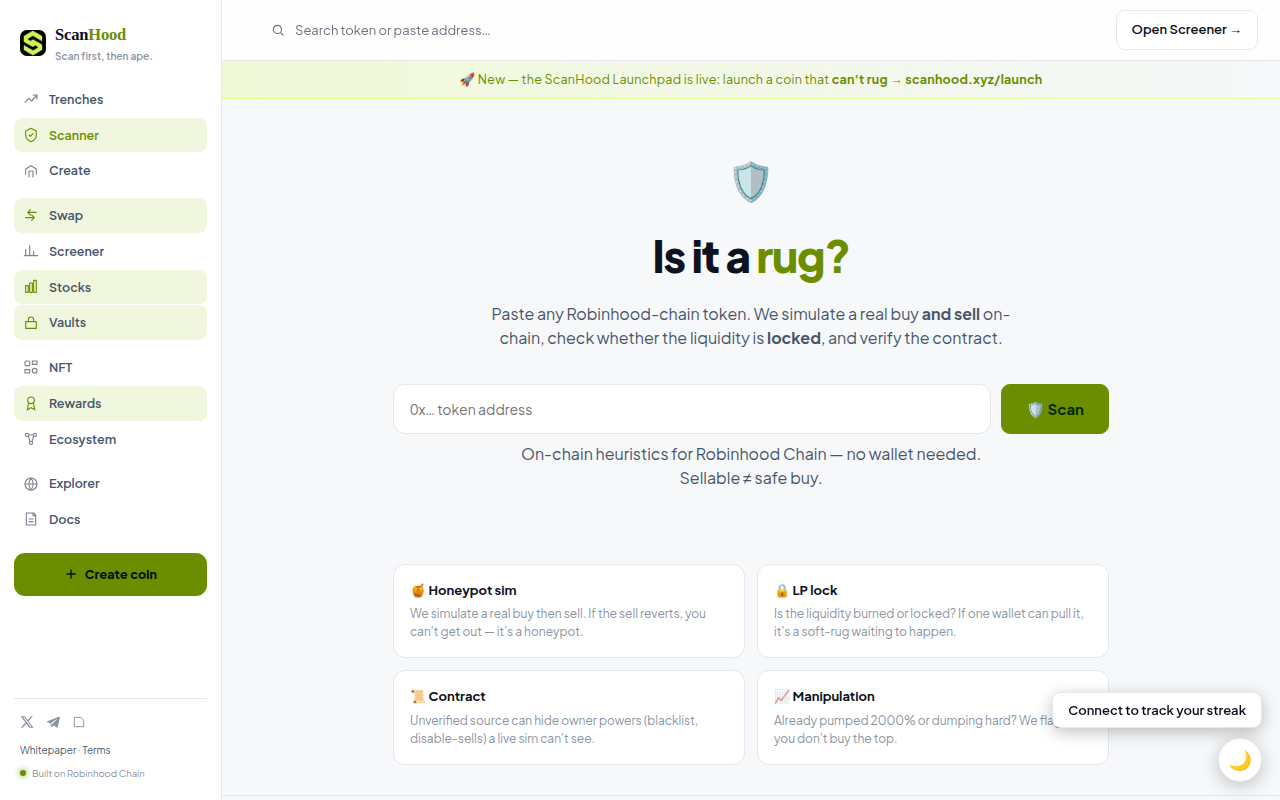
The cryptocurrency market is facing increased scrutiny, with a growing need for investor protection. ScanHood's live scanner is one tool being used to identify potential risks.
ROBINHOOD-CHAIN TOKENS UNDER SCRUTINY: 0.7% FAIL RUG CHECK
_As the cryptocurrency market continues to evolve, the need for rigorous security checks has never been more pressing. With the rise of decentralized finance (DeFi) and non-fungible tokens (NFTs), investors are increasingly vulnerable to scams and rug pulls. The latest scan data from ScanHood reveals a troubling trend, with 6 out of 870 tokens flagged as DANGER._
The cryptocurrency market has experienced a surge in growth in recent years, with the rise of decentralized finance (DeFi) and non-fungible tokens (NFTs) creating new opportunities for investors. However, this growth has also created new challenges, particularly in the area of token safety. On August 8, 2026, ScanHood's live scanner analyzed 870 Robinhood-Chain tokens, revealing a troubling trend. With 6 out of 870 tokens flagged as DANGER, investors are facing a significant risk of financial loss. The need for rigorous security checks has never been more pressing, and investors must take steps to protect themselves from scams and rug pulls.
The Rug Check Failure Rate
On August 8, 2026, ScanHood's live scanner analyzed 870 Robinhood-Chain tokens, with 0.7% failing the rug check. This translates to 6 tokens being flagged as DANGER, while 863 tokens were flagged with caution. The failed tokens pose a significant risk to investors, who may be unaware of the potential dangers lurking in the market. According to ScanHood's data, the majority of tokens (99.3%) passed the rug check, but the 0.7% failure rate is still a cause for concern.
Implications for DeFi Investors
The DeFi market has experienced rapid growth in recent years, with investors pouring billions of dollars into various tokens and projects. However, the lack of regulation and oversight has created an environment ripe for scams and rug pulls. The ScanHood data highlights the need for investors to exercise extreme caution when investing in DeFi tokens, as even a small percentage of failed rug checks can result in significant financial losses. Investors must conduct thorough research and due diligence before investing in any token, and consider using reputable scanners like ScanHood to minimize their risk exposure.
The Role of Central Banks in Regulating Cryptocurrency
As the cryptocurrency market continues to evolve, central banks are facing increasing pressure to regulate the industry. The rise of DeFi and NFTs has created new challenges for regulators, who must balance the need to protect investors with the need to promote innovation. The European Central Bank (ECB) and the Federal Reserve have both expressed concerns about the lack of regulation in the cryptocurrency market, and have called for greater oversight and transparency. However, the implementation of regulations will require a delicate balance between protecting investors and stifling innovation, and it remains to be seen how central banks will navigate this complex issue.
Conclusion and Recommendations
In conclusion, the ScanHood data highlights the need for investors to exercise extreme caution when investing in DeFi tokens. The 0.7% failure rate of the rug check is a cause for concern, and investors must take steps to minimize their risk exposure. To mitigate these risks, investors should conduct thorough research and due diligence before investing in any token, and consider using reputable scanners like ScanHood. Additionally, central banks and regulatory bodies must work together to create a framework for regulating the cryptocurrency market, one that balances the need to protect investors with the need to promote innovation.
As the cryptocurrency market continues to evolve, the need for investor protection has never been more pressing. With the rise of DeFi and NFTs, investors are facing new challenges and risks, and it is imperative that they take steps to minimize their risk exposure. The ScanHood data serves as a stark reminder of the dangers lurking in the market, and investors must remain vigilant to avoid financial loss.
Sources: ScanHood live scan data, European Central Bank, Federal Reserve