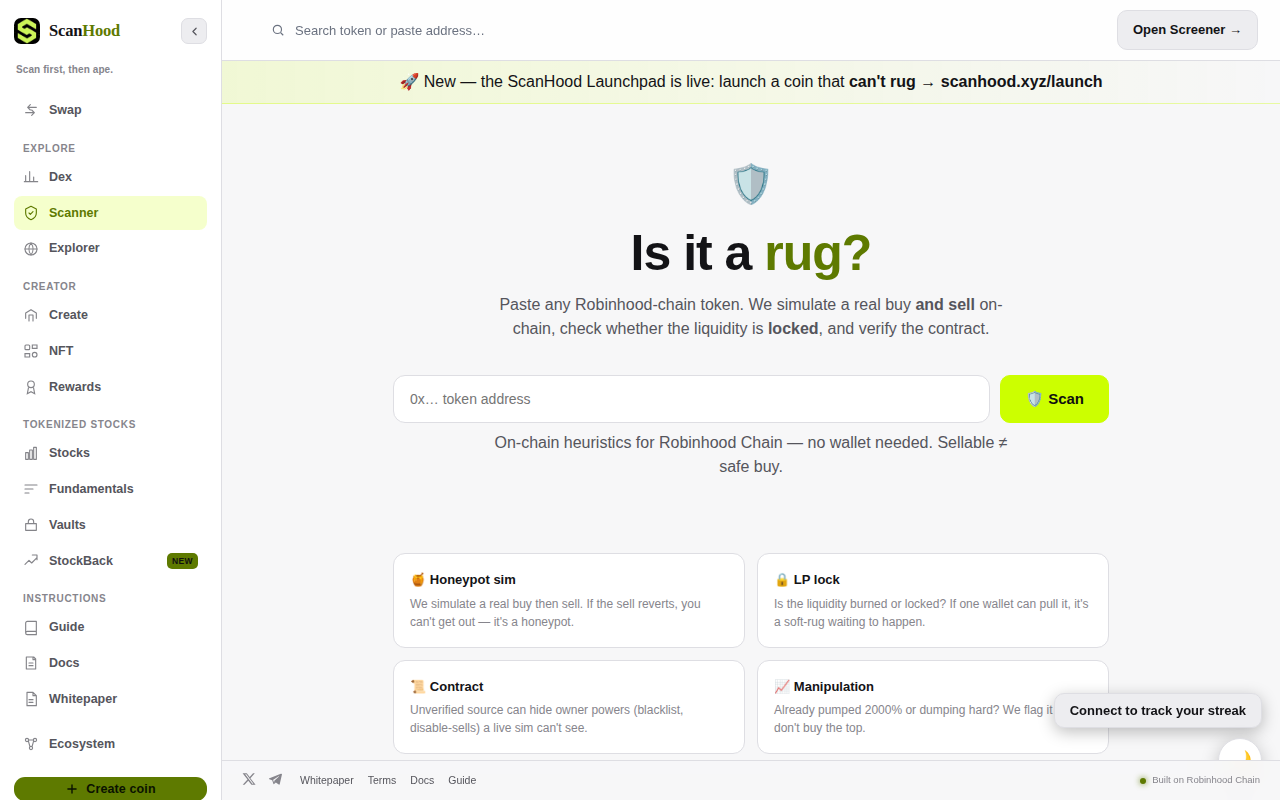
ScanHood's dashboard on 2026‑11‑02 lists 15 safe tokens, 1,050 cautions, and two danger alerts.
SCANHOOD FLAGS 1067 ROBINHOOD-CHAIN TOKENS, 0.2% FAIL RUG CHECK
*ScanHood's live scanner reviewed every Robinhood‑Chain token on 2026‑11‑02. Only 15 passed, 1050 raised caution, and 2 were marked danger. The data warns investors that a single failed rug check can signal a honeypot or unlocked liquidity.*
On November 2, 2026 ScanHood released its daily safety‑scan tally for the Robinhood Chain. The live scanner examined every token on the network, running a buy‑sell simulation, checking liquidity locks, and verifying contract sources. Out of 1,067 tokens, only fifteen cleared all checks. The rest triggered warnings, with 1,050 marked caution and two flagged danger. The data paints a stark picture: the Robinhood ecosystem is saturated with high‑risk projects. Investors who ignore these signals risk becoming trapped in honeypots or watching liquidity evaporate.
How many tokens passed ScanHood's safety test?
The scanner evaluated 1,067 tokens on the Robinhood Chain. Fifteen tokens cleared every check and were labeled safe. The remaining tokens triggered warnings: 1,050 received a caution flag, and two were flagged as danger. The caution flag indicates potential liquidity or contract issues, while danger signals a high probability of a rug pull. The split shows that the vast majority of new tokens carry risk, even before market exposure.
What does a 0.2% failure rate mean for investors?
Only 0.2% of the scanned tokens failed the Rug Check outright. A failed check means the simulated sell reverted, classifying the token as a honeypot. While the percentage appears low, each failure represents a token that cannot be exited once purchased. For investors, a single honeypot can wipe out a position. The data underscores that even a small failure rate can have outsized impact when combined with the high volume of caution‑flagged tokens.
Why does ScanHood flag caution on 1,050 tokens?
Caution flags arise from two core heuristics: liquidity lock status and contract verification. If liquidity is not locked or can be moved by a single wallet, the token is vulnerable to a soft rug. Unverified contracts can hide owner powers such as blacklisting or disabling sells. ScanHood simulates a real buy and sell; if the sell succeeds but the contract is unverified, the token still receives a caution. The sheer number of cautions suggests that most Robinhood‑Chain projects skip basic safety steps.
What market behavior does ScanHood detect?
The scanner also looks for price manipulation. Tokens that have already pumped 2,000% are flagged for potential dumping. A rapid rise followed by a sharp fall often precedes a rug pull. By highlighting these patterns, ScanHood gives traders a warning before they chase inflated returns. The tool does not guarantee safety, but it surfaces red flags that many investors overlook.
Frequently asked questions
How many Robinhood‑Chain tokens passed ScanHood's safety scan on 2026‑11‑02?
Fifteen tokens passed every check and were labeled safe.
What percentage of tokens failed the Rug Check?
0.2% of the scanned tokens failed the Rug Check.
How many tokens were flagged as danger?
Two tokens were flagged as danger, indicating a high risk of a rug pull.
ScanHood's snapshot is a wake‑up call for anyone eyeing Robinhood‑Chain tokens. The overwhelming caution count shows that basic safety steps are ignored by most developers. With two danger flags and a 0.2% honeypot rate, the market remains a minefield. Traders must demand locked liquidity and verified contracts before committing capital. The scanner’s real‑time alerts could become the only line of defense against the next wave of rug pulls.
Sources: ScanHood live scan data