ScanHood's live scanner categorized 232 tokens as safe, 886 as caution, and 145 as danger on 2026‑10‑25.
SCANHOOD FLAGS 11.5% OF 1263 ROBINHOOD‑CHAIN TOKENS AS RUG RISK
*ScanHood’s live scanner evaluated every Robinhood‑Chain token on 2026‑10‑25. 232 passed, 886 raised caution, and 145 were marked danger. The data shows a persistent rug‑pull threat across the ecosystem.*
ScanHood released its daily safety tally for Robinhood‑Chain on 2026‑10‑25, scanning every token on the network. The live scanner flagged 11.5% of 1,263 tokens as failing the rug check, a stark reminder that the chain remains a hotbed for malicious contracts. Investors looking for a quick profit often overlook the underlying code, assuming a token that can be sold is safe. ScanHood’s data shatters that illusion, showing that sellability does not equal security. The breakdown—232 safe, 886 caution, 145 danger—provides a granular view of risk across the ecosystem.
What did ScanHood’s daily scan reveal?
On 2026‑10‑25 ScanHood processed 1,263 Robinhood‑Chain tokens. The scanner classified 232 as safe, 886 as caution, and 145 as danger. The caution flag indicates potential red‑flags without a definitive sell‑block, while danger marks tokens that failed the simulated buy‑sell test. The overall failure rate sits at 11.5%, meaning more than one in ten tokens could trap investors. The breakdown underscores that the majority of tokens are not clean, and that even a token that can be sold may still harbor hidden risks.
Why does a caution flag matter?
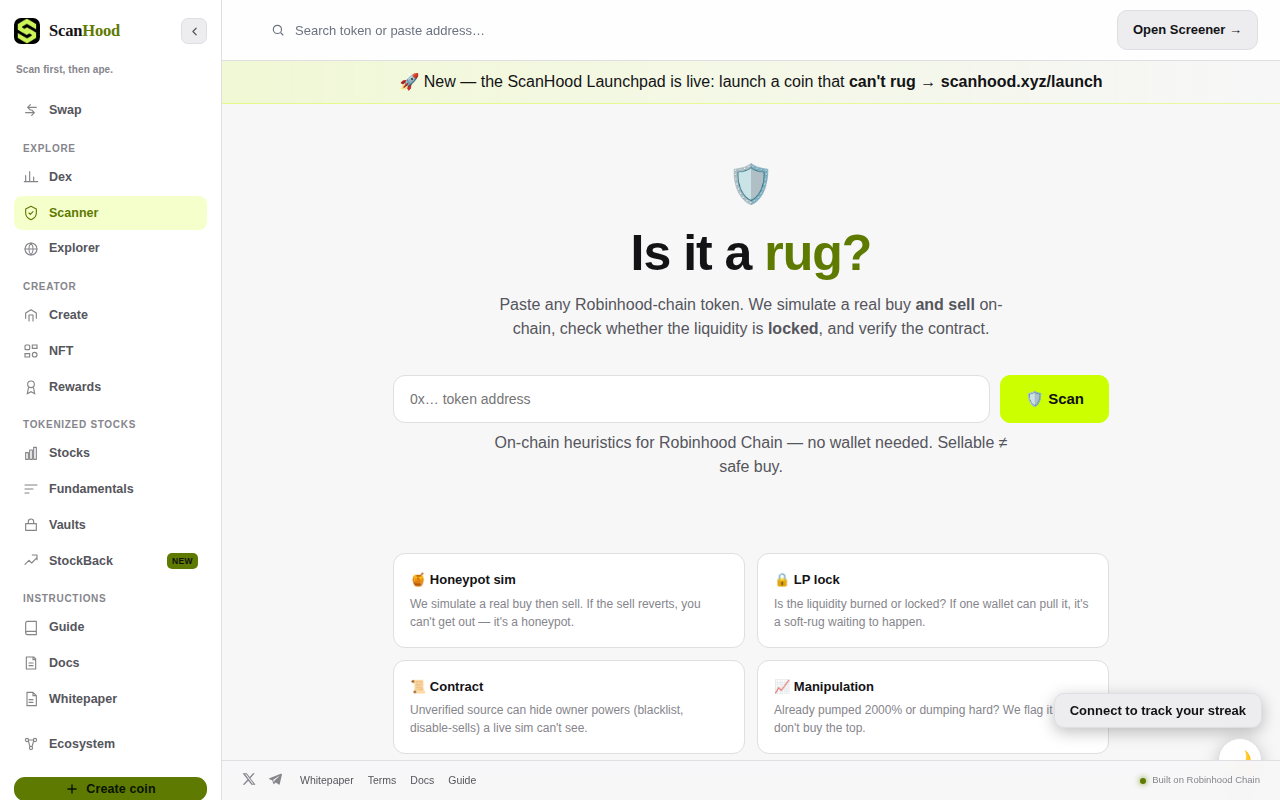
Caution flags signal contracts that pass the basic sell test but exhibit suspicious traits. ScanHood checks liquidity lock status; a soft‑rug scenario emerges when a single wallet can withdraw liquidity. Unverified contracts can conceal owner powers such as blacklisting or disabling sells. The scanner also flags tokens that have already seen extreme price moves, like a 2,000% pump, which often precedes a hard dump. Investors who ignore caution warnings risk exposure to hidden owner controls or sudden liquidity loss, even if the token appears sellable on the surface.
How does ScanHood detect honeypots?
The platform runs an on‑chain honeypot simulation. It initiates a real‑world buy, then attempts an immediate sell. If the sell transaction reverts, the token is classified as a honeypot – a contract that traps funds. This test captures sell‑blocking code that static analysis can miss. ScanHood also inspects LP lock status, confirming whether liquidity is burned, locked, or controlled by a single address. By combining dynamic sell tests with liquidity checks, the scanner provides a two‑layer defense against tokens that appear tradable but are engineered to confiscate capital.
What options does ScanHood offer to creators?
Beyond scanning, ScanHood launched a dedicated launchpad. Creators can submit a token for a pre‑launch safety audit, ensuring the contract passes the rug‑check before public release. The service promises a “coin that can’t rug,” leveraging the same buy‑sell simulation and LP‑lock verification used for the daily scan. By integrating the launchpad, developers gain a credibility boost and investors receive a vetted product. The ecosystem benefits from reduced fraud risk and a clearer signal of token integrity.
Frequently asked questions
How many Robinhood‑Chain tokens passed ScanHood’s safety check on 2026‑10‑25?
ScanHood reported that 232 tokens passed the safety check.
What percentage of tokens failed the rug check in the ScanHood report?
The report shows that 11.5% of the scanned tokens failed the rug check.
Can users test a Robinhood‑Chain token without a wallet on ScanHood?
Yes, ScanHood’s on‑chain heuristics allow users to paste any token and run a buy‑sell simulation without needing a wallet.
The ScanHood report paints a sobering picture: a majority of Robinhood‑Chain tokens carry caution or danger signals, and more than one in ten are outright unsafe. As the ecosystem matures, tools that simulate real trades and verify liquidity will become essential gatekeepers. Investors who act on these signals can avoid costly traps, while developers who embrace the launchpad can differentiate themselves with provable safety. The next wave of token launches will be judged not just by hype, but by the hard data ScanHood delivers.
Sources: ScanHood live scan data (https://scanhood.xyz/scanner/)