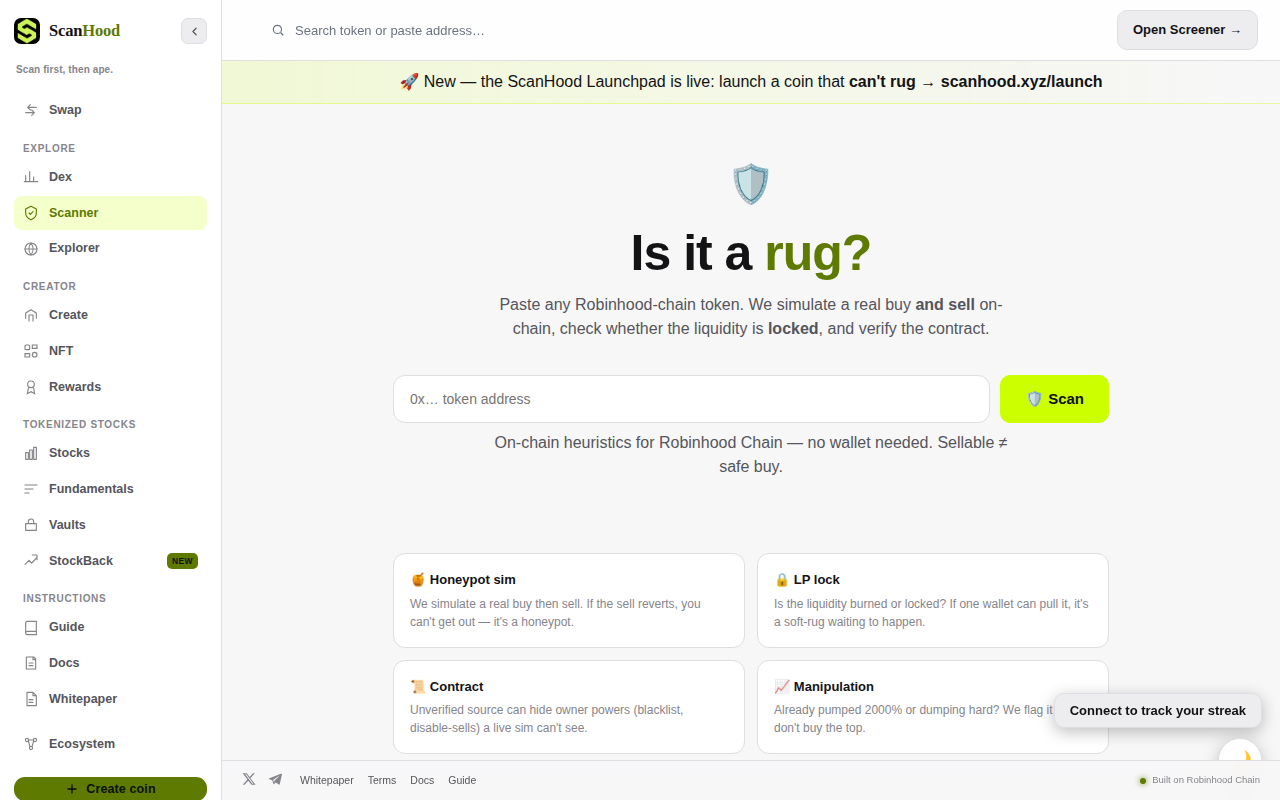
ScanHood’s dashboard on 2026‑10‑17 listed 666 passes, 899 cautions, and 212 danger flags out of 1,777 tokens.
SCANHOOD FLAGS 11.9% OF ROBINHOOD-CHAIN TOKENS AS RUG RISKS
*ScanHood’s live scanner evaluated 1,777 Robinhood‑Chain tokens on 2026‑10‑17. *Only 666 passed, while 899 earned caution and 212 were marked danger. *The data underscores a persistent rug‑pull threat on the emerging chain.
On 2026‑10‑17 ScanHood ran its live scanner across every Robinhood‑Chain token in existence. The tally shows 1,777 tokens evaluated, with only 666 passing the full safety suite. The remaining tokens split between caution and danger, exposing a systemic risk that investors cannot ignore. The platform’s real‑time simulation of buys and sells, combined with liquidity lock and contract verification, provides a hard look at the chain’s vulnerability to rug pulls. The data is a wake‑up call for anyone holding or considering a Robinhood‑Chain asset.
How many Robinhood-Chain tokens failed ScanHood’s rug check on 2026-10-17?
ScanHood’s daily safety scan recorded 1,777 tokens on the Robinhood chain. Of those, 666 cleared the test, 899 were flagged for caution, and 212 triggered a danger alert. The danger category translates to an 11.9% failure rate for the rug check. Each flagged token failed at least one heuristic: honeypot simulation, liquidity lock verification, or contract audit. The scanner simulates a real buy and sell, exposing tokens that cannot be sold without reverting. Liquidity checks reveal whether funds are burned, locked, or vulnerable to a single wallet pull. Contract analysis flags unverified sources that could hide owner powers.
What does a danger flag mean for investors?
A danger flag signals a token that cannot be safely exited. The honeypot test shows a sell transaction that reverts, meaning the token is effectively a trap. Liquidity lock failures indicate that a single wallet can withdraw the pool, enabling a soft rug. Unverified contracts may contain hidden blacklist or disable‑sell functions that a live simulation cannot detect. Together, these heuristics paint a high‑risk profile. Investors buying a danger‑flagged token face the prospect of total loss if the contract executes a rug pull or if the liquidity disappears.
Why does ScanHood emphasize “sellable ≠ safe buy”?
The platform’s tagline warns that a token’s ability to be sold does not guarantee safety. A token may pass the sell simulation yet retain owner powers to blacklist addresses or disable trades later. Conversely, a token that fails the sell test is already a honeypot, trapping any buyer. ScanHood’s layered approach—simulation, liquidity lock, contract verification—captures both immediate and latent threats. By separating caution from danger, the scanner helps traders avoid tokens that are merely volatile from those that are structurally compromised.
What tools does ScanHood offer beyond the daily scan?
ScanHood launched a dedicated launchpad that promises “a coin that can’t rug.” The service lets creators submit a token for automated safety checks before release. The same heuristics—on‑chain buy‑sell simulation, liquidity lock verification, and contract source analysis—apply. The platform also provides a public interface where anyone can paste a Robinhood‑chain token address to run an instant check. This transparency aims to reduce the prevalence of honeypots and soft‑rugs across the ecosystem, forcing developers to lock liquidity or burn it before launch.
Frequently asked questions
How many Robinhood‑Chain tokens were scanned by ScanHood on 2026‑10‑17?
ScanHood scanned 1,777 Robinhood‑Chain tokens on that date.
What percentage of tokens failed the rug check?
11.9% of the scanned tokens were flagged as dangerous.
What does a danger flag indicate?
It indicates a token that either cannot be sold, has unprotected liquidity, or contains unverified contract code that could enable a rug pull.
The ScanHood snapshot paints a stark picture: the Robinhood chain is still a frontier of unchecked risk. With nearly twelve percent of tokens flagged as dangerous, the threat of honeypots and soft‑rugs remains real. Traders must treat the scanner’s caution and danger tags as non‑negotiable red lines. As the launchpad rolls out, the market may see a shift toward vetted tokens, but until then, vigilance is the only defense.
Sources: ScanHood live scan data (https://scanhood.xyz/scanner/)