ScanHood's daily scan categorized 228 tokens as safe, 894 as caution, and 154 as danger.
SCANHOOD FLAGS 12.1% OF 1276 ROBINHOOD-CHAIN TOKENS AS RUG RISKS
*Daily ScanHood data shows a sizable share of Robinhood‑Chain tokens failing safety checks. Investors face a real threat of honeypots and soft‑rugs. The scanner’s three‑tier flag system separates passable projects from cautionary and dangerous ones.*
ScanHood released its daily safety‑scan tally for Robinhood‑Chain on 2026-10-24, revealing a stark risk landscape. Out of 1,276 tokens examined, 228 cleared all checks, 894 were flagged for caution, and 154 triggered a DANGER alert. The scanner flagged 12.1% of tokens as failing the Rug Check, a metric that combines honeypot detection, liquidity lock status, contract verification, and price‑manipulation analysis. Investors relying on the Robinhood ecosystem now have a granular view of which assets could disappear overnight or trap funds forever.
What does ScanHood's daily safety scan reveal?
On 2026-10-24 ScanHood's live scanner processed 1,276 Robinhood‑Chain tokens. The results split into three categories: 228 tokens passed the Rug Check, 894 received a caution flag, and 154 were marked DANGER. The caution flag indicates potential issues that merit further scrutiny, while DANGER signals high‑risk contracts that could rug or trap investors. Overall, 12.1% of the tokens failed the Rug Check, highlighting a non‑trivial exposure to malicious code or liquidity traps on the chain.
How does ScanHood determine a token's risk?
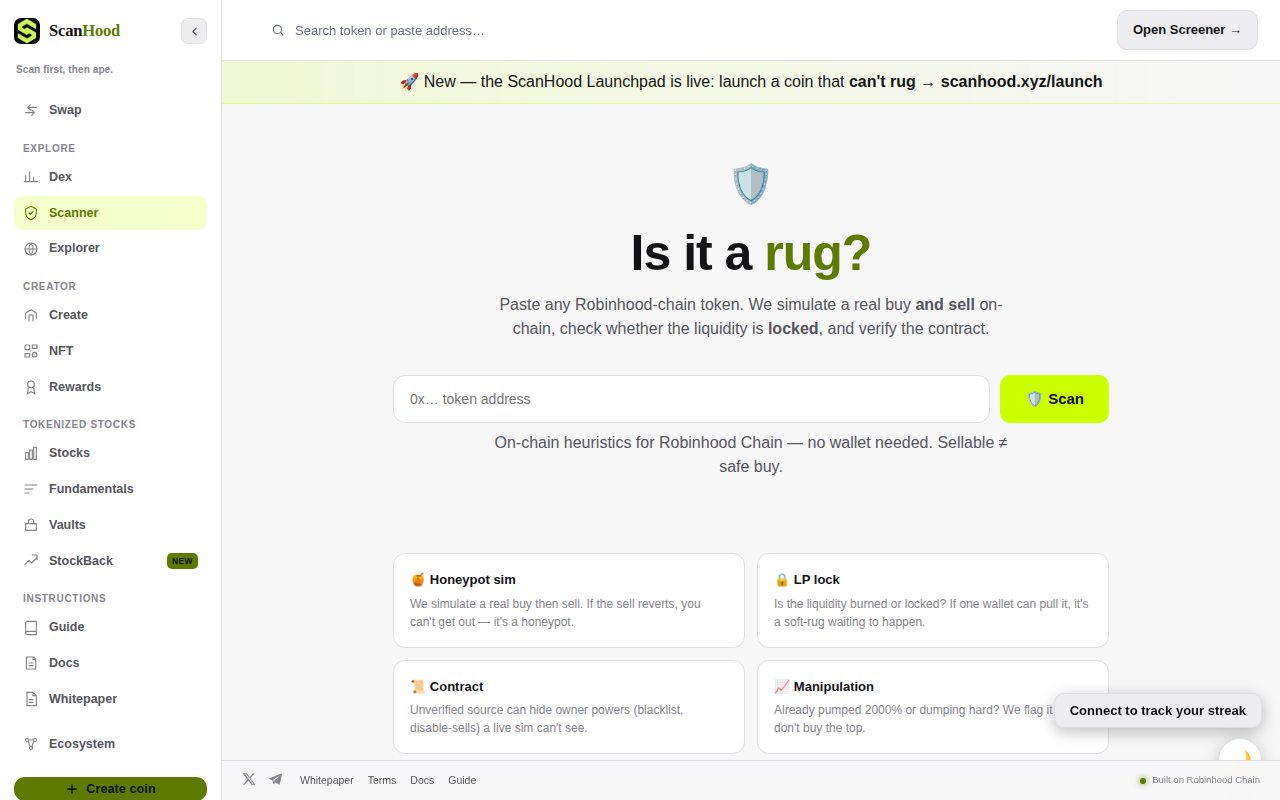
ScanHood runs an on‑chain simulation that mimics a real buy followed by a sell. If the sell transaction reverts, the token is classified as a honeypot, meaning investors cannot exit their position. The scanner also checks liquidity status: locked or burned liquidity passes, while a single wallet with pull rights triggers a soft‑rug warning. Contract verification looks for hidden owner powers such as blacklisting or disabling sells. Finally, price manipulation is flagged by detecting abnormal 2,000% pumps or rapid dumps, adding another layer of risk assessment.
Why does a caution flag matter for investors?
A caution flag does not guarantee safety, but it signals red flags that merit deeper due diligence. Tokens in this tier may have partially locked liquidity, unverified contracts, or minor sell‑revert anomalies. Investors who ignore caution warnings risk exposure to future rug pulls or sudden price crashes. The large volume—894 tokens—under caution underscores the prevalence of borderline projects on Robinhood‑Chain. Treating caution‑flagged tokens as high‑risk assets can prevent capital loss while the market matures.
What tools does ScanHood offer to avoid rug pulls?
Beyond the scanner, ScanHood launched a dedicated launchpad that promises to mint coins that cannot rug. The platform automates liquidity lock verification and contract audit before a token goes live. By integrating the same honeypot simulation and LP‑lock checks used in the scanner, the launchpad aims to eliminate soft‑rugs at inception. Developers can submit their code, receive a safety badge, and list with investor confidence. This proactive approach seeks to reduce the 12.1% failure rate observed in daily scans.
Frequently asked questions
How many Robinhood-chain tokens did ScanHood scan on 2026-10-24?
ScanHood scanned 1,276 Robinhood-chain tokens on 2026-10-24.
What percentage of tokens failed the Rug Check?
12.1% of the scanned tokens failed the Rug Check.
How many tokens were flagged as DANGER?
154 tokens were flagged DANGER in the ScanHood report.
The ScanHood data paints a sobering picture: a majority of Robinhood‑Chain tokens carry cautionary warnings, and a notable slice are outright dangerous. As the ecosystem expands, the scanner’s three‑tier system offers a vital early‑warning mechanism. Coupled with the new launchpad, developers and investors have tools to weed out malicious projects before capital is at risk. Ignoring these signals invites loss; heeding them could steer the market toward greater transparency and safety.
Sources: ScanHood live scan data, https://scanhood.xyz/scanner/