ScanHood's live scanner tallied 352 passes, 1,108 cautions, and 210 danger flags among 1,670 Robinhood‑Chain tokens on October 23.
SCANHOOD FLAGS 12.6% OF 1670 ROBINHOOD TOKENS AS RUG RISK OCT 23
*On October 23, ScanHood scanned every Robinhood‑Chain token in circulation. *12.6% failed its Rug Check, while the majority landed in caution or danger zones. *Investors face a stark safety landscape on a chain notorious for honeypots.
On October 23, ScanHood delivered a comprehensive safety audit of every token on the Robinhood‑Chain. The live scanner processed 1,670 contracts, delivering a stark snapshot of risk across the ecosystem. Only 352 tokens cleared all checks, while the bulk—1,108—were marked caution and 210 danger. The numbers translate to a 12.6% failure rate on the Rug Check, a metric that flags tokens unable to complete a simulated sell. For investors, the data is a wake‑up call: the Robinhood chain remains a hotbed for honeypots and liquidity traps. ScanHood’s real‑time heuristics expose these threats without requiring a wallet, forcing traders to confront the true safety of each token before committing capital.
What does the ScanHood daily safety scan reveal?
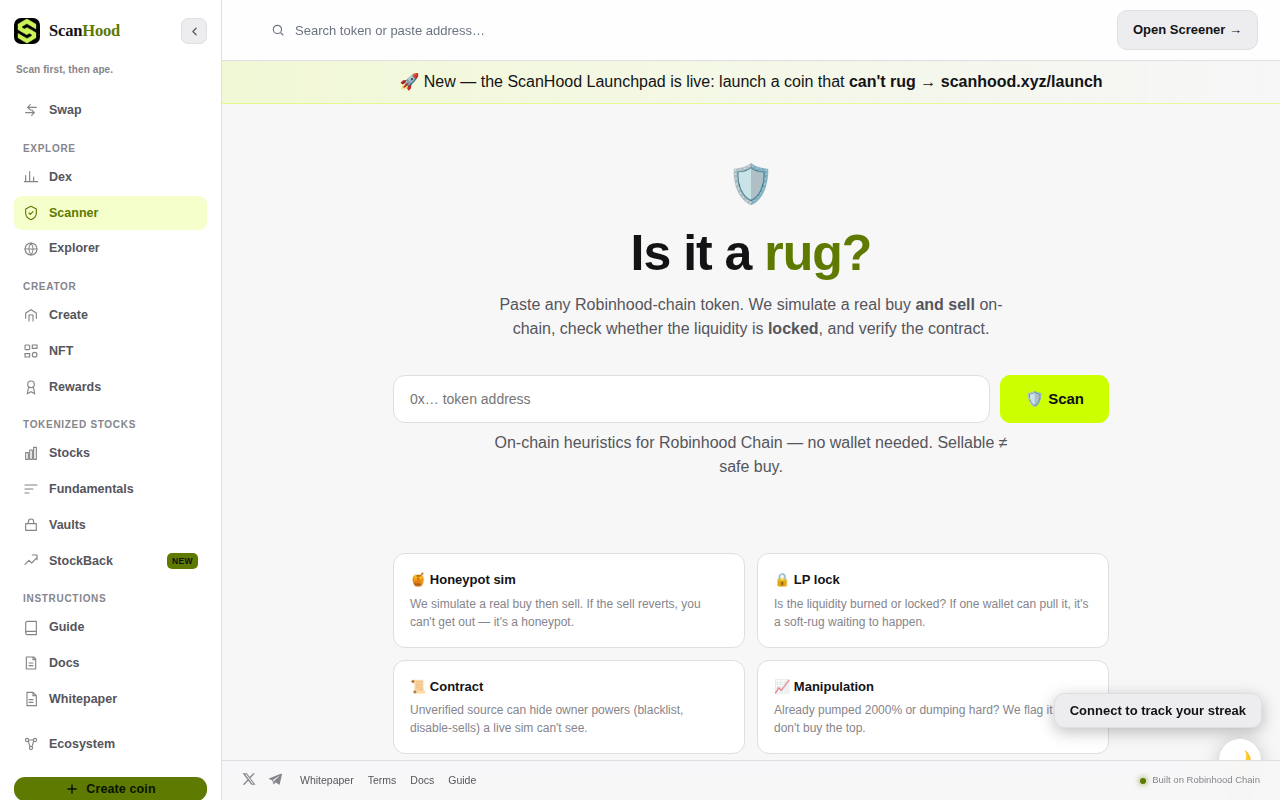
ScanHood processed 1,670 Robinhood‑Chain tokens on 2026‑10‑23. The scanner returned three outcomes: 352 tokens passed, 1,108 were flagged with a caution label, and 210 received a danger flag. The tool simulates a real on‑chain buy and sell to detect honeypots, checks whether liquidity is locked or burned, and inspects contract verification. A pass means the token cleared all simulated tests, but it does not guarantee market safety. Caution indicates potential red flags that merit deeper scrutiny, while danger signals clear exploit risk. The data paints a chain where the majority of tokens raise at least one safety concern.
How many tokens failed the Rug Check?
The Rug Check failed for 12.6% of the tokens scanned on October 23. In raw terms, that translates to a subset of the 1,670 tokens that did not clear the honeypot simulation or liquidity lock verification. Those tokens are flagged as unsafe for investors who intend to buy and later sell. The failure rate underscores the prevalence of malicious code or weak liquidity controls on the Robinhood chain, reinforcing the need for on‑chain verification before any transaction.
What does a 'caution' flag mean on ScanHood?
A caution flag appears when the scanner detects anomalies that do not outright block a sell but suggest hidden risk. This can include contracts with unverified source code, owner powers that could blacklist users, or liquidity that is not fully locked. The tool’s heuristics simulate a trade; if the sell transaction does not revert but the contract shows suspicious patterns, the token lands in the caution bucket. Investors should treat caution‑flagged tokens as high‑risk and conduct additional due diligence before allocating capital.
Can creators launch a rug‑proof token with ScanHood?
Yes. ScanHood recently launched a dedicated launchpad that promises a coin that cannot rug. The service runs the same on‑chain simulations and liquidity checks before allowing a token to go live. By requiring a verified contract and locked or burned liquidity, the launchpad aims to eliminate the most common rug‑pull vectors. While the platform cannot guarantee market performance, it removes the technical avenues that enable honeypot scams and soft‑rugs.
Frequently asked questions
How many Robinhood‑Chain tokens did ScanHood scan on October 23?
ScanHood scanned 1,670 tokens on 2026‑10‑23.
What percentage of tokens failed the Rug Check?
12.6% of the scanned tokens failed the Rug Check.
How many tokens were flagged as danger?
210 tokens received a danger flag in the ScanHood tally.
The ScanHood snapshot leaves no room for complacency. With over two‑thirds of tokens flagged for caution or danger, the Robinhood chain demands rigorous on‑chain verification before any trade. The launchpad’s promise of rug‑proof tokens may raise the baseline safety, but investors must still vet market dynamics. As the ecosystem evolves, tools like ScanHood will become the first line of defense against the next wave of crypto scams.
Sources: ScanHood live scan data (https://scanhood.xyz/scanner/)