ScanHood flagged 1,568 tokens with caution and 272 with danger, underscoring high risk on Robinhood‑Chain.
SCANHOOD FLAGS 12.6% OF 2156 ROBINHOOD-CHAIN TOKENS AS RUG RISKS
*ScanHood's live scanner evaluated every Robinhood‑Chain token on Oct 27, 2026. Only 316 passed cleanly while 12.6% failed the rug check, highlighting a volatile market.*
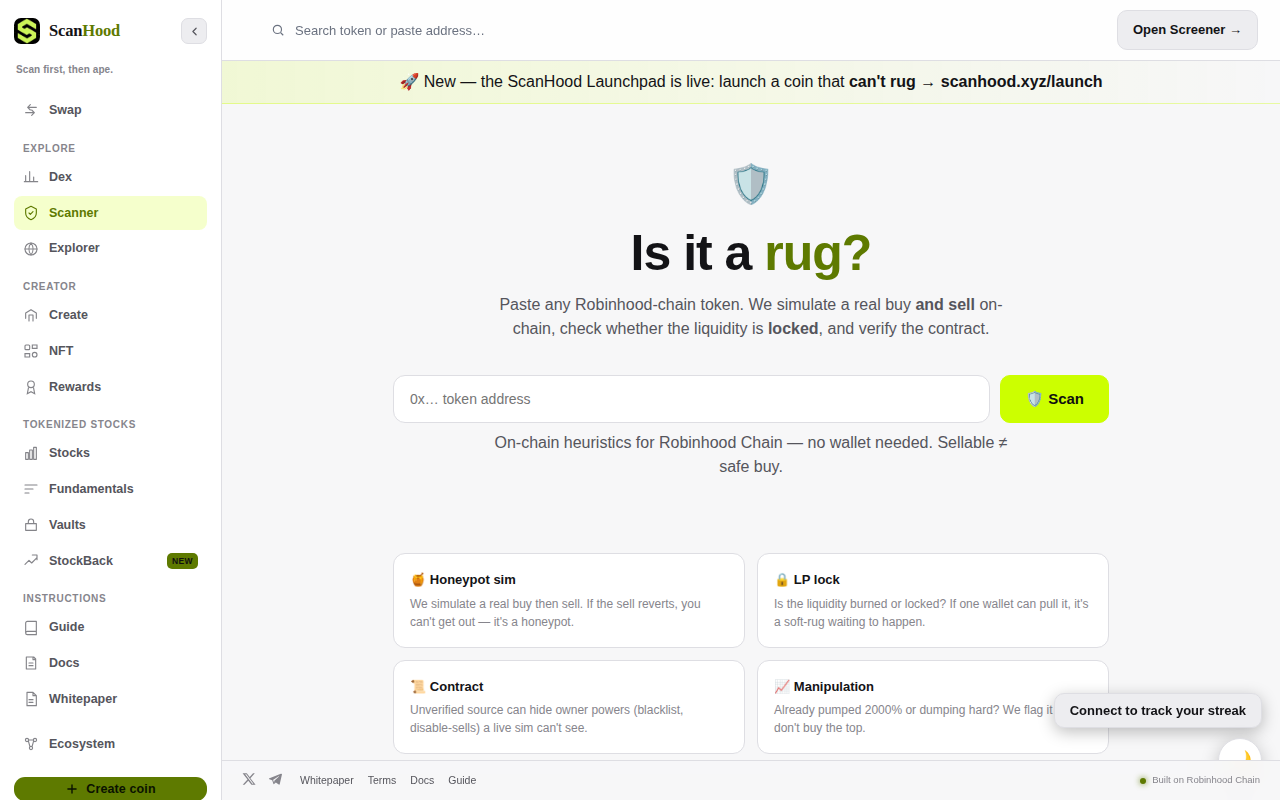
On October 27, 2026 ScanHood's live scanner processed every Robinhood‑Chain token on record—2,156 contracts in a single day, operating without a wallet, pulling data directly from the chain, and delivering instant risk grades. The tool runs a buy‑then‑sell simulation, checks liquidity lock status, and inspects contract verification, flagging tokens that could trap investors. The results are stark: 316 tokens cleared all checks, 1,568 received a caution flag, and 272 were marked DANGER. Overall, 12.6% of the scanned tokens failed the rug check, signaling a high risk environment for traders chasing new DeFi projects on Robinhood Chain. Such a distribution underscores the urgency for due‑diligence before any purchase.
What does ScanHood's daily safety scan reveal?
The scanner evaluated 2,156 Robinhood‑Chain tokens on 2026‑10‑27. Of those, 316 passed every test, earning a clean bill of health. 1,568 tokens triggered a caution flag, indicating potential issues such as unverified contracts or soft‑rug liquidity. 272 tokens were labeled DANGER, meaning the simulated sell reverted or the liquidity could be pulled by a single wallet. The overall failure rate sits at 12.6%, calculated from the 272 DANGER tokens plus any that did not meet the full criteria. These figures illustrate a market where the majority of new tokens carry at least a warning, and a sizable minority poses outright exit barriers.
Why does a caution flag matter for traders?
Traders often mistake a caution flag for a safe buy, but ScanHood draws a clear line. A caution label appears when the contract is unverified, when ownership functions exist that could blacklist addresses, or when liquidity is not fully locked. These conditions do not guarantee an immediate loss, yet they expose the token to manipulation or future rug pulls. The scanner’s heuristic warns that a token flagged caution should be approached with heightened scrutiny, especially if price spikes suggest pump‑and‑dump activity. Ignoring the caution can lead to sudden value collapse once hidden controls are exercised.
How does ScanHood detect honeypots and liquidity risks?
ScanHood runs a live on‑chain buy, then immediately attempts a sell. If the sell transaction reverts, the token is classified as a honeypot—investors cannot exit. The tool also checks whether liquidity provider (LP) tokens are burned or locked. If a single address retains control, the liquidity is deemed soft‑rug, meaning the owner could withdraw funds at any time. Contract verification is another layer; unverified source code can hide owner powers such as blacklisting or disabling sells. By combining these heuristics, ScanHood delivers a composite risk score that flags tokens before capital is committed.
What are the broader implications for Robinhood‑Chain investors?
The 12.6% failure rate signals that rug pulls remain a persistent threat on Robinhood Chain. With only 316 tokens passing cleanly, the majority of new projects carry at least a warning sign. Investors who ignore caution or danger flags risk losing funds to contracts that can lock or drain liquidity. The data also pressures developers to lock LP tokens and verify contracts to avoid being blacklisted by scanners. As ScanHood’s launchpad promises to mint coins that cannot rug, the market may see a shift toward pre‑vetted tokens, but the onus remains on traders to heed the scanner’s real‑time alerts.
Frequently asked questions
What percentage of Robinhood‑Chain tokens failed the rug check on 2026‑10‑27?
12.6% of the 2,156 scanned tokens failed the rug check.
How many tokens passed ScanHood's safety scan on that day?
316 tokens passed all checks.
How many tokens were flagged as DANGER?
272 tokens were flagged DANGER.
The ScanHood snapshot is a warning bell for anyone eyeing the Robinhood‑Chain boom. With three‑quarters of tokens flagged for caution or danger, the ecosystem cannot afford complacency. Traders must treat the scanner’s alerts as a prerequisite step, not an optional tool. As the platform rolls out a launchpad that guarantees non‑rug coins, the market will test whether pre‑screened projects can restore confidence. Until then, the data suggests that due diligence will separate the few viable assets from the sea of risky experiments.
Sources: ScanHood live scan data