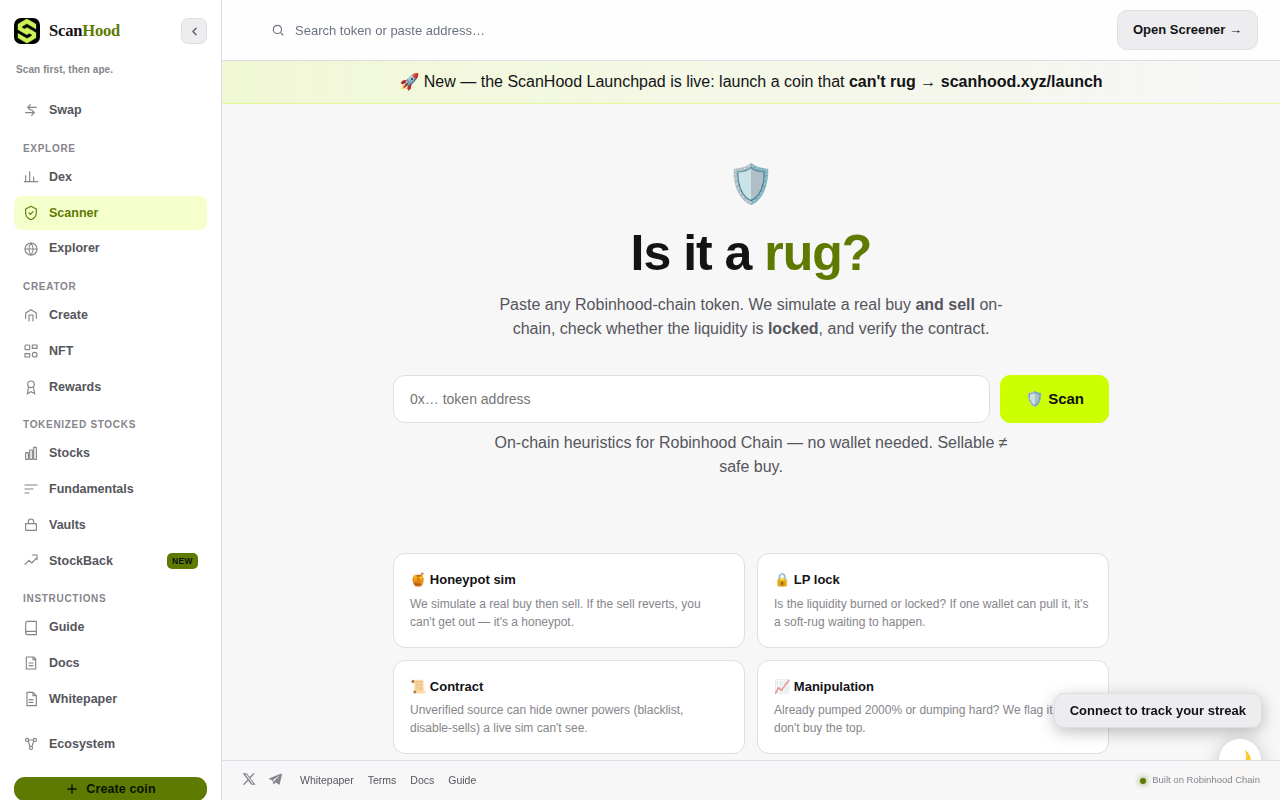
ScanHood’s dashboard displays the breakdown of passed, caution and danger tokens for the Robinhood chain on 2026-10-18.
SCANHOOD FLAGS 1200 ROBINHOOD-CHAIN TOKENS, 4 DANGER
*Daily ScanHood data shows 65 tokens cleared, 1200 flagged caution and four marked danger. The live scanner simulates buys and sells to expose honeypots and liquidity traps on the Robinhood chain.*
ScanHood released its daily safety scan for Robinhood‑chain tokens on 2026-10-18. The live scanner evaluated 1,269 tokens, separating the field into clear passes, caution warnings, and outright danger alerts. Only a handful of tokens cleared the rigorous buy‑sell simulation, while the majority raised red flags for potential rug pulls. The data underscores a volatile environment where unverified contracts and unsecured liquidity dominate the ecosystem. Traders relying on surface metrics risk exposure to honeypots and soft‑rugs that can wipe out positions in seconds.
How many Robinhood-chain tokens failed the rug check on 2026-10-18?
ScanHood scanned a total of 1,269 tokens on the Robinhood chain on 2026-10-18. Only 65 tokens passed the safety simulation. A massive 1,200 tokens were flagged for caution, and four tokens triggered a danger alert. The danger flag indicates a likely honeypot or liquidity lock that could be pulled by a single wallet. The caution flag warns of potential contract risks such as hidden owner powers or unverified source code. The 0.3% failure rate reflects the proportion of tokens that outright failed the rug check.
What does ScanHood’s honeypot simulation test?
The scanner runs a live on‑chain buy then sell simulation. If the sell transaction reverts, the token is a honeypot – investors cannot exit their position. The test also checks whether liquidity is locked or burned, exposing soft‑rugs where a single wallet can withdraw funds. Contract verification is examined for hidden owner powers like blacklisting or disabling sells. The simulation does not rely on wallet access, making it a transparent safety layer for traders.
Why does liquidity lock matter for token safety?
Liquidity lock determines whether the pool backing a token can be drained. If liquidity is merely burned, a single entity may still control the pool and execute a rug pull. ScanHood flags tokens where liquidity is not securely locked, labeling them as caution or danger depending on the severity. A locked or burned liquidity pool reduces the risk of sudden price crashes caused by a sudden withdrawal of funds.
What new tool does ScanHood offer to prevent rug pulls?
ScanHood launched a dedicated launchpad that requires a token to pass its safety checks before being listed. The launchpad promises a coin that cannot rug by enforcing honeypot simulation, liquidity lock verification, and contract audit before launch. This service aims to give developers a vetted path to market and investors a guarantee that listed tokens have cleared the same rigorous checks applied to the daily scan.
Frequently asked questions
How many Robinhood-chain tokens passed ScanHood’s safety scan on 2026-10-18?
Only 65 tokens passed the safety simulation on that date.
What does a danger flag indicate in ScanHood’s report?
A danger flag signals a token that likely cannot be sold after purchase, indicating a honeypot or unsecured liquidity.
What new feature does ScanHood provide to help launch safe tokens?
ScanHood introduced a launchpad that requires tokens to clear its safety checks before being listed.
The ScanHood numbers paint a stark picture: most Robinhood‑chain tokens carry hidden risks that only on‑chain simulation can reveal. As the ecosystem matures, tools that enforce liquidity locks and contract transparency will become the gatekeepers of investor safety. Until then, the daily scan remains the only real‑time shield against deceptive token launches.
Sources: ScanHood live scan data