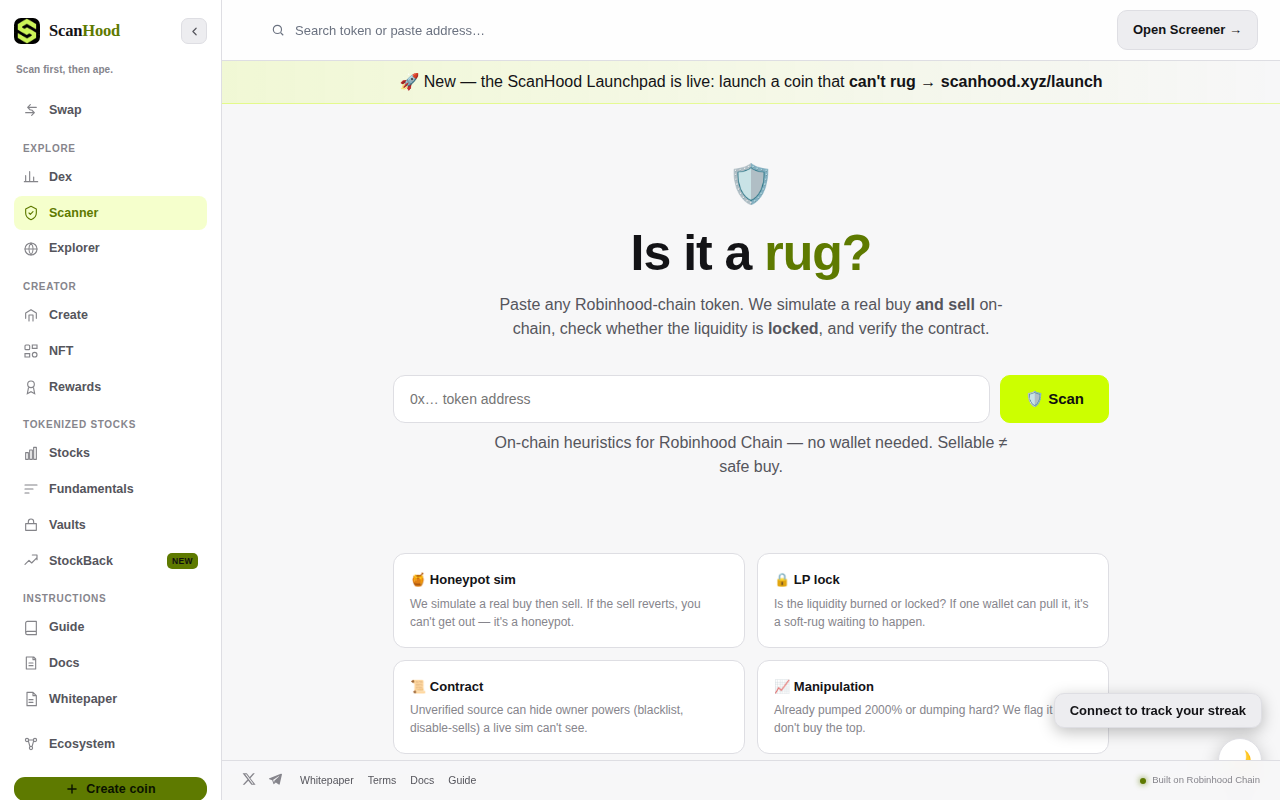
ScanHood’s live scanner flagged 14 tokens as safe, 1,438 as caution and 2 as danger on 2026-11-05.
SCANHOOD FLAGS 1454 ROBINHOOD-CHAIN TOKENS, ONLY 14 PASS SAFETY
*ScanHood’s live scanner evaluated every token on the Robinhood chain on 2026-11-05. Only a handful cleared the rug‑check; the rest carry caution or danger warnings. Investors face a stark safety landscape.*
On 2026-11-05 ScanHood released its daily safety‑scan tally for the Robinhood chain. The live scanner examined every token on the network, running a simulated purchase and sale, checking liquidity lock status, and verifying contract source. The results paint a bleak picture: out of 1454 tokens, only fourteen cleared all checks, while the overwhelming majority were marked for caution or danger. This snapshot arrives as DeFi investors scramble for reliable signals amid a flood of new projects. The data forces a hard look at risk exposure on the Robinhood chain and underscores the need for rigorous on‑chain vetting before any capital is deployed.
How many Robinhood‑chain tokens survived ScanHood’s safety test?
The scanner processed a total of 1454 tokens. Fourteen tokens earned a pass rating, indicating no immediate red flags in the simulated buy‑sell test, liquidity lock status, and contract verification. One thousand four hundred thirty‑eight tokens were flagged for caution, meaning they exhibit traits that could lead to loss, such as unverified contracts or soft‑rug potential. Two tokens triggered a danger flag, suggesting a high likelihood of a honeypot or outright rug. The data reflects a 0.1% failure rate for the most severe category. The split shows a market saturated with risk, where safe options are a tiny fraction of the whole.
What does a caution flag actually mean?
A caution flag signals that the token’s liquidity is either not locked or not burned, leaving a single wallet capable of pulling funds. It also indicates that the contract source is unverified, allowing hidden owner powers such as blacklisting or disabling sells. The scanner’s heuristics cannot guarantee a safe exit, only that the token does not meet the strict criteria for a pass. Investors should treat caution‑flagged tokens as high‑risk, especially if the token has already seen large price swings that could mask manipulation. The presence of a caution flag does not confirm a rug, but it highlights vulnerabilities that merit avoidance.
Why does a danger flag matter for traders?
Danger flags are reserved for tokens that fail the honeypot simulation: the sell transaction reverts, trapping the buyer’s funds. This outcome is the most severe form of rug, where the contract actively prevents exit. A danger‑flagged token also typically lacks any liquidity lock, meaning the creator can withdraw all pooled assets instantly. The scanner’s live simulation captures this behavior, providing a clear warning that the token cannot be sold once purchased. For traders, a danger flag is a definitive red line; any exposure to such a token guarantees loss unless the contract is altered, which is unlikely without the owner’s cooperation.
What options do investors have after the scan results?
Investors can use ScanHood’s launchpad to create new tokens that meet the pass criteria from the outset, ensuring liquidity is locked and contracts are verified. The platform also offers a real‑time simulation tool for any Robinhood‑chain token, allowing users to test buy‑sell dynamics before committing capital. By focusing on the fourteen passed tokens, traders can target assets that have cleared the most stringent checks. However, even passed tokens require due diligence beyond the scanner, as market dynamics can change. The broader takeaway is that the scanner provides a baseline safety filter, but continuous monitoring remains essential.
Frequently asked questions
How many Robinhood-chain tokens passed ScanHood’s safety scan on 2026-11-05?
Fourteen tokens earned a pass rating, indicating they cleared all safety checks.
What does a danger flag indicate in ScanHood’s report?
A danger flag means the token failed the honeypot simulation, preventing a sell and indicating liquidity can be withdrawn by a single wallet.
What proportion of tokens were flagged for caution?
One thousand four hundred thirty‑eight tokens received a caution flag, highlighting potential vulnerabilities such as unverified contracts or unlocked liquidity.
The ScanHood report leaves no room for optimism about the Robinhood chain’s current token landscape. With a single digit of safe assets and a danger flag on two tokens, the odds are stacked against unsuspecting traders. The platform’s tools give investors a chance to separate the few viable options from the sea of risk, but the onus remains on each participant to act with vigilance. As the ecosystem evolves, continuous scanning will be the only way to keep pace with emerging threats.
Sources: ScanHood live scan data