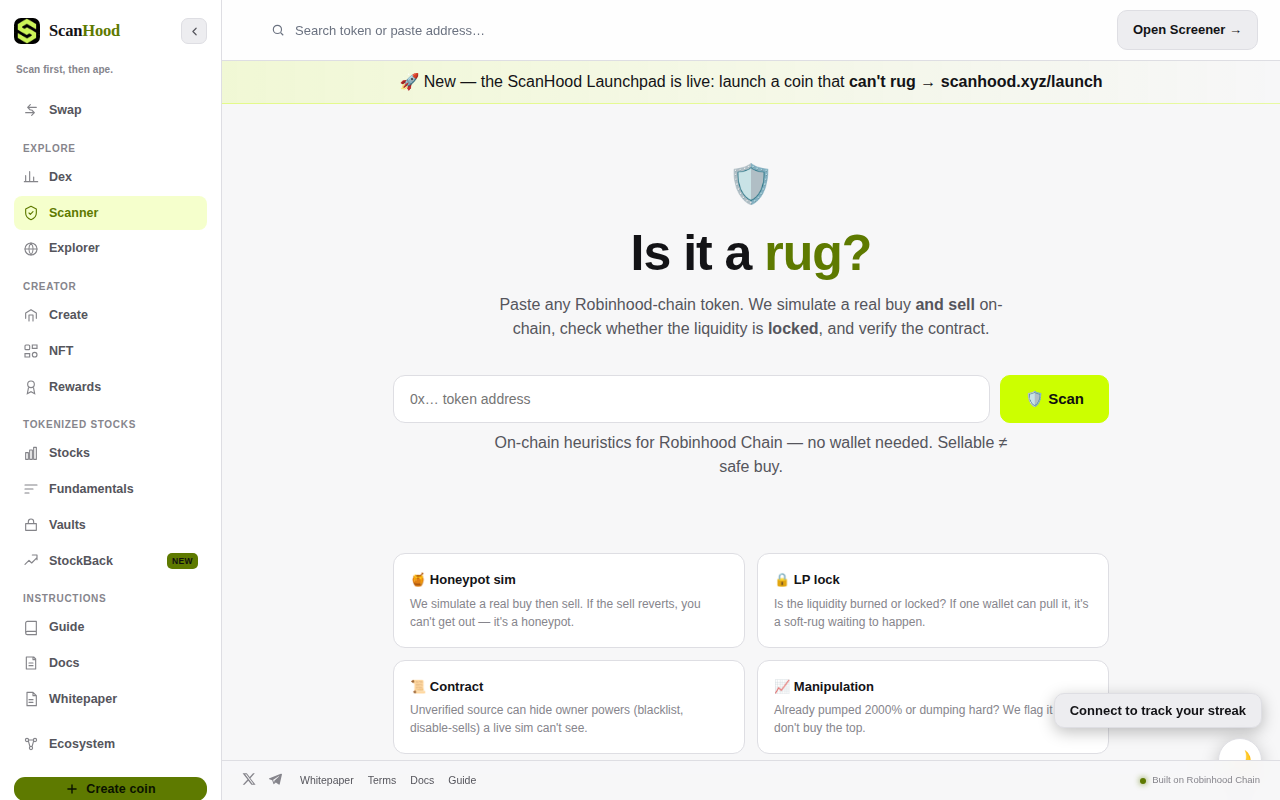
ScanHood's live scanner flagged 1,531 Robinhood-chain tokens for caution and two for danger on 2026-11-03.
SCANHOOD FLAGS 1556 ROBINHOOD-CHAIN TOKENS, ONLY 23 PASS SAFETY
*ScanHood's live scanner evaluated every Robinhood-chain token on 2026-11-03. Only a sliver passed, while the majority were flagged for caution or danger. The data warns investors to treat sellability as a red flag, not a safety guarantee.*
ScanHood released its daily safety‑scan tally for the Robinhood chain on 2026-11-03. The live scanner examined every token on the chain, totaling 1,556 assets. Only 23 tokens passed the full suite of checks, while 1,531 were flagged for caution and two for danger. The platform’s Rug Scanner runs a real‑world buy‑sell simulation, checks liquidity lock status, and verifies contract source code. A pass means the token survived a simulated sell without reverting, the liquidity appears locked, and the contract source is verified. The results paint a grim picture for investors who assume that a token’s sellability equals safety.
How many Robinhood-chain tokens passed ScanHood's safety scan?
On 2026-11-03 ScanHood scanned a total of 1,556 tokens on the Robinhood chain. The Rug Scanner flagged 1,531 tokens for caution and two for danger. Only 23 tokens cleared every check, earning a pass. The platform simulates a real on-chain buy and sell, verifies liquidity locks, and inspects contract verification. A pass means the token survived a simulated sell without reverting, the liquidity appears locked, and the contract source is verified. The stark disparity between passes and flags underscores the systemic risk on the Robinhood chain.
What does a "caution" flag mean for investors?
A caution flag signals that the token failed at least one safety heuristic. It may have unverified contract code, soft‑rug potential, or liquidity that is not securely locked. ScanHood warns that a token can be sellable in a simulation yet still hide owner powers such as blacklisting or disabling sells. The platform flags these tokens so investors avoid buying near a potential top. The caution category covered the overwhelming majority of tokens, indicating that most projects on the chain lack basic safeguards.
Why does ScanHood label some tokens as "danger"?
Danger denotes a token that either reverted on the simulated sell or showed a clear liquidity vulnerability. In the latest batch two tokens earned this label, meaning a buyer could be trapped in a honeypot or face an immediate rug pull. The scanner flags a hard‑rug scenario when a single wallet can pull liquidity, effectively draining the market. Investors encountering a danger flag should treat the token as a high‑risk, likely fraudulent asset.
Can the ScanHood Launchpad prevent future rugs?
The Launchpad promises to let creators launch a coin that "can't rug" by running every token through the same heuristics before it goes live. By requiring a pass on the Rug Scanner, the platform aims to eliminate honeypots, unverified contracts, and unlocked liquidity at launch. While the service cannot guarantee market behavior, it forces a baseline safety standard. If adopted widely, the Launchpad could raise the overall security posture of new Robinhood-chain projects.
Frequently asked questions
How many Robinhood-chain tokens passed ScanHood's safety scan on 2026-11-03?
Only 23 tokens passed the full safety scan out of 1,556 scanned.
What does a caution flag indicate in ScanHood's report?
A caution flag means the token failed at least one safety check, such as contract verification or liquidity lock, and may hide owner powers.
How many tokens were flagged as danger by ScanHood?
Two tokens were flagged as danger, indicating a likely honeypot or unlocked liquidity.
The ScanHood data is a wake‑up call for anyone eyeing the Robinhood chain. With a 0.1% failure rate on the rug check, the majority of tokens carry hidden dangers that a simple buy‑sell test cannot reveal. Investors must treat caution and danger flags as decisive warnings, not optional advisories. As the Launchpad rolls out, the market may see a shift toward verifiable safety, but until then the on‑chain reality remains fraught with honeypots and soft‑rug traps.
Sources: ScanHood live scan data