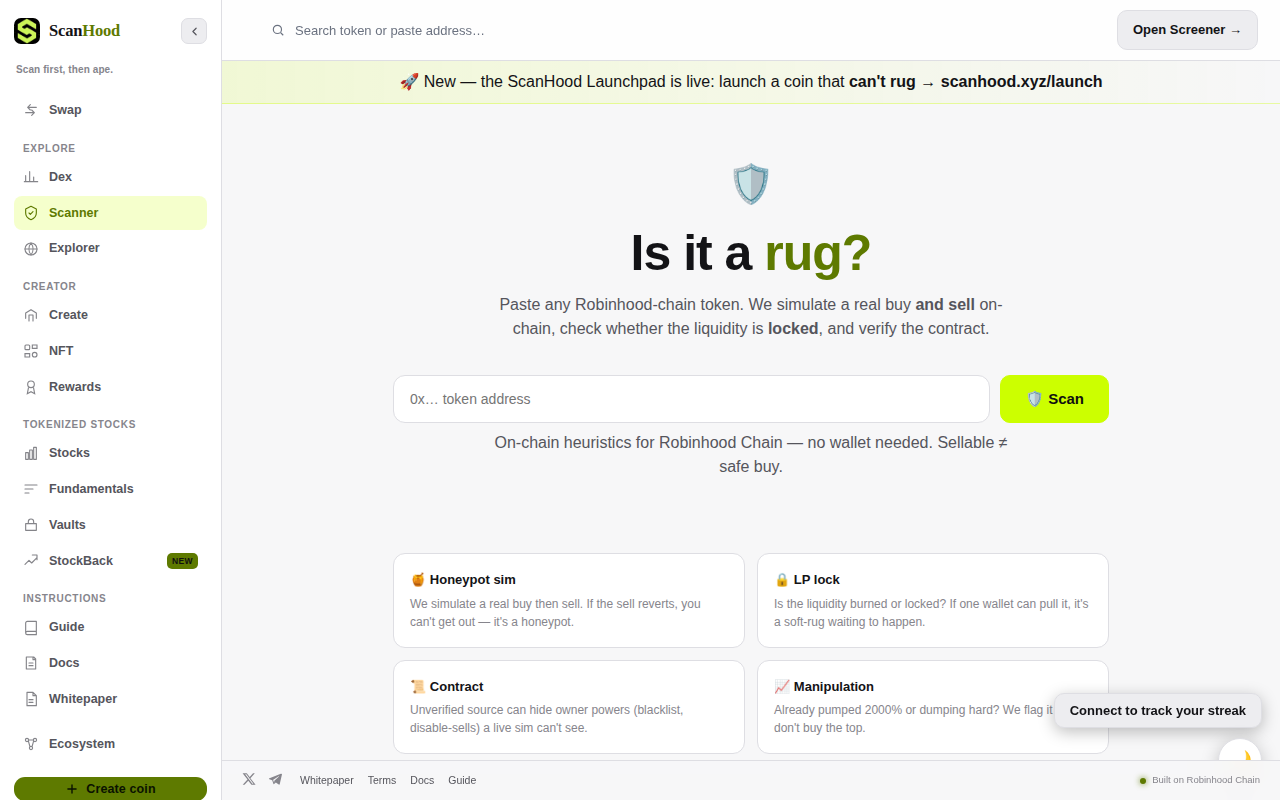
ScanHood’s live scanner flagged 1759 Robinhood‑Chain tokens with caution and two with danger on 2026-11-01.
SCANHOOD FLAGS 1775 ROBINHOOD-CHAIN TOKENS, ONLY 14 PASS SAFETY
*On 2026-11-01 ScanHood scanned every Robinhood‑Chain token in existence. Only a sliver cleared the Rug Check; the rest carry caution or danger flags. Investors face a stark risk landscape.*
On 2026-11-01 ScanHood released its daily safety‑scan tally for the Robinhood‑Chain. The live scanner examined every token on the chain—1775 in total—and returned a stark distribution of risk. Only fourteen tokens cleared the Rug Check, earning a pass status. The overwhelming majority, 1759 tokens, were flagged with caution, while two tokens triggered a danger alert. The data paints a bleak picture for investors who assume that any token on a popular chain is safe by default. ScanHood’s methodology simulates real buys and sells, checks liquidity locks, and inspects contract verification, delivering a granular view of each token’s vulnerability.
How many Robinhood‑Chain tokens passed ScanHood’s safety net?
ScanHood’s live scanner evaluated 1775 tokens on 2026-11-01. Fourteen tokens emerged with a clean bill of health, meaning they passed both the honeypot simulation and the liquidity‑lock check. The remaining tokens triggered alerts: 1759 were marked with a caution flag, indicating potential vulnerabilities, while two tokens earned a danger flag, signaling a high probability of rug‑pull mechanics. The scanner’s binary outcome—pass or flag—offers a clear, data‑driven snapshot of the chain’s risk exposure at a single point in time.
What does a 0.1% failure rate imply for investors?
The headline‑level statistic of 0.1% failure reflects the two danger‑flagged tokens out of the total pool. While the percentage appears minuscule, the absolute count of two high‑risk contracts can wipe out capital for unwary buyers. The caution‑flagged majority suggests that most tokens harbor hidden pitfalls—unverified contracts, soft‑rug liquidity, or potential blacklist functions. Investors cannot rely on a token’s sellability alone; the scanner’s layered checks expose deeper contract‑level threats that a simple market price would mask.
Why does ScanHood emphasize both honeypot simulation and LP lock verification?
The platform simulates a real on‑chain buy then sell to detect honeypot behavior—if the sell transaction reverts, the token is effectively a trap. Liquidity lock verification adds a second defense layer: locked or burned liquidity prevents a single wallet from draining the pool, a classic rug‑pull vector. By combining these heuristics, ScanHood offers a more comprehensive safety profile than a single‑metric scan. The dual approach catches contracts that may appear sellable but hide owner powers capable of disabling sales or blacklisting addresses.
What tools does ScanHood provide for future token launches?
Beyond the daily safety tally, ScanHood launched a dedicated Launchpad that promises to mint coins that cannot rug. The service integrates the same on‑chain heuristics, allowing creators to pre‑validate their contracts before public release. By embedding honeypot simulation, LP‑lock checks, and contract verification into the launch workflow, the platform aims to raise the baseline security standard for new Robinhood‑Chain projects. This proactive stance could shift the ecosystem from reactive flagging to preventive design.
Frequently asked questions
How many Robinhood‑Chain tokens passed ScanHood’s safety scan on 2026-11-01?
Fourteen tokens passed the safety scan, earning a clean pass status.
What percentage of tokens failed the Rug Check in the ScanHood report?
The report cites a 0.1% failure rate, reflecting the two danger‑flagged tokens.
What does ScanHood’s danger flag indicate?
A danger flag signals a high probability of rug‑pull mechanics, such as reversible sells or unlocked liquidity.
The ScanHood snapshot is a wake‑up call for anyone eyeing Robinhood‑Chain assets. With only fourteen tokens deemed safe, the ecosystem is riddled with contracts that could trap or drain investors. The platform’s dual‑check system offers the clearest lens yet on on‑chain risk, but it also underscores the need for due diligence before any purchase. As the Launchpad rolls out, the onus shifts to developers to embed safety from day one, potentially reshaping the chain’s risk profile for future participants.
Sources: ScanHood live scan data, https://scanhood.xyz/scanner/