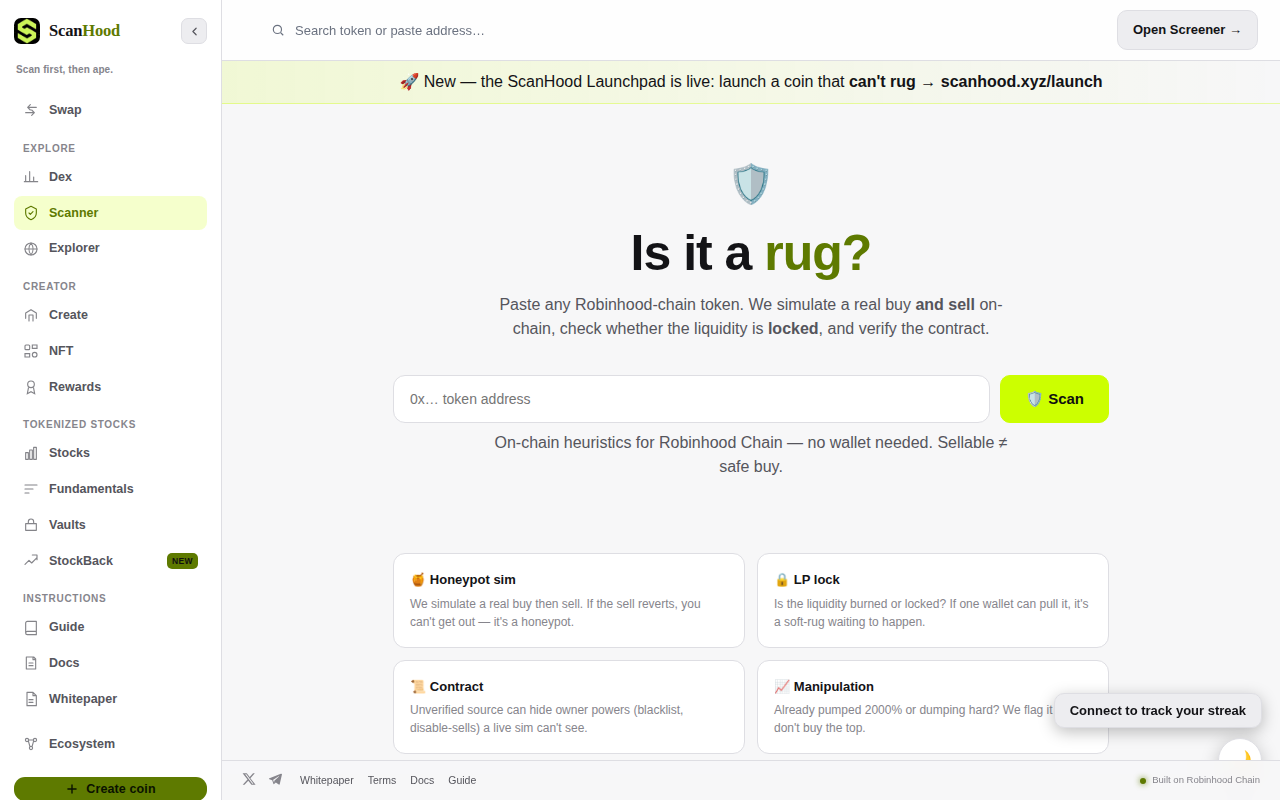
ScanHood's live scanner categorized 580 Robinhood‑Chain tokens on November 27, 2026, with only 74 passing all checks.
SCANHOOD FLAGS 3.1% OF 580 ROBINHOOD-CHAIN TOKENS AS RUGS
*ScanHood's live scanner evaluated every Robinhood‑Chain token on 2026‑11‑27. Only a fraction cleared the test; the rest carry caution or danger flags. The data warns investors to scrutinize liquidity and contract controls before buying.*
On November 27, 2026, ScanHood released its daily safety‑scan tally for Robinhood‑Chain tokens. The live scanner examined every token on the chain, delivering a stark snapshot of risk across the ecosystem. Out of 580 tokens, only seventy‑four cleared all checks, while the majority fell into caution or danger categories. The data underscores a market awash with projects that either hide critical controls or expose investors to outright rug‑pull scenarios. For traders, the numbers are a wake‑up call: the on‑chain landscape demands more than a cursory glance before committing capital.
What did ScanHood find on 2026‑11‑27?
The scanner processed 580 Robinhood‑Chain tokens. Seventy‑four tokens passed the full suite of checks. Four hundred‑eighty‑eight tokens received a caution flag, indicating potential issues such as unverified contracts or soft‑rug risk. Eighteen tokens were marked DANGER, meaning the simulated sell reverted or liquidity is openly controllable. Overall, 3.1% of the tokens failed the Rug Check, a metric that signals outright rug‑pull potential. The breakdown shows a market saturated with high‑risk projects, demanding rigorous due diligence from any buyer.
How does the Rug Scanner work?
ScanHood runs an on‑chain simulation that mimics a real purchase and immediate resale. If the sell transaction reverts, the token is a honeypot and cannot be exited. The tool also inspects liquidity status: locked or burned liquidity passes, while a single wallet that can withdraw funds triggers a soft‑rug warning. Contract verification checks for hidden owner powers such as blacklists or sell‑disabling functions that a live simulation cannot see. Finally, the scanner flags tokens that have already seen extreme price swings, labeling them as manipulation risk. Each heuristic operates without requiring a wallet, delivering a transparent risk profile.
Why does a caution flag matter?
A caution flag signals that a token has one or more red flags but did not outright fail the sell simulation. Common triggers include unverified source code, liquidity that is not fully locked, or recent price spikes that suggest pump‑and‑dump activity. While investors may still trade such tokens, the warning advises heightened scrutiny and possibly avoiding large positions. The distinction between caution and DANGER helps traders prioritize which tokens merit deeper technical review versus those that should be avoided entirely.
Can developers bypass the rug check?
ScanHood now offers a Launchpad that promises to mint coins that cannot rug. By integrating the same heuristics at launch, developers can ensure liquidity is locked, contracts are verified, and honeypot behavior is eliminated before the token ever hits the market. The service aims to reduce the pool of risky tokens and give investors a baseline of safety. However, the scanner still evaluates each launched token, meaning any deviation from the prescribed standards will still trigger caution or danger flags.
Frequently asked questions
How many Robinhood‑Chain tokens did ScanHood scan on 2026‑11‑27?
ScanHood scanned 580 Robinhood‑Chain tokens on that date.
What percentage of tokens failed the Rug Check?
3.1% of the scanned tokens failed the Rug Check.
How many tokens were flagged as DANGER?
Eighteen tokens received a DANGER flag.
The ScanHood report paints a grim picture for Robinhood‑Chain investors: a tiny slice of tokens are truly safe, while the rest carry measurable risk. As the launchpad promises cleaner releases, the onus remains on traders to let the scanner's flags guide their decisions. Ignoring the caution and danger signals invites loss; heeding them could restore confidence in a fragmented market.
Sources: ScanHood live scan data, https://scanhood.xyz/scanner/