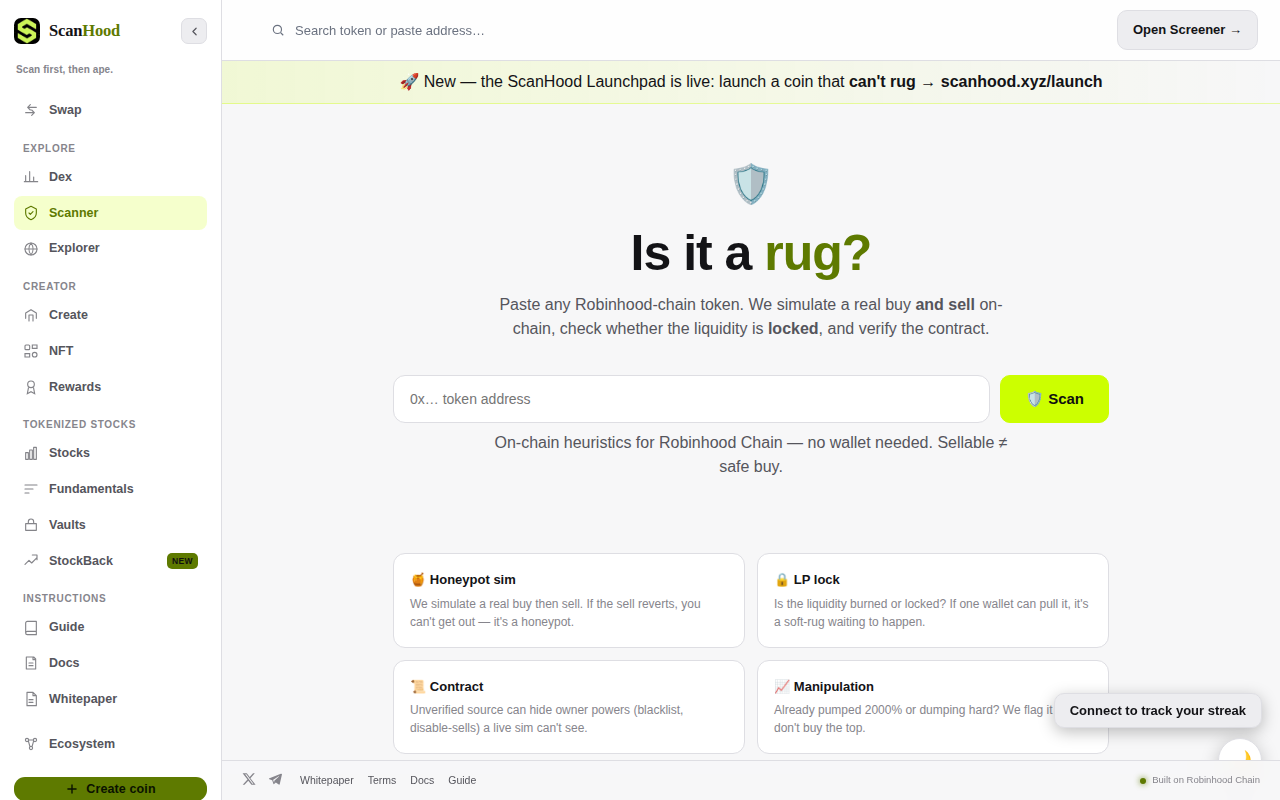
ScanHood’s dashboard on 2026‑11‑24 lists four passed tokens, three with caution, and zero danger alerts.
SCANHOOD FLAGS 3 ROBINHOOD-CHAIN TOKENS WITH CAUTION ON DAILY CHECK
*ScanHood scanned seven Robinhood‑Chain tokens on 2026‑11‑24. Four passed, three received caution flags, and none were marked danger. The live scanner’s heuristics expose honeypots, liquidity risks, and contract opacity in real time.*
On 2026‑11‑24 ScanHood’s live scanner processed seven Robinhood‑Chain tokens. The tool simulates on‑chain buys and sells, checks liquidity lock status, and verifies contract source. Its daily safety‑scan tally shows four tokens passed, three flagged caution, and none flagged danger. This snapshot gives investors a real‑time safety gauge.
ScanHood’s Rug Scanner promises to expose honeypots, soft‑rugs, and manipulation. By running a simulated trade, it detects sell reverts that trap buyers. It also inspects whether liquidity is burned, locked, or controlled by a single wallet. Unverified contracts trigger alerts for hidden owner powers. The latest batch shows no outright danger, but the caution flags warn of potential risk.
What did ScanHood’s daily tally reveal on 2026‑11‑24?
The ScanHood live scanner processed seven Robinhood‑Chain tokens on 2026‑11‑24. Its safety‑scan tally recorded four tokens as passed, three tokens flagged with caution, and zero tokens flagged as danger. The headline notes a 0.0% failure rate for the Rug Check, meaning no token outright failed the test. This breakdown gives investors a quick risk snapshot: a majority cleared, but a significant minority raised warning signs that merit further scrutiny before any purchase.
How does ScanHood identify a honeypot on Robinhood‑Chain?
ScanHood runs a simulated on‑chain buy followed by a sell. If the simulated sell transaction reverts, the tool labels the token a honeypot because the buyer cannot exit the position. This honeypot simulation is a core part of the Rug Scanner, distinguishing tokens that appear sellable from those that trap investors. The process requires no wallet connection, relying solely on on‑chain heuristics to mimic a real trade and detect sell‑revert behavior.
What does a caution flag indicate for a token?
A caution flag signals potential red flags without declaring outright danger. ScanHood checks liquidity lock status; if liquidity is burned or locked, the token is safer, but if a single wallet can pull it, the token is marked caution for a soft‑rug risk. The scanner also verifies contract source. Unverified contracts can hide owner powers such as blacklisting or disabling sells, prompting a caution label. Finally, the tool flags tokens that have experienced extreme price swings—like a 2000% pump—suggesting manipulation risk. Each caution flag urges investors to dig deeper before committing capital.
Why does a passed token still need scrutiny?
Passing the Rug Check confirms that a simulated buy‑sell cycle succeeded, liquidity is locked or burned, and the contract source is verified. However, ScanHood warns that sellable does not equal safe. The platform still flags tokens that have been pumped dramatically, indicating possible market manipulation. Even without a danger label, a token could harbor subtle owner powers or future liquidity changes not captured in a single simulation. Investors should treat a pass as a baseline, not a guarantee, and continue monitoring on‑chain activity and community signals.
Frequently asked questions
How many Robinhood‑Chain tokens did ScanHood scan on 2026‑11‑24?
ScanHood scanned seven Robinhood‑Chain tokens on 2026‑11‑24.
How many tokens passed ScanHood’s Rug Check on that day?
Four tokens passed the Rug Check, while three were flagged with caution and none were flagged as danger.
What does a caution flag mean in ScanHood’s report?
A caution flag indicates potential issues such as liquidity that can be pulled by a single wallet, unverified contract source, or signs of price manipulation, but it does not label the token as outright dangerous.
The ScanHood report underscores that a clean pass is not a free pass. Caution flags highlight liquidity control, contract opacity, and price manipulation that can erode investor confidence. As DeFi markets on Robinhood‑Chain expand, tools that simulate real trades and audit on‑chain data become essential guardrails. Investors who ignore the nuance between pass and caution risk exposure to hidden rug pulls. Ongoing vigilance, not just a single scan, will separate sustainable projects from fleeting hype.
Sources: ScanHood live scan data (https://scanhood.xyz/scanner/)