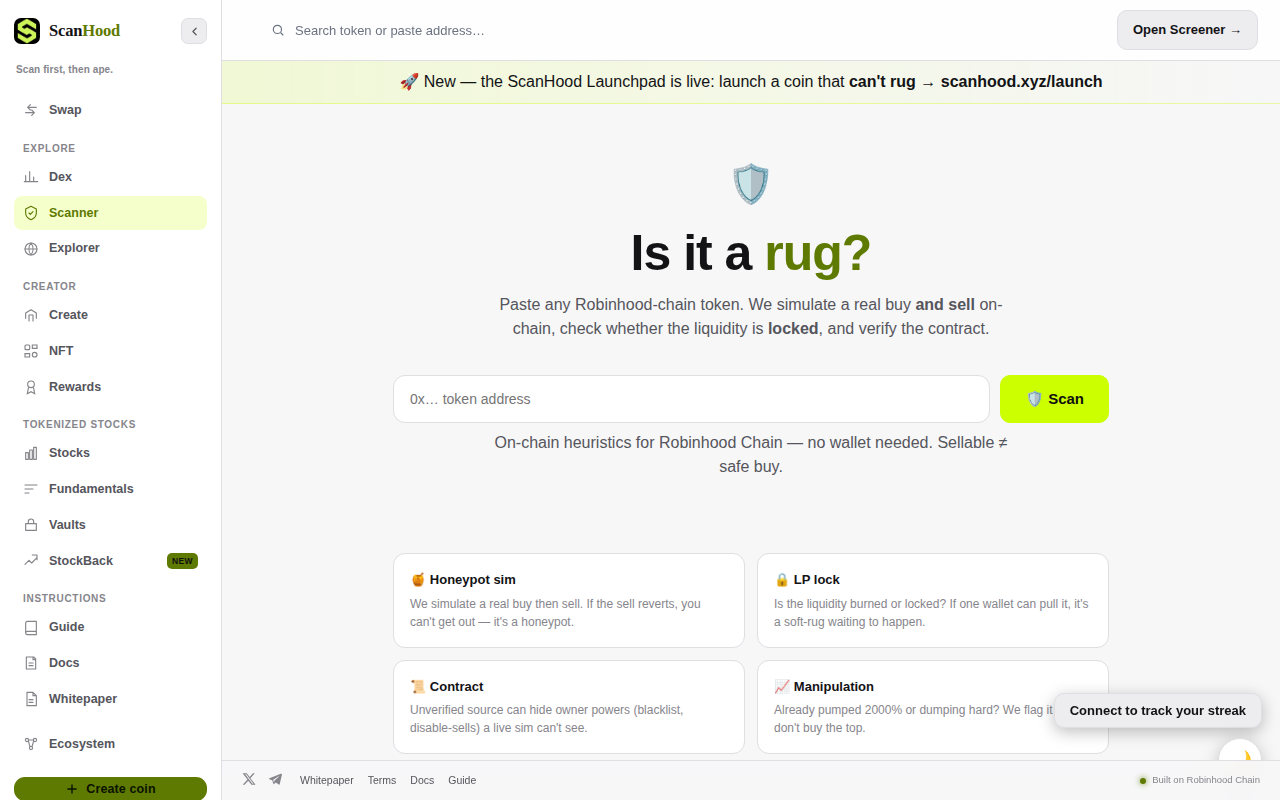
ScanHood's dashboard on 2026-11-23 lists 102 passed, 430 caution, and 28 danger tokens out of 560 scanned.
SCANHOOD FLAGS 5% OF 560 ROBINHOOD-CHAIN TOKENS AS RUGS
*Daily ScanHood data shows a majority of Robinhood‑Chain tokens carry risk. The live scanner separates safe contracts from honeypots and liquidity traps, forcing investors to act now.*
ScanHood released its daily safety scan for Robinhood‑Chain tokens on 2026-11-23, flagging risk across the ecosystem. The live scanner evaluated 560 tokens, separating those that can be bought and sold safely from those that hide traps. Investors face a landscape where a token can appear legitimate until a simulated sell fails, locking funds forever. The data shows a stark split: a minority passes, a large caution pool, and a dangerous minority that could rug. In a market driven by hype and rapid price swings, the scanner’s real‑time verdict forces traders to reconsider blind optimism.
What did the ScanHood scan reveal on 2026-11-23?
ScanHood processed 560 Robinhood‑Chain tokens on 2026-11-23. The tool simulated real buys and sells, checked liquidity locks, and inspected contract verification. Of the batch, 102 tokens passed all checks, 430 were flagged for caution, and 28 received a DANGER label. The DANGER flag indicates a likely honeypot or soft‑rug scenario where sellers cannot exit. The caution flag warns of potential manipulation, unverified contracts, or liquidity that is not securely locked. The pass count represents tokens that cleared the simulated sell test, have locked or burned liquidity, and show verified source code.
Why does a 5.0% failure rate matter?
A 5.0% failure rate translates to 28 tokens that could trap investors. In a market where rapid price swings are common, a honeypot can freeze capital instantly. The ScanHood methodology mimics on‑chain behavior, exposing contracts that revert on sell. That reversal is a clear sign of a rug pull in progress. Investors relying on superficial metrics may overlook these traps, leading to sudden losses. The data underscores that even a small percentage of malicious tokens can have outsized impact on a portfolio.
How does ScanHood detect liquidity traps?
The scanner checks whether liquidity is burned or locked in a single wallet. If a single address can withdraw the pool, the token is marked as a soft‑rug risk. The tool also flags contracts lacking verification, which can hide owner powers such as blacklisting or disabling sells. By running a live sell simulation, ScanHood catches cases where the transaction reverts, confirming a honeypot. These heuristics provide a transparent view of on‑chain risk without requiring a wallet connection.
What does the 2000% pump warning imply?
The ScanHood interface highlights tokens that have already surged 2000% or are dumping hard. Such extreme moves often precede a rug pull, as manipulators inflate price before exiting. The warning helps traders avoid buying at a peak that is likely to collapse. By flagging these patterns, ScanHood adds a layer of market‑behavior analysis to its technical checks.
Frequently asked questions
How many Robinhood‑Chain tokens did ScanHood scan on 2026-11-23?
ScanHood scanned 560 tokens on that date.
What percentage of tokens failed the Rug Check?
5.0% of the scanned tokens were flagged as failing the Rug Check.
What does a DANGER flag indicate in ScanHood's report?
A DANGER flag marks tokens where the simulated sell reverts, indicating a honeypot or soft‑rug risk.
The ScanHood snapshot paints a cautionary picture of the Robinhood‑Chain token market. With only a fraction passing rigorous on‑chain tests, the majority sit in a gray zone that can quickly turn hostile. The 5.0% failure rate, while numerically small, represents a real threat to capital. As DeFi projects proliferate, tools that simulate actual trades and verify liquidity become essential safeguards. Investors who ignore these signals risk being caught in the next rug pull.
Sources: [ScanHood live scan data]