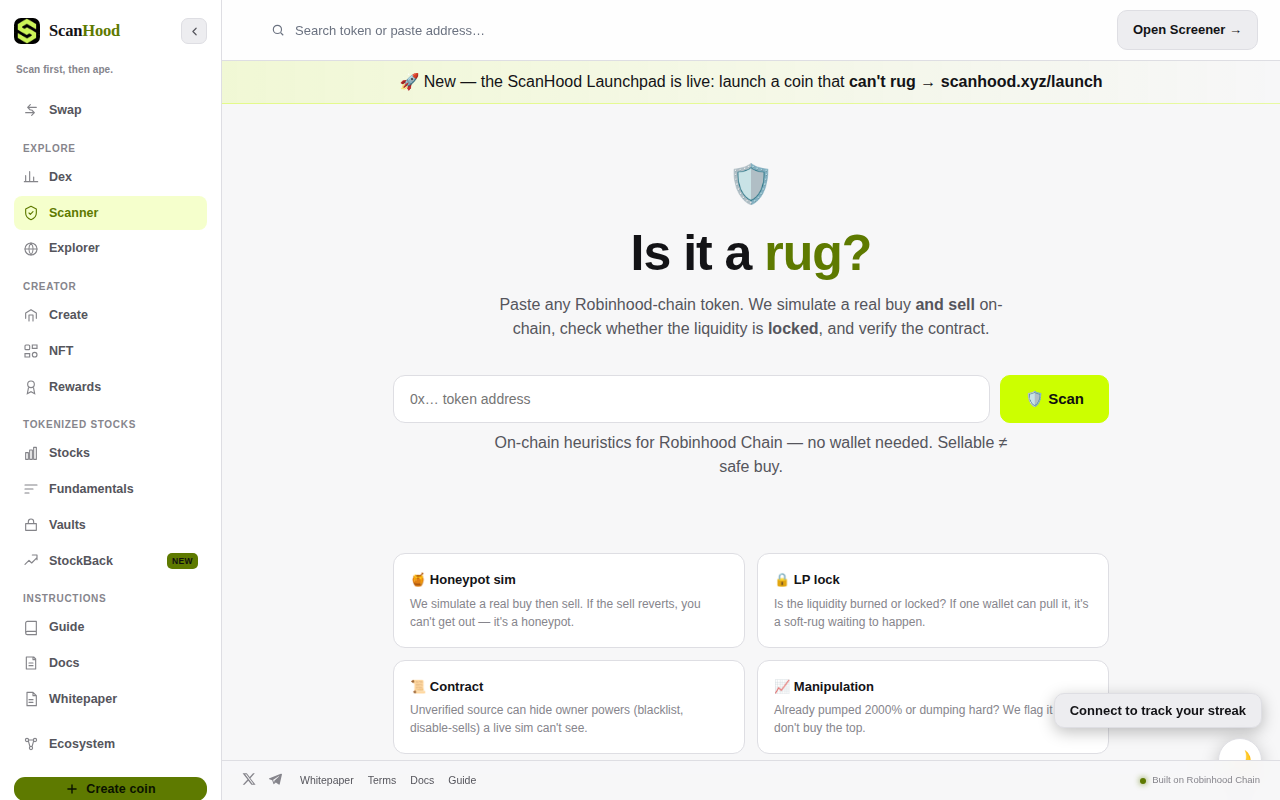
ScanHood's live scanner categorized 576 Robinhood‑Chain tokens on November 26, 2026, highlighting 85 passes, 462 cautions, and 29 dangers.
SCANHOOD FLAGS 5% OF 576 ROBINHOOD TOKENS AS RUGS
*ScanHood's live scanner evaluated 576 Robinhood‑Chain tokens on 2026‑11‑26. Only 85 passed, while 462 earned caution and 29 were marked danger. The data underscores persistent risk in the chain's DeFi ecosystem.*
On November 26, 2026, ScanHood's live scanner ran a full sweep of the Robinhood‑Chain token landscape. The tally: 576 tokens examined, 85 cleared, 462 flagged for caution, and 29 marked danger. Five percent of the batch failed the Rug Check, a stark reminder that even a chain touted for DeFi innovation harbors exploitable projects. ScanHood's methodology simulates a real buy‑then‑sell transaction, inspects liquidity locks, and verifies contract transparency. The results paint a sobering picture for investors chasing high‑yield tokens on a platform where safety is still a work in progress.
How many Robinhood‑chain tokens failed ScanHood's rug check on 2026‑11‑26?
ScanHood processed 576 tokens on the date in question. Five percent—exactly 5.0%—failed the Rug Check, landing in the DANGER category. The remaining tokens split between 85 clean passes and 462 caution flags. The failure rate, while numerically modest, signals that a non‑trivial slice of new projects still harbor exploitable flaws. Investors seeing a token in the DANGER bucket should treat it as a high‑probability rug, given the scanner’s on‑chain sell simulation reverted. The data provides a snapshot of the chain’s health: most tokens trigger at least a caution, and a small but critical minority are outright hazardous.
What do ScanHood's caution and danger flags indicate?
Caution flags arise when the scanner detects red flags without a definitive sell‑revert. These may include unverified contracts, soft‑rug liquidity setups, or owner powers that could be abused later. Danger flags, by contrast, result from a simulated sell that fails, confirming a honeypot that traps buyers. Both categories warn investors that a token is not safe to buy and hold, even if it appears sellable on the surface. The distinction matters: caution suggests potential future risk, while danger signals an immediate, exploitable flaw. Users relying solely on price charts miss these on‑chain realities, which ScanHood surfaces without requiring a wallet connection.
Why can a token that passes still be risky?
A passed token means the simulated buy‑sell cycle succeeded and liquidity appears locked or burned. However, the scanner cannot see hidden contract functions such as blacklist capabilities or future owner actions. Unverified source code can conceal powers to disable sells or blacklist addresses later. Thus, a clean pass does not guarantee long‑term safety; it only confirms the token behaved correctly at the moment of testing. Investors must still perform due diligence beyond the scanner, especially on contracts lacking verification.
What tools does ScanHood offer to protect investors?
ScanHood provides a honeypot simulation that mimics a real purchase and sale on‑chain, instantly revealing sell‑reverts. It checks liquidity status, confirming whether LP tokens are burned or locked, and flags soft‑rugs where a single wallet could withdraw funds. The platform also highlights contract verification status, alerting users to hidden owner powers. Additionally, a new Launchpad promises to issue coins that cannot rug, leveraging the same heuristics at creation. All checks run without needing a wallet, delivering rapid, on‑chain risk assessments for any Robinhood‑Chain token.
Frequently asked questions
How many tokens were scanned by ScanHood on 2026-11-26?
ScanHood scanned 576 Robinhood‑Chain tokens on that date.
What percentage of tokens failed the Rug Check?
5.0% of the scanned tokens failed the Rug Check.
How many tokens were flagged as danger?
29 tokens were flagged DANGER in the ScanHood tally.
The ScanHood snapshot shows a chain where caution is the norm and danger, though limited, is real. Investors must treat the scanner as a first line of defense, not a guarantee. As the Robinhood ecosystem matures, tools like ScanHood will be essential to weed out honeypots before capital is lost. The next wave of tokens will face stricter scrutiny, but until verification becomes universal, the risk of rug pulls remains embedded in the code.
Sources: ScanHood live scan data