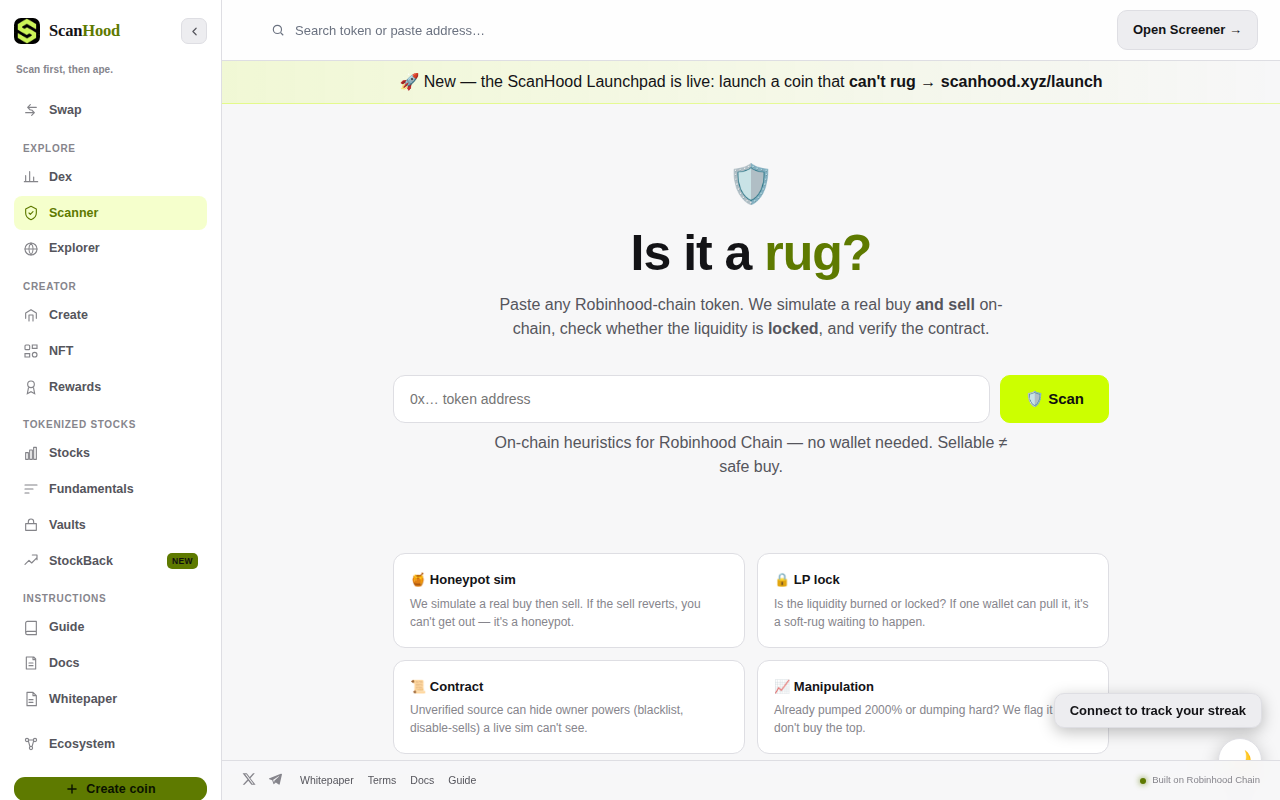
ScanHood's dashboard on 2026‑11‑25 lists 91 passes, 488 cautions, and 20 danger flags among 599 tokens.
SCANHOOD FLAGS 599 ROBINHOOD-CHAIN TOKENS, 3.3% FAIL RUG CHECK
*ScanHood's live scanner processed every Robinhood‑Chain token on 2026‑11‑25. The data shows a flood of caution flags and a small but critical danger pool.*
On 2026‑11‑25 ScanHood ran its live scanner across every Robinhood‑Chain token. The result: 599 contracts evaluated in a single day. Only 91 emerged clean, while the rest lit up with caution or danger warnings. The scanner’s honeypot simulation, liquidity lock check, and contract verification expose hidden risks that ordinary explorers miss. Investors looking for a quick gain now have a hard data set that separates the few viable tokens from a sea of potential traps. The stakes are high; a failed sell test means total loss. The numbers speak plainly: the Robinhood Chain is awash with tokens that demand scrutiny before any capital is committed.
What did ScanHood find on November 25?
The scanner examined every token on the Robinhood Chain, totaling 599 contracts. Of those, 91 passed the safety suite, 488 were marked with a caution flag, and 20 triggered a danger alert. The danger flag indicates a high likelihood of a rug pull, honeypot behavior, or unlocked liquidity. The caution flag warns of potential red flags such as unverified contracts or suspicious price manipulation. Only 3.3% of the scanned tokens failed the final rug check, meaning they could not be sold in the simulated test. The data paints a landscape where most tokens carry warning signs, even if they are not outright dangerous.
Why does a caution flag matter more than a pass?
A pass means the token survived a simulated buy‑sell test, liquidity lock verification, and contract source check. A caution flag, however, flags any one of those criteria as questionable. Unverified source code can hide owner powers that block sales. Liquidity that is not locked or burned can be withdrawn at any moment, creating a soft‑rug scenario. Price spikes of 2000% that later dump are also flagged. Investors who ignore caution warnings risk buying at a peak only to watch the token become unsellable. The scanner’s design forces a binary view: safe, risky, or dangerous, leaving no room for hopeful speculation.
How does the danger flag impact investors?
Tokens flagged danger failed the simulated sell step, meaning the transaction reverted. In practice, a buyer cannot exit the position without losing the entire investment. The scanner also checks liquidity lock status; if a single wallet can pull the pool, the token is a soft‑rug waiting to happen. The danger pool of 20 tokens represents the most acute threat on the Robinhood Chain that day. For traders, these tokens are effectively blacklisted by the scanner. The presence of a danger flag should trigger immediate avoidance, as the on‑chain heuristics have identified a contract that cannot be safely liquidated.
What does this mean for the Robinhood Chain ecosystem?
The scan reveals a chain saturated with tokens that raise red flags. While a majority passed the final rug check, the sheer volume of caution alerts suggests systemic risk. Developers may be deploying contracts without proper verification or liquidity safeguards. Investors face a high barrier to due diligence, relying on tools like ScanHood to separate the few safe projects from the rest. The data could pressure token creators to adopt stricter standards, such as verified source code and immutable liquidity locks, to avoid being flagged. Until then, the ecosystem remains a minefield where only rigorous on‑chain testing can provide a semblance of safety.
Frequently asked questions
How many Robinhood-chain tokens did ScanHood scan on 2026-11-25?
ScanHood scanned 599 Robinhood‑Chain tokens on that date.
What percentage of tokens failed the rug check?
3.3% of the scanned tokens failed the rug check.
How many tokens were flagged as danger?
20 tokens received a danger flag.
ScanHood’s snapshot of the Robinhood Chain is a warning shot. With 488 tokens flagged for caution and 20 outright dangerous, the ecosystem shows a pattern of reckless launches. The data forces developers to tighten contract practices and investors to demand verification before committing funds. As the scanner continues to run daily, the only certainty is that the next token could be the next trap unless the community embraces the hard lessons this report delivers.
Sources: ScanHood live scan data