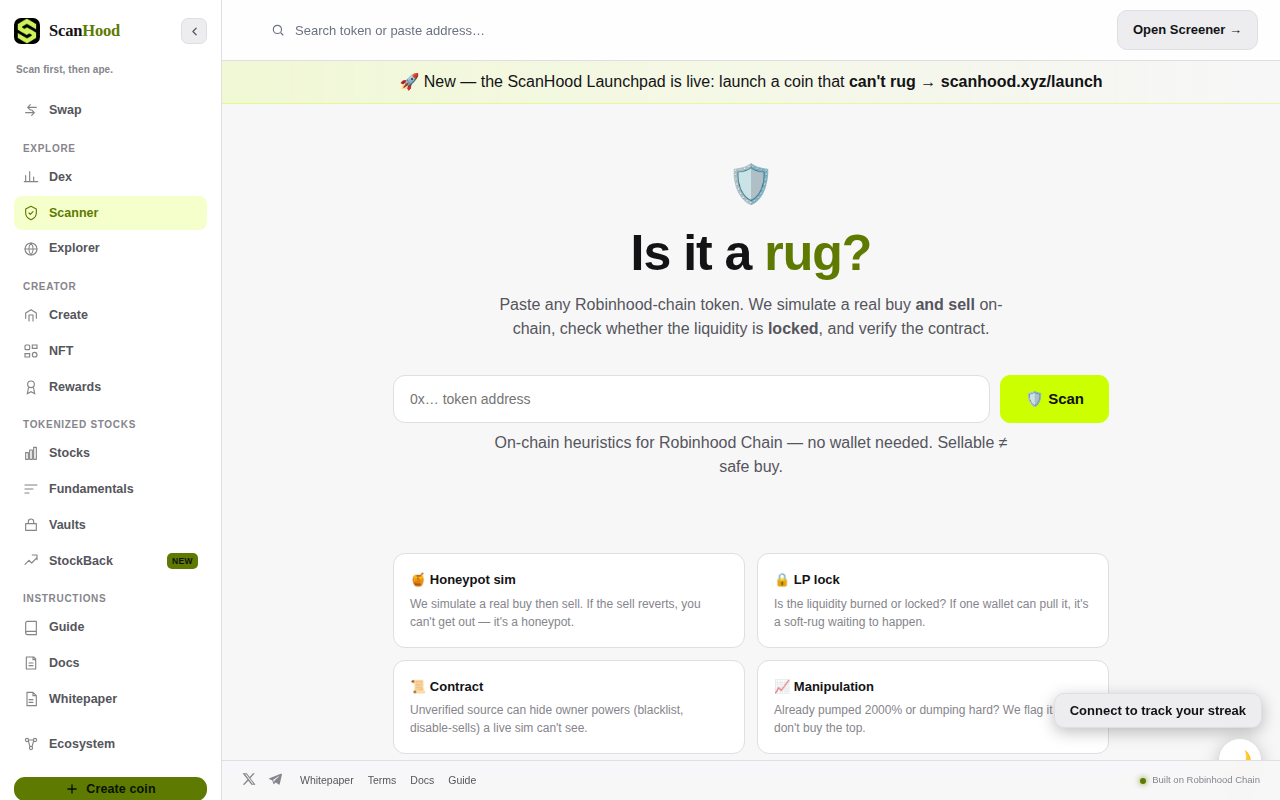
The ScanHood live scanner categorizes 877 Robinhood‑Chain tokens on 2026‑11‑08.
SCANHOOD FLAGS 667 ROBINHOOD-CHAIN TOKENS AS CAUTION, 28 AS DANGER
*ScanHood’s live scanner evaluated 877 Robinhood‑Chain tokens on 2026‑11‑08. Only 182 passed, while 667 raised caution flags and 28 were marked danger. The data shows a 3.2% failure rate on the Rug Check, underscoring systemic risk on the chain.*
On 2026‑11‑08 ScanHood released its daily safety scan for Robinhood‑Chain tokens. The live scanner evaluated 877 tokens, delivering a stark snapshot of risk across the ecosystem. Only 182 tokens passed every safety test, while 667 raised caution flags and 28 were marked danger. The Rug Check failure rate of 3.2% signals that a non‑trivial slice of the market could trap investors. ScanHood’s methodology simulates a real purchase and sale, checks liquidity lock status, and inspects contract verification, offering a pragmatic safety net in a space rife with honeypots and soft‑rugs. The data underscores the urgency for traders to verify token safety before committing capital.
What did ScanHood’s daily tally reveal?
The ScanHood scanner processed 877 tokens on the Robinhood chain. Of those, 182 cleared every test and were marked safe. A majority, 667, triggered a caution flag, indicating potential liquidity or contract issues. Twenty‑eight tokens were flagged as danger, meaning the simulated sell reverted or liquidity is unprotected. The overall Rug Check failure rate sits at 3.2%, a metric that quantifies how many tokens could trap investors. The scanner runs a real‑world buy‑then‑sell simulation, checks LP lock status, and inspects contract verification. Those steps expose honeypots, soft‑rugs, and hidden owner powers that a static audit might miss.
How does ScanHood detect a honeypot?
The tool initiates a live on‑chain purchase of the token, then attempts to sell it back. If the sell transaction reverts, the token is classified as a honeypot—investors cannot exit their position. This dynamic test goes beyond static code analysis, catching contracts that deliberately block sells while appearing benign. The scanner also verifies whether liquidity is burned or locked. If a single wallet retains control, the token is flagged as a soft‑rug risk. By simulating real market behavior, ScanHood provides a practical safety net for traders navigating the Robinhood ecosystem.
Why does a 2000% price swing matter?
ScanHood’s description warns of tokens that have already pumped 2000% before dumping hard. Such extreme volatility often coincides with rug‑pull tactics, where early buyers profit while later investors are left with worthless assets. The platform flags these patterns so users avoid buying at a peak. By highlighting massive price swings, ScanHood helps traders spot manipulation before it crystallizes into loss.
What options does ScanHood offer for new projects?
Beyond scanning, ScanHood launched a launchpad that promises to deploy coins that cannot rug. The service integrates the same on‑chain heuristics, ensuring new tokens start with locked liquidity and verified contracts. Creators can submit a token, and the platform runs the same buy‑sell simulation and LP lock check before allowing public launch. This aims to raise the baseline safety of the Robinhood chain and reduce the pool of risky tokens.
Frequently asked questions
How many Robinhood‑Chain tokens did ScanHood scan on 2026‑11‑08?
ScanHood scanned 877 tokens on that date.
What percentage of tokens failed the Rug Check?
The Rug Check failure rate was 3.2%.
How many tokens were marked as danger?
Twenty‑eight tokens received a danger flag.
The ScanHood tally paints a sobering picture: most Robinhood‑Chain tokens carry caution or danger signals. Investors who ignore these warnings risk being caught in honeypots or liquidity traps. As the platform expands its launchpad, the onus shifts to developers to meet higher safety standards. Until then, the scanner remains the only real‑time guard against rug pulls on the chain.
Sources: ScanHood live scan data