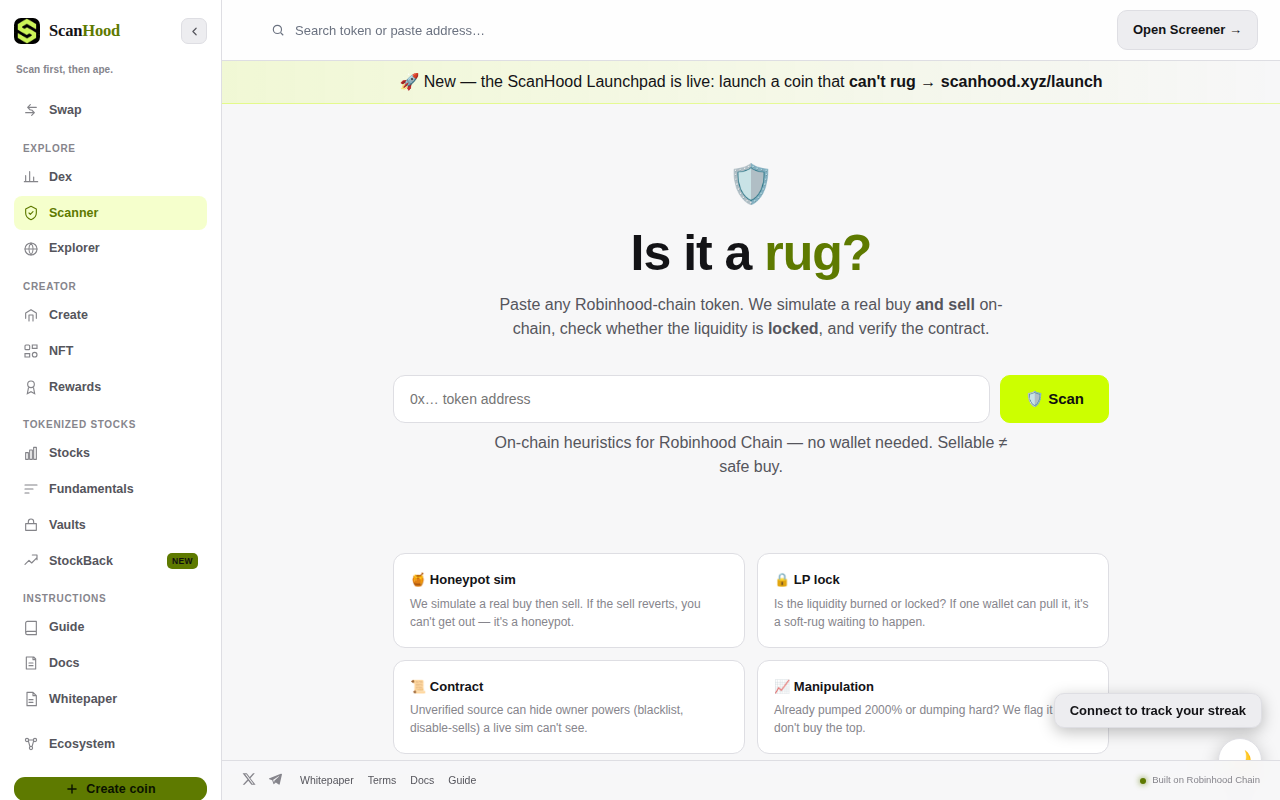
ScanHood’s dashboard on Oct 26, 2026 lists 212 passed, 917 caution, and 97 danger tokens out of 1,226 scanned on the Robinhood Chain.
SCANHOOD FLAGS 7.9% OF 1,226 ROBINHOOD-CHAIN TOKENS AS RUGS
*On Oct 26, 2026 ScanHood scanned every Robinhood‑Chain token and flagged nearly eight percent as outright dangerous. The data splits into passes, cautions, and danger alerts, giving investors a real‑time risk map.*
On October 26, 2026 ScanHood processed every active token on the Robinhood blockchain. The live scanner logged 1,226 contracts, running a buy‑sell simulation, liquidity lock check, and contract audit in seconds. The results are stark: 212 tokens cleared every test, 917 raised caution flags, and 97 were marked DANGER. That translates to 7.9% of the market failing the Rug Check outright. Investors now have a hard data point on which projects may vanish with their capital. The ScanHood Launchpad is also live, promising new coins that cannot rug, but the scanner’s daily tally remains the primary guard against fraud.
What did ScanHood’s October 26 scan uncover about Robinhood‑Chain tokens?
The scanner logged 1,226 contracts in a single run. It simulated a full buy‑sell cycle, checked liquidity lock status, and verified contract code. The output was binary: 212 tokens passed every test, 917 raised caution flags, and 97 were marked DANGER. The danger tally equals 7.9% of the total pool, meaning almost one in twelve tokens could rug pull investors without warning. The caution group signals potential red flags but not definitive failure. ScanHood’s live data provides the only snapshot of on‑chain risk for the entire Robinhood ecosystem on that date.
Pass, caution, and danger: the three‑tier risk model
ScanHood categorises results into three buckets. "Passed" means the token survived a simulated sell, the liquidity is locked or burned, and the contract shows no hidden owner powers. "Caution" flags tokens where one or more checks raised concerns—perhaps a soft‑rug risk or recent price manipulation. "DANGER" marks contracts that reverted on sell, have unlocked liquidity, or contain unverifiable code that could blacklist holders. The model forces investors to treat a caution flag as a warning, not a green light. By quantifying risk, the scanner strips away speculation and replaces it with measurable on‑chain behavior.
How does ScanHood spot honeypots and liquidity traps?
The platform runs a honeypot simulation: it executes a real‑world buy then attempts a sell on the same block. If the sell transaction reverts, the token is a honeypot—investors cannot exit. Next, it inspects the liquidity pool. A burned or time‑locked LP passes; a single wallet with withdrawal rights triggers a soft‑rug alert. Finally, the contract verifier scans source code for owner‑only functions that could blacklist addresses or disable sells. These heuristics operate without a wallet, delivering a transparent, on‑chain risk score instantly.
What does a 7.9% danger rate mean for DeFi investors?
A near‑8% danger rate signals a volatile market where malicious contracts are not rare. For capital on the Robinhood Chain, the odds of buying a token that cannot be sold are higher than many legacy markets. Investors must treat caution flags as potential deal‑breakers and demand liquidity locks before committing funds. The data also pressures developers to lock liquidity and verify contracts, or risk being excluded by a community that now has hard evidence of risk. In short, the scanner forces a shift from hype‑driven buying to evidence‑based due diligence.
Frequently asked questions
How many Robinhood‑Chain tokens did ScanHood scan on Oct 26, 2026?
ScanHood scanned 1,226 Robinhood‑Chain tokens on that date.
What percentage of tokens failed the Rug Check?
7.9% of the scanned tokens failed the Rug Check.
How many tokens were flagged as DANGER?
97 tokens were flagged DANGER in the ScanHood report.
The ScanHood snapshot turns speculation into statistics. With 97 danger alerts and a 7.9% failure rate, the Robinhood Chain is a minefield for the unwary. Investors who ignore the caution tier risk exposure to soft‑rugs, while those who chase unverified hype may fall into honeypots. The data forces developers to adopt transparent liquidity practices or face market exclusion. As the scanner continues daily runs, the on‑chain risk landscape will sharpen, and only projects that survive every check will earn investor trust.
Sources: ScanHood live scan data