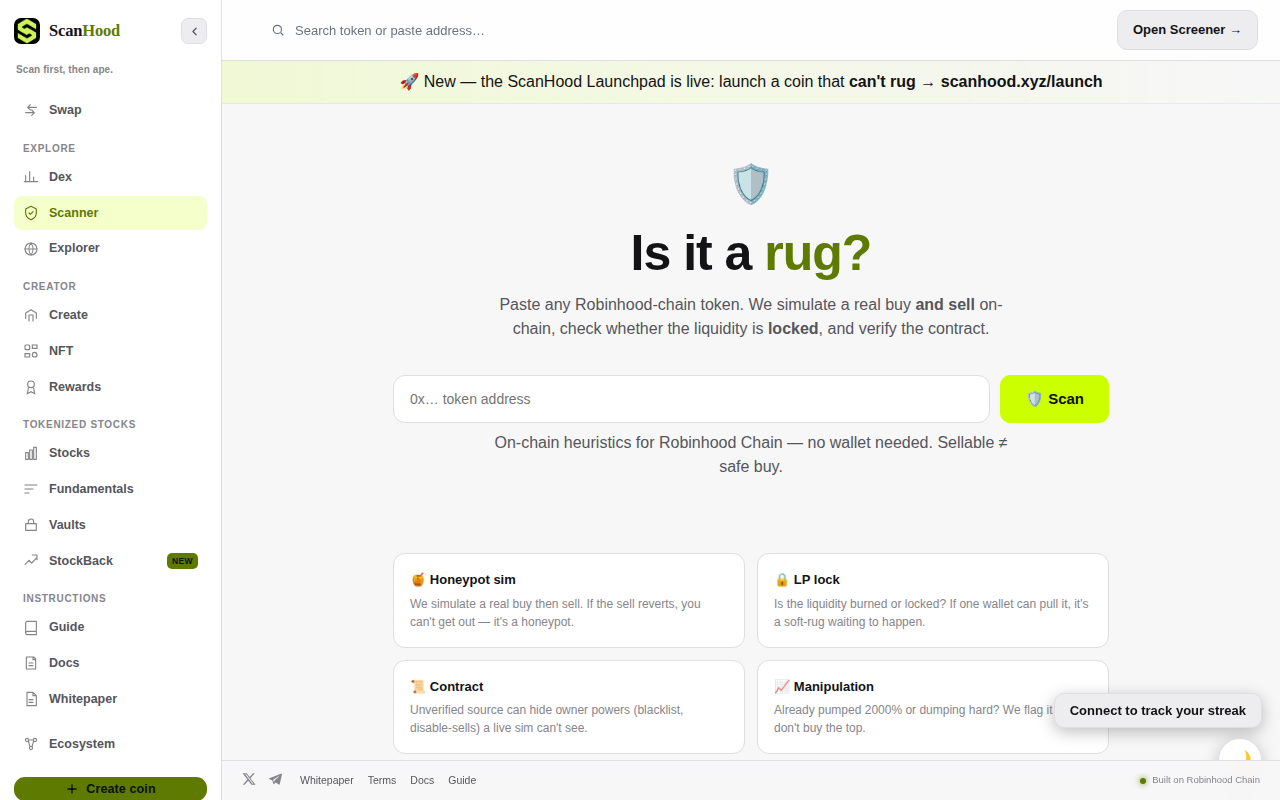
The ScanHood live scanner lists 340 passes, 1,101 cautions, and 146 danger flags for Robinhood-Chain tokens on 2026-10-21.
SCANHOOD FLAGS 9.2% OF 1,587 ROBINHOOD-CHAIN TOKENS AS RUG RISKS
*Daily ScanHood data shows 340 tokens passed, 1,101 flagged caution, and 146 flagged danger. The 9.2% failure rate signals a growing threat on Robinhood Chain.*
ScanHood released its daily safety scan for Robinhood-Chain on 2026-10-21, covering 1,587 tokens. The data shows a stark split: 340 tokens passed, 1,101 raised caution, and 146 flagged DANGER. A 9.2% failure rate underscores a rising risk of rug pulls on the chain. The scanner simulates real buys and sells, checks liquidity locks, and inspects contract verification, delivering a hard‑line verdict on each token's safety. Investors and developers now have a clear, on‑chain metric to gauge exposure before committing capital.
How many Robinhood-Chain tokens failed ScanHood's rug check on 2026-10-21?
ScanHood scanned 1,587 Robinhood-Chain tokens on 2026-10-21. Of those, 146 tokens were flagged as DANGER, representing a 9.2% failure rate. The remaining tokens split into 340 passes and 1,101 caution flags. The DANGER flag indicates a high likelihood of a rug pull, based on on-chain simulations that show sell transactions reverting or liquidity being unprotected.
What does a DANGER flag mean for investors?
A DANGER flag means the token failed the honeypot simulation and liquidity lock checks. ScanHood’s simulator attempts a real buy and sell; if the sell reverts, the token is a honeypot. It also checks whether liquidity is burned or locked; a soft‑rug is flagged when a single wallet can withdraw liquidity. Investors cannot rely on a sellable token as a safety guarantee; the DANGER flag signals a contract that can trap funds.
Which tokens showed extreme price manipulation?
The ScanHood scanner highlights tokens that have already pumped 2000% or are dumping hard. Those tokens receive a caution or DANGER flag, alerting buyers to avoid buying at inflated peaks. The manipulation metric is derived from on-chain price spikes that exceed normal market behavior, indicating coordinated buying or selling that can precipitate a rapid crash.
How can developers launch a rug‑proof token?
ScanHood now offers a Launchpad that runs tokens through the same heuristics before deployment. The service verifies contract code, locks liquidity, and runs honeypot simulations. By passing these checks, a new token can claim it "can't rug" based on the same criteria that flagged existing tokens. Developers must ensure the contract is verified and liquidity is locked to avoid the DANGER flag.
Frequently asked questions
How many Robinhood-Chain tokens failed the ScanHood rug check on 2026-10-21?
146 tokens were flagged DANGER, representing a 9.2% failure rate out of 1,587 scanned.
What does a DANGER flag indicate in ScanHood's report?
It indicates the token failed honeypot and liquidity lock simulations, meaning a sell transaction can revert and liquidity may be unprotected.
Can developers use ScanHood to launch a rug‑proof token?
Yes, ScanHood's Launchpad runs the same heuristics—contract verification, liquidity lock, and sell simulation—before allowing a token to be launched.
The ScanHood numbers leave no room for optimism: nearly one in ten Robinhood-Chain tokens cannot be trusted to let investors exit. As the ecosystem expands, the scanner’s real‑time heuristics become a vital defense against honeypots and soft‑rugs. Developers seeking credibility must clear the same checks, or risk being buried in the 146 DANGER listings. The market will separate resilient projects from those built on deception, and ScanHood is the first line of that separation.
Sources: ScanHood live scan data (https://scanhood.xyz/scanner/)