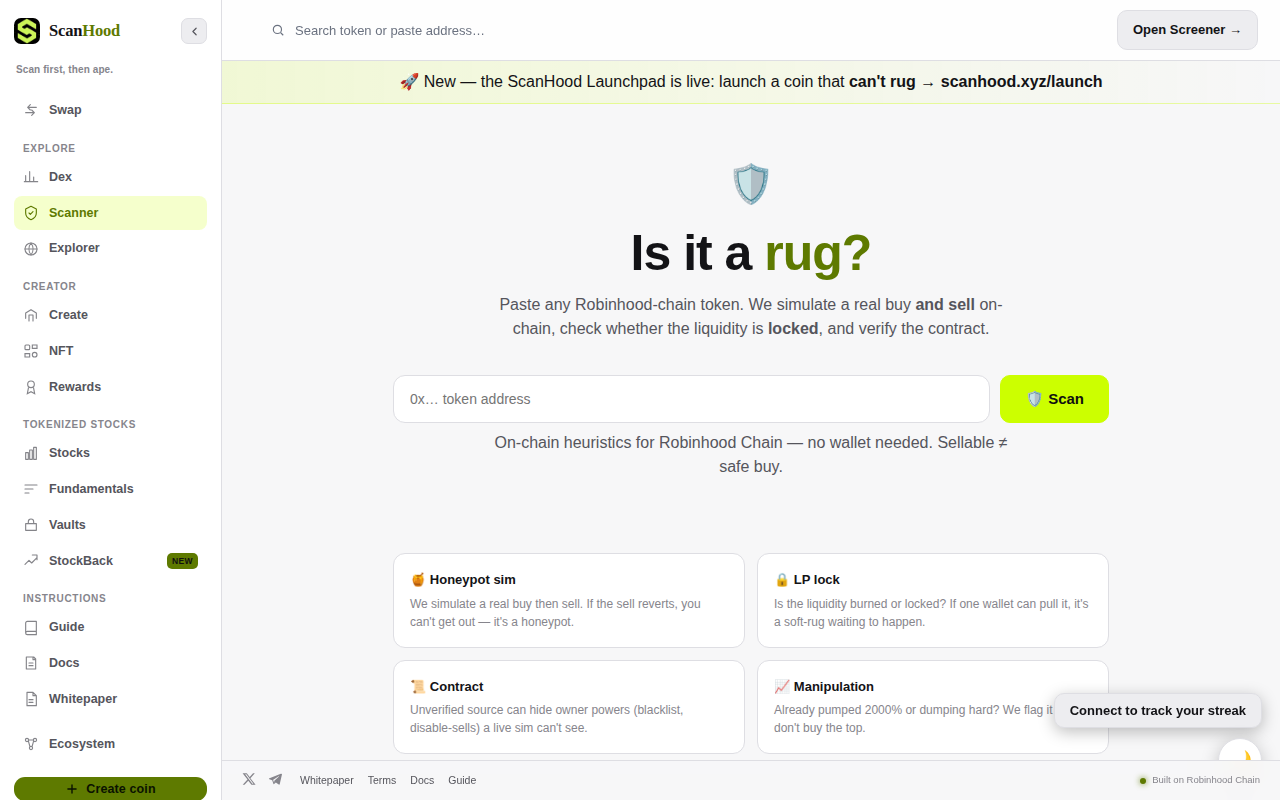
ScanHood's live scanner flagged 69 tokens as danger and 512 as caution out of 718 scanned on the Robinhood chain.
SCANHOOD FLAGS 9.6% OF 718 ROBINHOOD-CHAIN TOKENS AS RUG RISKS
*Daily ScanHood data shows a surge of caution and danger flags on Robinhood-chain tokens. Investors face a hidden threat as nearly one in ten tokens fail the rug check.*
ScanHood released its daily safety scan for Robinhood-chain tokens on November 21, 2026, and the numbers read like a warning siren. Out of 718 tokens examined, 9.6% failed the rug check, while the majority landed in caution or danger zones. The scanner’s real‑time buy‑sell simulation, liquidity lock verification, and contract audit expose hidden threats that standard market data miss. Investors scrolling through launchpads see glossy token pages, but ScanHood’s data shows a landscape riddled with potential traps. The urgency is clear: without a rigorous on‑chain check, traders risk losing capital to contracts that can reverse sales or pull liquidity at will.
How many Robinhood-chain tokens failed ScanHood's rug check on 2026-11-21?
On November 21, 2026 ScanHood scanned 718 tokens on the Robinhood chain. The live scanner flagged 69 tokens as DANGER and 512 as caution, leaving 137 tokens that passed. That translates to 9.6% of the tokens failing the rug check outright. The breakdown shows a majority of tokens—71%—receiving a caution flag, indicating potential risk without an immediate sell block. The DANGER category, representing roughly 10% of the total, signals contracts that could lock liquidity or revert sales. The data underscores a volatile environment where most tokens are not cleanly safe, and a non‑trivial slice are outright hazardous.
What does a caution flag indicate?
A caution flag appears when ScanHood's heuristics detect red flags that stop short of a full sell revert. The 512 tokens flagged caution may have soft‑rug characteristics: liquidity that is not fully locked, owner privileges that could be abused, or recent price manipulation. The scanner simulates a buy and sell; if the sell succeeds but other risk markers exist, the token lands in caution. Investors should treat these tokens as high‑risk, requiring deeper contract audit before committing capital. The caution tier warns of possible future rug scenarios without confirming an immediate honeypot.
Why does a danger flag matter for investors?
Danger flags denote tokens where the simulated sell transaction reverted, confirming a honeypot. The 69 tokens in this category cannot be sold once purchased, trapping funds. Additionally, danger may indicate liquidity that is either un‑locked or controlled by a single wallet, enabling a soft‑rug. For investors, a danger flag is a deal‑breaker: the token is effectively unsellable on-chain. The presence of 69 danger tokens out of 718 scanned highlights that outright scams still permeate the Robinhood chain, demanding vigilance and reliance on tools like ScanHood before any purchase.
How does ScanHood detect honeypots and LP locks?
ScanHood runs an on‑chain simulation that executes a real‑world buy followed by a sell. If the sell transaction reverts, the token is marked a honeypot. The platform also checks liquidity status: it verifies whether liquidity is burned, locked, or held by a single wallet. A soft‑rug is flagged when a single address can pull liquidity. Contract verification adds another layer; unverified source code can conceal owner powers such as blacklisting or disabling sells. Finally, ScanHood flags tokens that have already seen extreme price swings—2000% pumps or hard dumps—signaling manipulation. All checks run without needing a wallet, delivering a transparent risk profile.
Frequently asked questions
What percentage of Robinhood-chain tokens failed the rug check on 2026-11-21?
9.6% of the 718 tokens scanned failed the rug check.
How many tokens were flagged as danger by ScanHood?
ScanHood flagged 69 tokens as DANGER.
How many tokens passed ScanHood's safety scan?
137 tokens passed the ScanHood safety scan.
The ScanHood tally is a stark reminder that the Robinhood chain remains fertile ground for malicious contracts. With 71% of tokens flagged caution and 10% marked danger, the onus is on investors to demand transparent, on‑chain verification before committing funds. As the scanner’s launchpad promises coins that "can't rug," the industry faces a crossroads: embrace rigorous safety tools or continue to gamble on opaque projects. The data from November 21 signals that the latter path will only deepen losses.
Sources: [ScanHood live scan data]