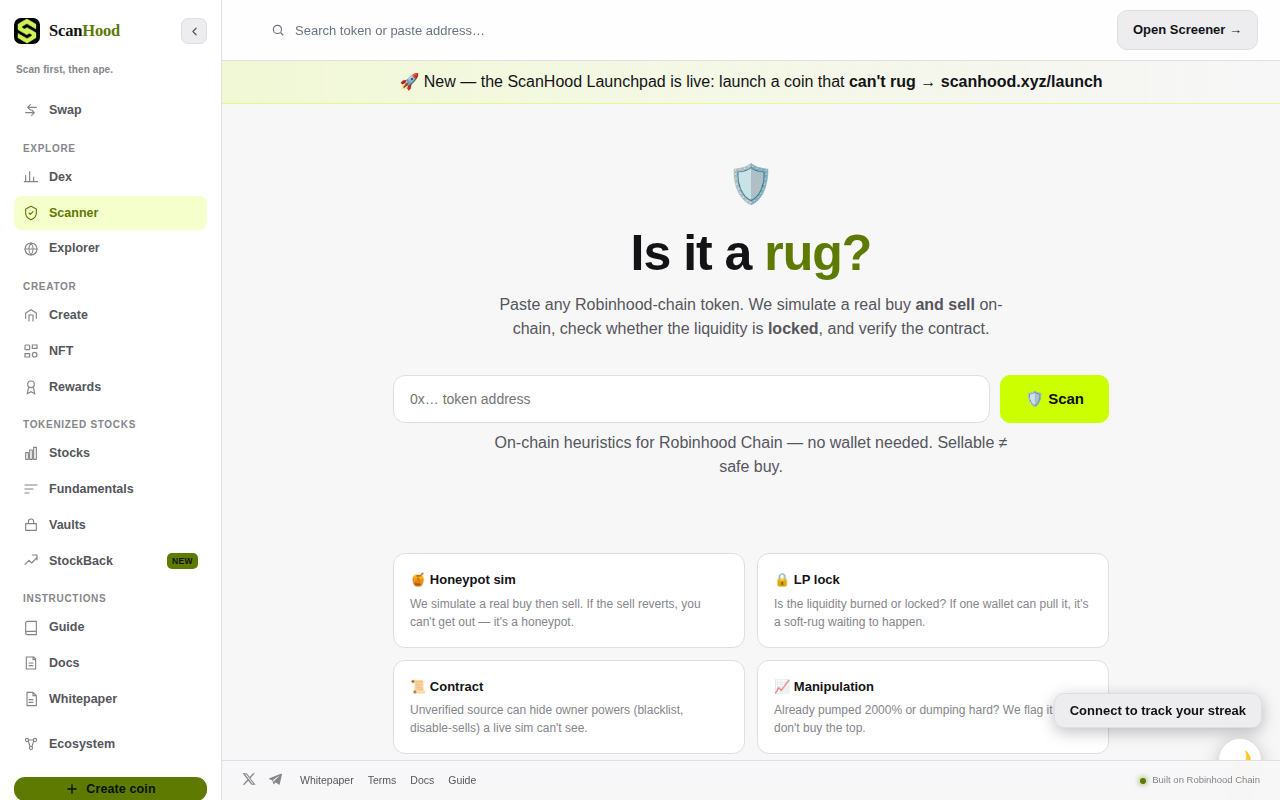
The ScanHood live scanner listed five Robinhood‑Chain tokens, each marked with a caution flag on 2026‑11‑04.
SCANHOOD FLAGS ALL FIVE ROBINHOOD-CHAIN TOKENS WITH CAUTION
*On November 4, 2026 ScanHood’s live scanner evaluated five Robinhood‑Chain tokens and raised a caution flag on each. The result signals immediate risk for investors seeking quick gains on the chain.*
ScanHood released its daily safety scan for Robinhood‑Chain on November 4, 2026. The live scanner examined five tokens and returned a uniform caution flag across the board. No token cleared the test, and none were marked as outright danger. The result is a stark reminder that the Robinhood ecosystem still harbors contracts with hidden risks. With DeFi investors chasing high yields, a single caution can spell a costly exit if liquidity is withdrawn or contract controls are abused. The data forces traders to pause and reassess their exposure before committing capital.
What did ScanHood's November 4 scan reveal about Robinhood-chain tokens?
The scanner processed exactly five tokens on 2026‑11‑04. None cleared the safety test; the report shows 0 passed, 5 flagged caution, and 0 flagged danger. The overall failure rate was recorded as 0.0% for the Rug Check, meaning no token outright failed the honeypot simulation, but every token triggered a caution status. ScanHood’s dashboard lists the tally as 0 passed, 5 caution, 0 danger out of the five examined. The uniform caution flag suggests a systemic issue rather than isolated contract flaws.
Why does a caution flag matter for investors?
A caution flag indicates that the scanner detected one or more red flags—potentially unverified contracts, soft‑rug liquidity, or manipulative price spikes. While the token may still be sellable in a test transaction, the warning warns of hidden owner powers, blacklist capabilities, or liquidity that could be withdrawn by a single wallet. Investors treating a caution as a green light risk exposure to sudden sell‑offs or lock‑in scenarios that the scanner cannot fully simulate. The distinction between caution and danger is critical: danger means a confirmed honeypot, whereas caution signals high probability of future rug.
How does ScanHood's honeypot and LP‑lock simulation work?
The platform runs an on‑chain buy then sell simulation. If the sell transaction reverts, the token is classified as a honeypot. It also checks whether liquidity is burned or locked; a single wallet able to move the pool triggers a soft‑rug warning. Contract verification is another layer: unverified source code can conceal owner powers such as blacklisting or disabling sells. Finally, the scanner flags tokens that have already pumped dramatically—e.g., 2000% gains—or show dumping patterns, alerting users to potential price manipulation.
What next steps can traders take after a caution flag?
Traders should treat a caution flag as a call for deeper due diligence. Verify the contract source on a block explorer, confirm liquidity lock status, and assess recent price movements for abnormal spikes. Consider limiting exposure or avoiding the token until the project provides transparent audits or a verified contract. Using ScanHood’s Launchpad, developers can lock liquidity before release, reducing future caution flags. For investors, the safest route remains tokens that pass both the honeypot test and the LP‑lock check without any caution.
Frequently asked questions
How many Robinhood-chain tokens did ScanHood scan on 2026-11-04?
ScanHood scanned five Robinhood-chain tokens on that date.
What percentage of the tokens failed the Rug Check on November 4, 2026?
The report shows a 0.0% failure rate for the Rug Check.
What safety classification did the scanned tokens receive?
All five tokens were flagged caution; none passed or were marked danger.
The ScanHood snapshot on 2026‑11‑04 paints a bleak picture for Robinhood‑Chain token safety. A blanket caution across all five tokens suggests that the chain’s projects are not yet meeting basic security thresholds. Investors must demand verified contracts and locked liquidity, or risk being caught in a soft‑rug. As the ecosystem matures, only tokens that survive rigorous on‑chain simulations will earn trust. Until then, vigilance remains the only defense.
Sources: ScanHood live scan data