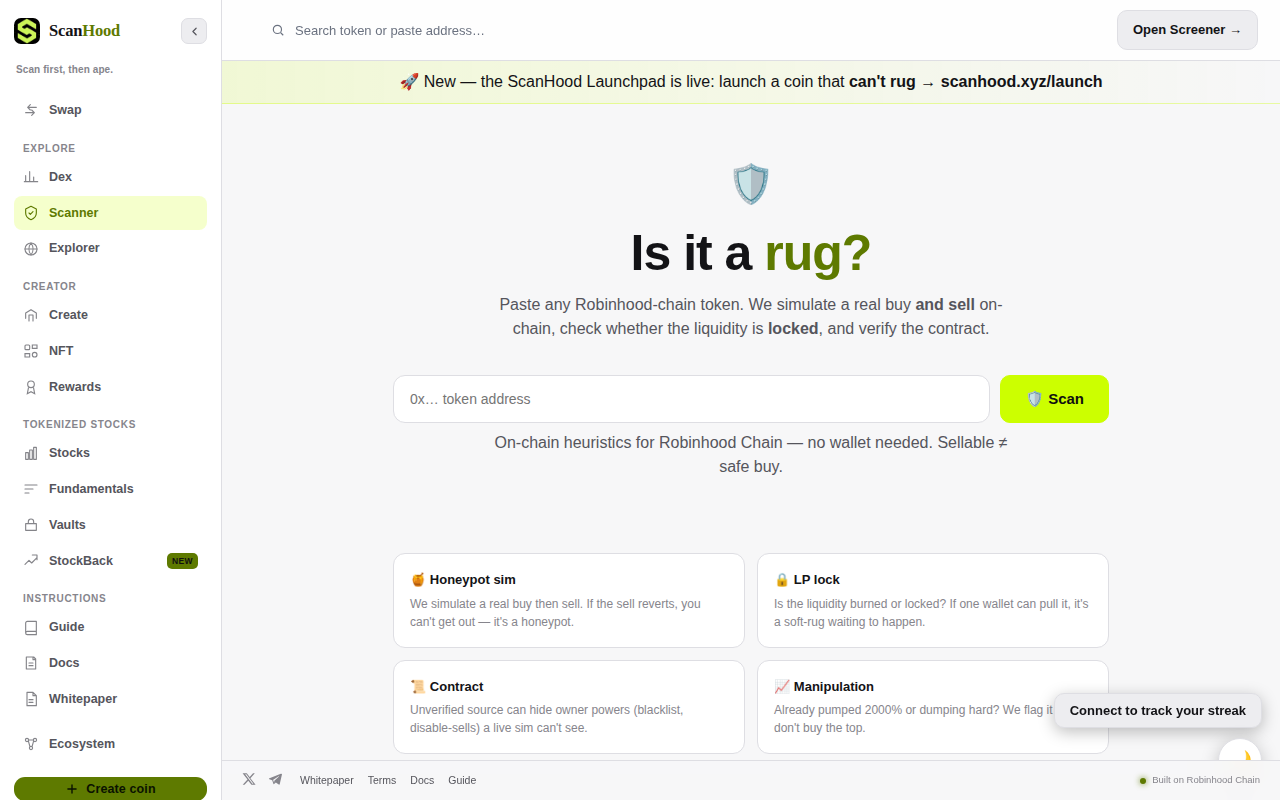
ScanHood’s live scanner flagged 2 of 6 Robinhood‑Chain tokens as DANGER on October 28, 2026.
SCANHOOD FLAGS ONE THIRD OF ROBINHOOD-CHAIN TOKENS AS RUG RISK
On October 28, 2026 ScanHood’s live scanner evaluated six Robinhood‑Chain tokens. A third failed the rug check, highlighting systemic risk on the chain. Investors must treat the warning as a call to action.
On October 28, 2026 ScanHood’s live scanner turned its lens on six Robinhood‑Chain tokens. The platform, which simulates on‑chain buys and sells, checks liquidity locks, and verifies contract integrity, delivered a stark verdict: 33.3% of the tokens failed the rug check. The breakdown was clean—two passed, two earned a caution flag, and two were marked DANGER. Those numbers translate into a clear warning for investors: a sizable slice of the market cannot be safely exited. In an ecosystem where rapid token launches are the norm, the ScanHood report forces participants to confront the real cost of lax security.
What did ScanHood’s October 28 scan reveal?
The ScanHood dashboard recorded six tokens on the Robinhood chain. Two tokens cleared every test and earned a pass. Two more triggered a caution flag, meaning the scanner detected potential red flags but not a definitive failure. The remaining two were marked DANGER, indicating a high likelihood of a honeypot or unlocked liquidity. Overall, 33.3% of the tokens failed the rug check. The split—2 pass, 2 caution, 2 danger—shows a balanced distribution of risk across the small sample, but the danger tier alone signals immediate exposure for any buyer.
How does ScanHood flag a token as DANGER?
ScanHood runs an on‑chain simulation that attempts a real buy followed by a sell. If the sell transaction reverts, the token is a honeypot and receives a DANGER label. The tool also inspects liquidity: if the pool is not locked or can be withdrawn by a single wallet, the token is flagged as a soft‑rug risk. Contract verification is another layer; unverified contracts can hide owner powers such as blacklisting or disabling sales. When any of these heuristics trigger, ScanHood marks the token DANGER, warning users that the asset cannot be safely exited.
Which tokens passed the safety scan?
Two of the six examined tokens met all of ScanHood’s criteria. They passed the honeypot simulation, showed locked or burned liquidity, and had verified contracts without hidden owner powers. The scanner recorded them as safe to buy and sell under current on‑chain conditions. No further caution flags were attached, suggesting that, at the moment of the scan, these tokens presented no immediate rug‑pull vectors.
Why does a 33.3% failure rate matter now?
A one‑third failure rate on a single day signals a volatile environment on the Robinhood chain. Investors chasing high‑yield DeFi projects often overlook the underlying safety checks. When a third of tokens cannot be sold after purchase, capital can be trapped, amplifying market distrust. The presence of two DANGER tokens among six also implies that malicious actors are actively deploying honeypots or soft‑rug mechanisms. This pattern, if it persists, could deter new liquidity inflows and force exchanges to tighten listing standards. The data urges immediate due diligence before any allocation.
Frequently asked questions
What percentage of Robinhood-Chain tokens failed the Rug Check on 2026-10-28?
33.3% of the tokens scanned on that day failed the Rug Check.
How many tokens were flagged as DANGER in the ScanHood report for that day?
Two tokens received a DANGER flag.
What does ScanHood’s “caution” flag indicate?
The caution flag marks tokens that show potential issues but did not trigger a full failure.
The ScanHood snapshot is a microcosm of broader DeFi risk on emerging chains. With two tokens already deemed dangerous, the onus is on traders to run the same checks before committing capital. As the Robinhood chain continues to attract new projects, the scanner’s real‑time alerts could become a de‑facto gatekeeper, separating viable assets from traps. Ignoring the warning invites loss; heeding it preserves liquidity and confidence.
Sources: ScanHood live scan data (https://scanhood.xyz/scanner/)