Shadow Banks, Dead Games, and a Prisoner Who Won't Fight Back: Crypto's Trust Crisis
BIS declares exchanges are shadow banks. JPMorgan says DeFi is too broken for institutions. SBF drops his retrial. Web3 gaming left $15 billion in a mass grave. Meanwhile, BTC derivatives are flashing the most dangerous short squeeze setup in months.

April 23, 2026 will be remembered as the day the institutions spoke. Not with one voice, but with enough volume that the echo is impossible to ignore. The Bank for International Settlements published a 38-page report calling crypto exchanges "shadow banks." JPMorgan released research saying DeFi's security flaws make it structurally uninvestable for institutions. Sam Bankman-Fried, the man who embodied crypto's broken promises, quietly withdrew his retrial motion. And somewhere in the wreckage, 93% of all Web3 gaming projects lie dead after incinerating $15 billion.
This is not a drill. This is a sector-wide trust audit, and the numbers do not flatter.
1. "What Looks Like Savings Is an Unsecured Loan to a Shadow Bank"
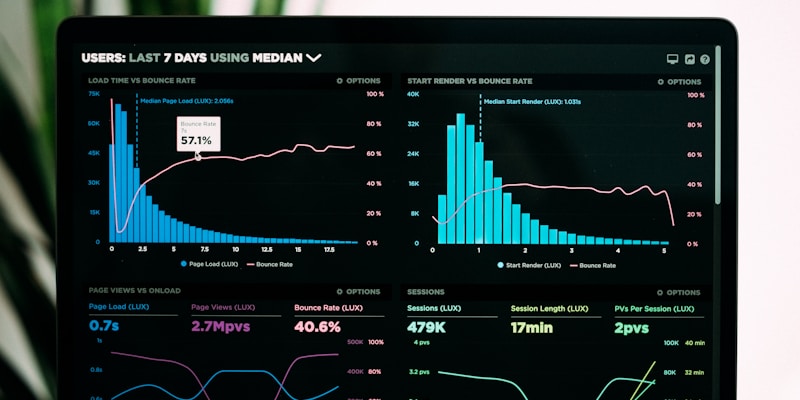
The BIS did not mince words. In a report published Thursday, the central bank of central banks warned that crypto exchanges have evolved from trading platforms into "multifunction cryptoasset intermediaries" that bundle services typically separated across banks, brokers, and exchanges, all without the safeguards that make traditional finance stable.
The report specifically targeted "earn" and yield products heavily marketed to retail users as passive income tools. The structure, according to the BIS, is closer to unsecured lending than savings. Users relinquish control and sometimes ownership of their digital assets to the platform, which then recycles the funds into lending, trading, and market-making strategies. Returns paid to customers are a share of profits from these activities.
There is no FDIC insurance. No transparency on how assets are used. No separation of proprietary trading from customer deposits. The BIS pointed to the collapse of Celsius Network and FTX as proof that these weaknesses are not theoretical. They have already burned billions.
"What unraveled at Celsius and FTX wasn't just poor management, it was a system built on leverage, opacity and deposit-like promises without protection." - BIS FSI Report, April 2026
The report also cited the October 2025 flash crash that triggered $19 billion in forced liquidations across crypto derivatives markets. That event, the BIS argued, showed how quickly these dynamics can spiral when there is no circuit breaker, no lender of last resort, and no deposit insurance to stop the bleed.
The implications cut deeper than the report's text suggests. If 63 central banks now formally classify crypto "earn" products as shadow banking, regulatory action is not a question of if but when. The EU's MiCA framework already requires stablecoin issuers to hold reserves with licensed credit institutions. The U.S. is debating the Clarity Act. The BIS report gives every regulator on the planet the academic ammunition to demand the same structural separations that exist in TradFi: deposit-taking from trading, custody from prop desks, lending from exchanges.
Source: BIS FSI Paper No. 27 - Shadow Banks in Crypto
2. JPMorgan: DeFi Is Too Broken for Wall Street

On the same day the BIS published its shadow banking report, JPMorgan dropped its own bomb. Analysts led by Nikolaos Panigirtzoglou published a Wednesday research note arguing that persistent security vulnerabilities and stagnant total value locked are structurally undermining DeFi's institutional appeal.
The trigger was the KelpDAO exploit. An attacker breached a cross-chain bridge, minted $292 million in unbacked rsETH, and used it as collateral to drain lending protocols, leaving roughly $200 million in bad debt. Contagion spread beyond directly affected platforms. The bank said the exploit erased about $20 billion in TVL within days.
JPMorgan's diagnosis is systemic, not incidental. Hack losses this year are tracking 2025 levels, with infrastructure and bridge exploits still the primary vulnerability despite years of auditing improvements. Cross-chain bridges expand functionality but multiply the attack surface. They rely on complicated designs, shared infrastructure, and sometimes weak validation mechanisms. Billions of dollars in losses trace back to a single category of failure.
The growth picture is equally bleak. While TVL has partially recovered in dollar terms, it is largely unchanged in terms of ether (ETH). That means the recovery is a price effect, not an organic expansion. No new capital is arriving. Existing capital is just worth more because ETH recovered from its lows.
And the flight response is telling. Following the KelpDAO exploit, capital flowed from DeFi lending into Tether's USDT, which benefits from deeper liquidity and faster off-ramps. USDT is now the preferred flight-to-safety asset in crypto. When DeFi's own participants run to a centralized stablecoin issuer after a bridge exploit, the message about trust in decentralized systems writes itself.
"Much as traditional investors shift towards cash in uncertain times, crypto participants have responded to recent exploits by seeking refuge in stablecoins." - JPMorgan Research, April 23, 2026
The institutional read is brutal. If the largest bank in the United States is publishing research saying DeFi cannot scale for institutional use because it keeps getting hacked, and if the central bank of central banks is saying exchanges are shadow banks, the window for crypto to self-regulate into respectability is closing fast.
Source: CoinDesk - JPMorgan DeFi Report
3. SBF Surrenders: The Retrial Motion That Died in a Prison Cell

Sam Bankman-Fried, currently serving a 25-year federal sentence for fraud and conspiracy tied to FTX's 2022 collapse, has withdrawn his request for a retrial. In a letter to the judge overseeing his case, Bankman-Fried said he believes he would not receive a fair hearing but may renew the motion after his direct appeal and a related request for reassignment are decided.
The timing is a problem for the FTX narrative. On the same day Bankman-Fried conceded ground, the world learned that SpaceX agreed to acquire AI coding startup Cursor at a $60 billion valuation. That number turned a routine bankruptcy asset sale into one of the largest missed recoveries in crypto history.
- Alameda invested $200,000 in Anysphere (Cursor) in April 2022 for ~5% of the company at a $4M valuation
- FTX estate sold that same stake for $200,000 in April 2023 during bankruptcy liquidation
- At SpaceX's $60B acquisition price, that 5% stake is now worth $3 billion
- The gap: a 15,000x return that went to whoever bought it from the bankruptcy, not to FTX creditors
Bankman-Fried has spent the past year arguing from prison that FTX's estate destroyed billions in value by liquidating assets too quickly during the bankruptcy. In February, he shared a projection suggesting FTX's net asset value would have reached $78 billion if the estate had held positions instead of selling into the bottom of crypto prices. The Cursor number is the single clearest example of that claim: $200,000 realized versus $3 billion in current value.
FTX customers have been made whole in dollar terms under the bankruptcy distribution plan, receiving back their claim values plus interest. But they did not receive the upside from what those assets became between the filing and now. That upside, in the Cursor stake alone, represents $3 billion of forgone recovery.
Bankman-Fried's parents have publicly advocated for a pardon, appearing on CNN in March to argue that FTX customers were ultimately repaid and the case should be revisited. The Cursor math will feature prominently in that campaign. Whether it matters to a pardon decision is a different question entirely.
The irony compounds. The man who withdrew his retrial motion because he does not trust the system to give him a fair hearing built a system that gave thousands of customers no hearing at all. There is no appeals process for a drained account. No Rule 33 motion for a liquidated position.
Source: CoinDesk - SBF Withdraws Retrial Motion
Source: CoinDesk - FTX Cursor Stake
4. The $15 Billion Graveyard: Web3 Gaming's Mass Extinction

While regulators and banks debated systemic risk, data from Caladan, a market-making and trading firm, delivered a different kind of obituary. Roughly 93% of all GameFi projects are now effectively dead. Token values are down approximately 95% from their 2022 peaks. Funding to studios collapsed 93% by 2025.
- $15 billion invested in Web3 gaming since 2021
- 93% of projects now dead or effectively dead
- 300+ games shut down
- Token values down 95% from 2022 peaks
- Funding to studios down 93% by 2025
- Gaming's share of Web3 VC: 63% in 2022, single digits by 2025
The post-mortems are brutal. Pixelmon raised $70 million in a 2022 NFT mint and, four years later, still has no public game. Ember Sword burned through $18 million over seven years of development before shutting down with no refunds. Gala Games is embroiled in a lawsuit alleging its co-founder diverted $130 million in tokens. Square Enix quietly wound down its Symbiogenesis experiment. Hamster Kombat lost 96% of its users within six months. YGG, the flagship gaming guild token, trades 99.6% below its November 2021 peak.
Caladan's diagnosis is structural, not cyclical. The failure was a mismatch between a model built around financial incentives and an audience that consistently signaled it wanted entertainment instead. Players bought tokens or NFTs, earned rewards in those same assets, and cashed in as long as newcomers kept piling in. When the inflow stopped, the entire loop collapsed. This is not a game design problem. It is a Ponzi mechanics problem dressed up with graphics.
"Capital was destroyed at every layer simultaneously - venture capital, retail NFT buyers, gaming guilds and Telegram's 300-million-user tap-to-earn wave." - Caladan Research, April 2026
Capital has rotated to AI, real-world asset tokenization, and layer-2 infrastructure. The lesson is clear: when your product's core loop requires constant new entrants to pay existing participants, you have not built a game. You have built a liability with a user interface.
Source: CoinDesk - Web3 Gaming Failure Report
5. 100 Firms, One Letter, Zero Markup: The Senate Crypto Lobbies

While the BIS and JPMorgan were diagnosing systemic risk, a coalition of more than 100 U.S. crypto companies and trade groups was pushing in the opposite direction. In a letter to Senate Banking Committee leadership, the coalition called for a markup of the Clarity Act, a bill that would create a federal framework for crypto markets.
The signatories include Coinbase, Circle, Kraken, Ripple, Andreessen Horowitz, Paradigm, Consensys, Anchorage Digital, and Galaxy Digital, alongside developer groups, state blockchain associations, and university chapters of Stand With Crypto.
1. Preserve consumer rewards tied to payment stablecoins
2. Define clear SEC and CFTC oversight roles
3. Protect developers who build non-custodial tools
4. Simplify disclosure rules
5. Create a federal standard that avoids patchwork state laws
6. Prevent a return to "regulation by enforcement"
The coalition warned that the absence of U.S. legislation risks pushing investment, jobs, and development offshore to jurisdictions like the EU, which already has its MiCA framework in place. Ji Hun Kim, CEO of the Crypto Council for Innovation, framed it as a "global race to the top."
The problem is that the Senate Banking Committee has not scheduled a markup. The letter exists. The will does not. Meanwhile, the BIS report gives ammunition to every senator who wants to argue that crypto does not deserve light-touch regulation but rather the same structural separations imposed on banks after 2008. The industry is lobbying for clarity while the regulatory momentum is shifting toward containment.
This is the core tension of April 2026. The industry wants rules so it can operate. The institutions want proof that the system is safe enough to operate in. The data keeps saying it is not. And the clock is running.
Source: CoinDesk - 100+ Crypto Firms Letter
6. The Most Hated Rally: BTC at $80K with Derivatives Primed
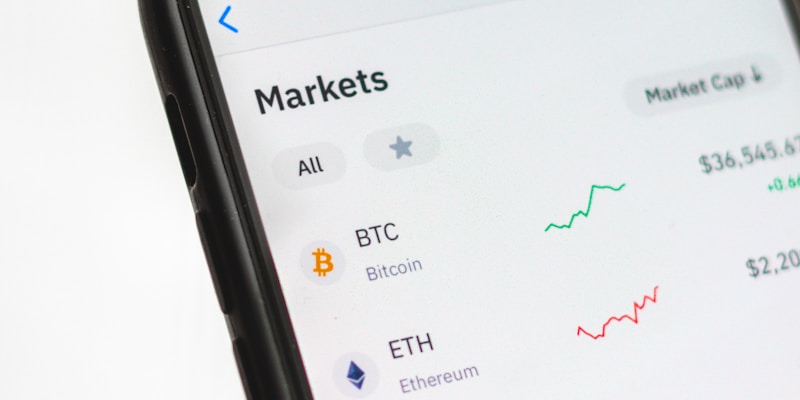
Underneath all of this, Bitcoin is quietly setting up the most dangerous derivatives configuration in months. BTC slipped 0.7% from near $80,000 on Thursday, but the price action masks a much more interesting positioning story.
- Price: ~$77,600 (failed break above $80K)
- Futures open interest: 775K BTC (near record 800K from Wednesday)
- Perpetual funding rates: Negative (bears paying bulls)
- 30-day implied volatility: Flat at 2.5-month lows
- Puts pricier than calls on Deribit
- But: Call option demand concentrated at $80K-$85K strikes
The combination of historically elevated open interest and negative funding rates is rare. This is what analysts are calling a "most hated rally" - price advancing while leveraged positioning remains tilted bearish. If BTC breaks $80,000 convincingly, bears face forced liquidations. The open interest is so large that a squeeze through resistance could trigger cascading short covers, accelerating the move faster than most models predict.
Oil prices added pressure Thursday, rising 1.5% to $103 per barrel after reports that the U.S. seized three Iranian tankers in Asian waters. S&P 500 and Nasdaq futures both lost 0.5%. Risk assets across the board softened.
But the CVD data tells a subtler story. Over the past 24 hours, most major altcoins (XRP, SOL, ETH) showed negative cumulative volume delta - more sellers hitting bids than buyers lifting offers. Only BTC, M, and CRO showed positive CVD readings. Capital is concentrating in Bitcoin and flowing out of the altcoin complex. CoinMarketCap's Altcoin Season Index fell to 32/100, its lowest in 10 days.
Ether dropped 2.5% to $2,320. DeFi tokens morpho and aave led the sector's losses, down 4.6% and 2.8% respectively, as KelpDAO exploit fallout continued to poison sentiment. XRP slipped 2.5% after rejection near $1.44, compounded by GraniteShares delaying its 3x leveraged XRP ETF launch to May.
The one exception: Spark (SPK) surged 70% after listing on Upbit, South Korea's largest exchange. Monero (XMR) rose 3.3%, outperforming privacy peers DASH and ZEC. But these are isolated moves in a market where the broad participation needed to sustain a rally remains absent.
The setup is binary. Break $80K and the short squeeze could be violent. Fail here and the bearish funding was justified. The market is coiled. The direction depends on macro inputs that have nothing to do with crypto: oil, Iran, the Fed, and whether risk appetite survives the current geopolitical pressure.
Source: CoinDesk - BTC Market Update
7. The Quantum Question: $145 Billion in Risk, Not Ruin

One more data point for the trust file. Bitcoin analyst James Check published research this week estimating that roughly 1.7 million BTC, worth about $145 billion at current prices, sit in Satoshi-era addresses that could theoretically be vulnerable to a cryptographically relevant quantum computer.
The number sounds catastrophic. The analysis says it is not. During bull markets, long-term holders routinely distribute between 10,000 and 30,000 BTC per day. At that pace, the entire Satoshi-era supply equates to roughly two to three months of typical profit-taking. In the most recent bear market, more than 2.3 million BTC changed hands in a single quarter, exceeding the full quantum target, with no systemic collapse.
- 1.7 million BTC in vulnerable P2PK wallets (~$145B)
- Long-term holders distribute 10K-30K BTC/day in bull markets
- Full Satoshi supply = 2-3 months of typical profit-taking
- 2.3M BTC changed hands in a single bear market quarter (no collapse)
- Monthly exchange inflows approach 850K BTC
- Derivatives cycle through Satoshi-stash equivalent every few days
Monthly exchange inflows approach 850,000 BTC. Derivatives markets cycle through notional volumes equivalent to the entire Satoshi stash every few days. What appears massive in isolation becomes relatively ordinary against Bitcoin's existing liquidity and turnover.
The real debate is governance, not mechanics. Should the network freeze early coins through something like BIP-361, or let the free market handle quantum risk through price discovery? Adam Back has pushed for optional upgrades over forced freezes. The community is split. The BIS and JPMorgan reports add urgency: if the largest institutional voices are already questioning crypto's systemic stability, a quantum theft event - even a manageable one - could be the pretext for regulatory intervention that goes far beyond what the market damage itself would justify.
Source: CoinDesk - Bitcoin Quantum Threat Analysis
8. The Capital Still Flows: Blockchain Capital's $700M Bet

In the middle of all this institutional skepticism, money is still moving. Blockchain Capital, the San Francisco-based venture firm, is raising $700 million for two new funds - its seventh early-stage fund and second growth fund. The firm, which previously backed Coinbase, Circle, and Tether, manages $2 billion in fee-bearing assets with a total portfolio worth more than $6 billion.
- Target: $700M across early-stage (7th fund) and growth (2nd fund)
- Previous raise: $580M in 2023 for 6th early-stage + late-stage fund
- Total managed: $2B fee-bearing assets, $6B+ total portfolio
- Key portfolio: Coinbase, Circle, Tether
- LP base: university endowments, sovereign wealth funds, U.S. pension plans
The LP base matters. University endowments, sovereign wealth funds, and U.S. pension plans are not retail degens. They are fiduciaries with return targets and risk committees. If they are writing checks for $700 million in crypto venture funds on the same day the BIS calls exchanges shadow banks, it means two things: (1) institutional capital believes crypto's future is real enough to warrant allocation, and (2) that belief is based on structural thesis, not current conditions.
The bet is that regulation will create the framework for institutions to enter. The BIS report, the JPMorgan note, the Senate lobbying letter - all of these are steps toward that framework, even if they read as warnings today. Capital is positioning for the world that exists after the rules get written, not the world that exists while they are being debated.
Source: CoinDesk - Blockchain Capital $700M Fundraise
9. Satsuma: The Corporate Treasury Strategy That Ate Itself
Pantera Capital is urging London-listed Satsuma Technology (SATS) to liquidate its remaining 646 BTC, worth roughly $50 million, and return cash to shareholders. The stock has lost 99% of its value since peaking at 14 pounds ($18.90) last June. SATS traded at 21 pence ($0.28) on Thursday, down 12.5% on the day.
The collapse is a case study in the dangers of corporate Bitcoin treasury strategies. Satsuma raised 164 million pounds ($221 million) through an oversubscribed convertible note in August 2025, backed by Pantera, ParaFi, Kraken, and Digital Currency Group. Bitcoin then surged past $126,000 before falling 50% to $60,000 by early February. Leadership turmoil compounded the decline - a director exited in February, CEO Henry Elder stepped down in March.
- Raised: $221M in August 2025 via convertible note
- Backers: Pantera, ParaFi, Kraken, DCG
- BTC peak: $126K (post-raise) → BTC low: $60K (Feb 2026)
- Current holdings: 646 BTC (~$50M)
- Share price: 21 pence ($0.28) - down 99% from peak
- Market cap: Below the value of its own BTC holdings
Satsuma's market value has fallen below that of its 646 BTC holdings. The company is worth less than the Bitcoin it holds. That discount reflects zero confidence in management, zero confidence in strategy, and zero confidence that the corporate treasury model can survive a 50% drawdown without imploding.
Pantera, one of the backers who enabled the raise, is now the one demanding liquidation. That is not just an investor dispute. It is an admission that the corporate Bitcoin treasury thesis, which worked spectacularly for MicroStrategy during the bull run, becomes a death trap when leverage meets a bear market. Satsuma is the canary in the corporate-treasury coal mine. If it dies here, every other listed Bitcoin proxy will face the same questions.
Source: CoinDesk - Satsuma/Pantera
10. The Arbitrum Problem: Decentralization Until It Is Inconvenient

The KelpDAO exploit produced an unexpected second-order consequence. Arbitrum's Security Council, a small elected group empowered to act in emergencies, froze more than 30,000 ETH (about $71 million) tied to the attacker. The intervention prevented stolen funds from moving. It also reopened crypto's oldest debate: what decentralization actually means when a group of people can step in and override outcomes after the fact.
Steven Goldfeder, co-founder of Offchain Labs, told CoinDesk the starting point was inaction. "The default was do nothing," he said. The freeze emerged from a Security Council member as a "surgical" approach that would not affect other users, network performance, or cause downtime.
The technical reality is more nuanced than the language suggests. The "freeze" required the use of privileged powers to transfer funds out of the attacker-controlled address and into a wallet with no owner, rendering them immobile. This is not a passive lock. It is an active intervention.
- Security Council: elected by token holders every 6 months
- Power: emergency intervention to protect the network
- Action: transferred $71M in ETH from attacker address to unowned wallet
- Argument for: prevented laundering, bought time for recovery
- Argument against: proves a small group can override transactions post-execution
- Core question: if intervention is possible, where is the line, and who decides?
The concern is not this specific case. It is precedent. If a small group can step in to stop a hacker, the same mechanism could theoretically be used under regulatory pressure or political influence. The BIS report on shadow banking explicitly flags this category of risk - centralized control points in ostensibly decentralized systems. When the Security Council demonstrates that power exists, regulators will start asking when it will be used at their direction rather than the community's.
Source: CoinDesk - Arbitrum Security Council Freeze
The Bottom Line

April 23, 2026 is not a crisis day. No exchange collapsed. No token went to zero that was not already heading there. Bitcoin is at $77,600, not $7,600. The market is functioning.
But the institutional diagnosis is now complete, and it is unanimous. The BIS says exchanges are shadow banks. JPMorgan says DeFi is too broken for institutional capital. The data says 93% of Web3 gaming is dead. The corporate treasury thesis has a live casualty in Satsuma. SBF has given up fighting. The quantum debate is shifting from "could it happen" to "what do we do when it does." And the Senate is being lobbied by 100 firms while scheduling zero markups.
The trust deficit is the trade. Every piece of institutional analysis published today says the same thing in different words: crypto's infrastructure cannot be trusted at scale until the structural weaknesses are fixed. That is not a death sentence. It is a construction permit. The firms that fix these problems - the ones that build auditable bridges, insured custody, transparent yield products, and governance mechanisms that survive regulatory scrutiny - will own the next cycle.
Everyone else will join the $15 billion graveyard.
Sources: Bank for International Settlements FSI Paper No. 27 (April 2026), JPMorgan Research (April 23, 2026), Caladan Web3 Gaming Report (April 2026), CoinDesk, Bloomberg, U.S. District Court Southern District of New York filing, Blockchain Capital fundraising reports via Bloomberg. Market data as of April 23, 2026 18:00 UTC.