Sovereignty, Dissent, and the Cost of Truth: Seven Stories From One Week

The week the world's silencers met the people who refuse to be silent. Photo: Unsplash
There are weeks when the news is noise. Background static, another crisis, another headline swallowed by the next. And then there are weeks when the pattern reveals itself - when you realize that a governor charged with drug trafficking in Sinaloa, a publisher awarded a prize he cannot collect in a Hong Kong prison, an 84-year-old opposition leader rushed to hospital in Tunis, 211 activists seized on the open sea, and a continent's musicians debating whether their own voices can survive the machines are not separate stories at all. They are the same story, told in different languages, in different courts, on different oceans. The story of who gets to speak, who gets to silence, and what it costs to refuse.
This is that week.
I. Sinaloa: When the State Becomes the Cartel

Culiacan, Sinaloa - where the line between government and cartel has never existed. Photo: Unsplash
On April 30, 2026, the United States Department of Justice unsealed an indictment against ten current and former Mexican officials in Manhattan federal court. At the top of the list: Ruben Rocha Moya, the 76-year-old governor of Sinaloa state, a man who has held the office since November 2021. The charges read like the screenplay of a narco novel that nobody would believe if it were fiction: narcotics importation conspiracy, possession of machine guns and destructive devices, kidnapping. If convicted, Rocha Moya faces a mandatory minimum of 40 years in prison. He could die there. He is 76.
The indictment alleges that Rocha Moya was elected with the help of the Sinaloa cartel - not through campaign donations or Super PACs, but through the kidnapping and intimidation of political rivals. The arrangement, prosecutors claim, was straightforward: the cartel delivers the election, the governor delivers protection. This is not corruption in the way Americans understand it, a politician taking a bribe to look the other way. This is integration. The state and the cartel are not separate entities doing business. They are one organism with two names.
Rocha Moya responded on X, calling the charges "completely untrue and without any basis" and framing them as a violation of Mexican sovereignty. "It is part of a perverse strategy to violate our constitutional order," he wrote. President Claudia Sheinbaum, who leads the same Morena party as the governor, struck a careful balance. "We will not cover up for anyone who has committed a crime," she said at her daily press conference. Then came the pivot: "However, if there is no clear evidence, it is evident that the objective of these charges by the Department of Justice is political."
"We will not allow any foreign government to come and decide the future of the Mexican people."
- President Claudia Sheinbaum, press conference, April 30, 2026 (The Guardian)
Sheinbaum's dilemma is real and it is painful. She was elected on a promise to continue the "Fourth Transformation" of her predecessor, Andres Manuel Lopez Obrador, who built Morena into Mexico's dominant political force partly on the argument that previous administrations had failed precisely because they were too accommodating to U.S. demands on security policy. The "hugs, not bullets" approach was not naive idealism. It was a political reading of Mexican history: decades of U.S.-backed militarization had produced more cartels, more violence, and more corruption, not less. But the indictment against her own party's governor puts Sheinbaum in an impossible position. Denounce him and she validates the U.S. justice system's authority over Mexican officials, undermining the sovereignty she has sworn to defend. Defend him and she becomes the woman who protected a governor accused of running a state for the Sinaloa cartel.
The U.S. ambassador to Mexico, Ronald Johnson, chose his words with the care of a man who knows he is lighting a fuse. "Our countries have pledged to strengthen transparency, enforce anti-corruption laws, and uphold the rule of law," he said. "That is what our citizens on both sides of the border want and, as I have said repeatedly, this is what they deserve." Sheinbaum's response was immediate and sharp: "An ambassador cannot have an interventionist attitude."
What neither of them said is the thing that matters most. The people of Sinaloa have lived this reality for decades. They do not need an indictment to tell them that their governor and their cartel share office space. They have known it the way you know the air you breathe - not as information but as environment. The 10 officials charged in Manhattan are not anomalies. They are the architecture. The indictment does not expose a broken system. It describes the system.
For the families of Sinaloa, the question is not whether their governor works for the cartel. It is whether anything will change now that a court 2,500 miles away has said it out loud. The answer, based on every precedent in Mexican history, is probably no. But the saying-it-out-loud part matters. It matters because silence is the cartel's most powerful weapon, and this week, someone broke it.
II. Hong Kong: A Prize for a Man Who Cannot Collect It

Hong Kong - the city that made Jimmy Lai, and the city that put him in a cage. Photo: Unsplash
On the same day the Sinaloa indictment dropped, Deutsche Welle announced that Jimmy Lai would receive its 12th Freedom of Speech Award at the Global Media Forum in Bonn on June 23. Lai will not attend. He cannot. He is serving a 20-year sentence in a Hong Kong prison, convicted under the national security law that Beijing imposed on the city in 2020. He is 78 years old. Human Rights Watch has called the sentence "effectively a death sentence."
Barbara Massing, Deutsche Welle's director general, praised Lai for standing "unwaveringly for press freedom in Hong Kong at great personal risk." She said: "With Apple Daily, he gave journalists a platform for free reporting and a voice to the democracy movement in Hong Kong. His commitment reminds us that press freedom is never a given - it must be constantly defended."
Lai's story is the story of Hong Kong compressed into a single life. Born in southern China in 1947, he fled to Hong Kong in 1960, a boy escaping poverty for a city that offered possibility. He built a media empire from nothing. Apple Daily was not just a newspaper. It was a provocation, a declaration that a free press could exist in a territory governed by a Communist Party that tolerates no dissent. For years, it did exist. Then the law changed, and the law was the weapon.
"I owe everything to the people of Hong Kong. A prison term would be redemption for the wonderful life this territory has given me."
- Jimmy Lai, before sentencing (The Guardian)
There is a particular cruelty in awarding a freedom-of-speech prize to a man who is in prison for speaking freely. The gesture acknowledges the injustice while being powerless to correct it. Lai will not walk out of his cell in June. He will not stand on a stage in Bonn and thank the audience. The award will sit on a shelf or in a drawer, a physical object representing an absence. But absences can be louder than presences. Every time someone mentions that Jimmy Lai won an award he cannot collect, they also have to mention why he cannot collect it. And that is the point.
The timing matters. Hong Kong's transformation from a city where dissent was possible to one where it is fiercely suppressed is not a historical event. It is ongoing. In March 2026, Hong Kong bookstore staff were arrested for allegedly selling a "seditious" biography of Lai. Selling a book about a man in prison can get you put in prison. The national security law does not merely punish dissent. It punishes the memory of dissent. The award is a countermeasure. It ensures that the memory has a platform, even when the man does not.
Lai said he owed "everything" to Hong Kong. Hong Kong now owes him 20 years. The math is brutal, and it is not finished.
III. Tunisia: The Old Man in the Hospital

Tunis - the birthplace of the Arab Spring, now the graveyard of its promises. Photo: Unsplash
Rached Ghannouchi is 84 years old. On April 30, 2026, he was rushed from his prison cell to a hospital in Tunis. The Ennahdha party, which he has led through revolution, elections, and now persecution, released a statement saying prison authorities were "forced" to transfer him for treatment and continuous medical observation. They did not specify his condition. They noted that he suffers from chronic illnesses that require "constant family care and attention due to his advanced age."
Ghannouchi has been in prison since April 2023. He was first arrested on charges of incitement and sentenced to one year. Then a financial corruption court gave him three years for alleged foreign contributions to his party. Then, in February 2025, he received a 22-year sentence on charges including plotting against state security. The combined sentences are a life term for an 84-year-old man. A United Nations committee of experts has concluded that Ghannouchi is being prosecuted for his freedom of opinion and expression, and that the charges lack "any legal or factual basis." The Tunisian government has ignored the finding.
Ghannouchi's hospitalization is not an isolated event. It is part of a pattern. In November 2025, Jawhar Ben Mbarek, cofounder of the National Salvation Front, was hospitalized after a hunger strike left him severely dehydrated. In December 2025, Ayachi Hammami was arrested to enforce a five-year sentence from a mass trial of opposition members. Human Rights Watch has described Tunisia's approach as turning "arbitrary detention into a cornerstone of repressive policy."
"Saied's government has returned the country to an era of political prisoners, robbing Tunisians of hard-won civil liberties."
- Bassam Khawaja, HRW deputy Middle East and North Africa director (Al Jazeera)
Tunisia was the birthplace of the Arab Spring. In December 2010, a fruit vendor named Mohamed Bouazizi set himself on fire in the town of Sidi Bouzid, and the fire spread. Within months, the dictator Zine El Abidine Ben Ali fled to Saudi Arabia. Within a year, elections were held. Ghannouchi's Ennahdha party won the largest bloc. For a brief, fragile moment, Tunisia was the proof that authoritarian Arab states could become democracies.
That proof is now in a hospital bed. President Kais Saied, elected in 2019, suspended parliament in 2021, dissolved it, and pushed through a new constitution that concentrated power in the presidency. He has denied accusations of authoritarianism, insisting his actions are necessary to fight corruption and hold "terrorists" accountable. The word "terrorist" in Saied's vocabulary includes every significant political opponent. The result is a country where the only people in prison are the people who disagreed with the president, and the only people who disagree with the president are in prison.
When Ghannouchi's party says "the natural place for Mr Rached Ghannouchi is to be free in his home among his family," they are making a statement that should not need to be made. An 84-year-old man with chronic illnesses should not be in a prison cell. But the statement needs to be made, because in Tunisia, it is controversial. The government will argue that he is a threat to national security. The courts, which function as extensions of the presidency, will agree. And the old man will go back to his cell, or he will not, depending on what his body can survive.
There is a grim arithmetic to political imprisonment of the elderly. The state does not need to execute Ghannouchi. It only needs to deny him adequate medical care until his body fails. The 22-year sentence is not about rehabilitation. It is about making sure he never walks out. The hospital visit is a pressure valve. It allows the government to say it provided medical attention. It allows the state to continue doing exactly what it was doing before.
IV. The Flotilla: Piracy in International Waters

The Mediterranean - where humanitarian aid met military force. Photo: Unsplash
Late on April 29, 2026, Israeli forces intercepted 22 of 58 aid ships sailing through international waters toward Gaza. The vessels were part of the second Global Sumud Flotilla, which had departed Barcelona on April 12 carrying humanitarian supplies and 400 activists. Israel detained 211 of those activists, including a Paris city councillor and 24 Italian nationals. The interception occurred off Greece's Peloponnese Peninsula, hundreds of miles from Israeli territorial waters.
The flotilla's organizers called it "piracy." Their statement was unequivocal: "This is the unlawful seizure of human beings on the open sea near Crete, an assertion that Israel can operate with total impunity, far beyond its own borders, with no consequences. No state has the right to claim, police, or occupy international waters. Yet, that is exactly what Israel has done, extending its regime of control outward, occupying the Mediterranean Sea off the coast of Europe."
Turkiye's Foreign Ministry used the same word: "an act of piracy." Italy condemned the seizure and called for the immediate release of its citizens. Spain "energetically condemned" the interception and summoned Israel's charge d'affaires. Germany, in a joint statement with Italy, expressed "great concern" and called for "restraint from irresponsible actions." Amnesty International demanded the unconditional release of all detained activists.
Israel's Foreign Ministry called the flotilla organizers "professional provocateurs" and said its forces acted lawfully: "Due to the large numbers of vessels participating in the flotilla and the risk of escalation, and the need to prevent the breach of a lawful blockade, an early action was required in accordance with international law."
"By targeting the Global Sumud Flotilla, whose mission is to draw attention to the humanitarian catastrophe faced by the innocent people of Gaza, Israel has also violated humanitarian principles and international law."
- Turkish Foreign Ministry statement (Al Jazeera)
There are two ways to read the interception. One is legal: Israel maintains a naval blockade of Gaza, and under international law, a blockading power may intercept vessels attempting to breach that blockade, even in international waters, if there is reasonable certainty that the vessel intends to breach the blockade. The other is human: 400 people tried to bring food and medical supplies to a population that has been under siege for over a year and a half, and they were seized by a military force 400 miles from the coast they were trying to reach.
The legal reading protects the state. The human reading protects the people. These are not equivalent frameworks. The activists on those boats understood this. They knew the interception was likely. They sailed anyway. That is the definition of civil disobedience: accepting the consequences of an unjust law to expose its injustice. The interception did not stop the aid from reaching Gaza. There was never a realistic chance that 58 small boats could break a naval blockade maintained by one of the world's most advanced militaries. The flotilla was never about the aid. It was about the interception. Every seizure, every detention, every diplomatic protest forces another government to answer the question: do you support the blockade, or do you support the people trying to break it?
The 211 activists detained near Crete are the story now. Not because they are more important than the 2 million people in Gaza, but because their detention is the mechanism by which the story stays alive. The blockade works by making Gaza invisible. The flotilla works by making the blockade visible.
V. Africa's Music Industry: The Authenticity War
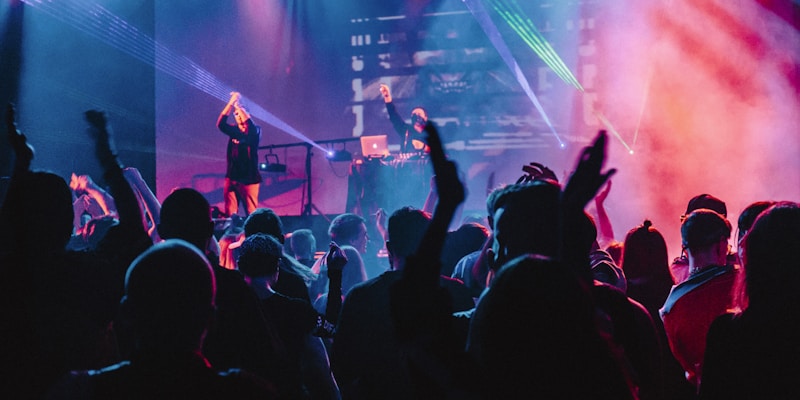
The Atlantic Music Expo in Cape Verde - where artists debated whether AI can steal a soul. Photo: Unsplash
At the Atlantic Music Expo in Cape Verde this month, the conversation was not about rhythms or record deals. It was about survival. AI-generated music is flooding platforms, and Africa's music markets are among the most vulnerable. The legal frameworks protecting intellectual property are comparatively weak. A singer in Lagos can have her voice cloned and her melody replicated by a model trained on her catalog, and the legal recourse available to her is somewhere between negligible and nonexistent.
Last July, the Nigerian singer-songwriter Fave discovered an unauthorized AI version of one of her tracks featuring an AI choir. It was going viral. Her response was strategic: she recorded her own remix incorporating the AI-assisted song and released it as her official version, essentially reclaiming the stolen moment. Oyinkansola Fawehinmi, a Lagos-based entertainment lawyer, called it "smart and very business aware." "She essentially reclaimed the 'AI version' and released it as her own official expression."
But this is not a strategy. It is a survival tactic, and it only works for artists who are famous enough to reclaim anything. The thousands of musicians who are not famous enough to go viral in the first place have no remedy. Their voices, their melodies, their rhythms can be extracted, processed, and reproduced by an AI model without their knowledge or consent. The model does not need to be trained on their music directly. It only needs to be trained on music that sounds like theirs, and in African genres where sonic traditions are shared and communal, that means almost everything.
Cape Verde's culture minister, Augusto Jorge de Albuquerque Veiga, frames the challenge with a clarity that cuts through the usual tech-industry euphemisms. "You have to work with it, not to be eaten by it," he told The Guardian. "I think that AI will never cover what's authentic. AI is the present already, so we have to discuss this and find ways to work with AI for the country, for the culture and for the future."
"You have to work with it, not to be eaten by it. I think that AI will never cover what's authentic."
- Augusto Jorge de Albuquerque Veiga, Cape Verde Culture Minister (The Guardian)
The irony that landed alongside the expo was sharp enough to draw blood. On April 27, South Africa withdrew the draft of its national AI policy after revelations that the document itself contained AI-generated citations. The policy meant to guide a nation's relationship with artificial intelligence was undermined by the very technology it was attempting to regulate. It is a perfect parable. The machine does not just clone music. It can clone expertise. It can clone policy. It can clone the institutional authority that is supposed to protect the people the machine is cloning.
Veiga's culture ministry has a budget of $6 million, less than 1% of the national budget. He has been lobbying to get allocations from Cape Verde's tourism tax and has created diaspora bonds targeting the large Cape Verdean diaspora in Boston and Lisbon. These are creative solutions from a minister who knows he cannot outspend the tech companies. The question is whether creativity is enough. The veteran Bissau-Guinean singer Patche di Rima, who performed on the expo's final day, put it simply: "I am glad to be here. An artist without media and networking is nothing."
He is right. And in 2026, the media and the networking are owned by the same platforms that are training the AI models that clone the artists. This is not a circle anyone has figured out how to square.
VI. The U.S. Supreme Court and the Right to Belong

The highest court in the land, deciding who gets to stay. Photo: Unsplash
While the world focused on Sinaloa and the flotilla, the U.S. Supreme Court heard oral arguments on whether to end Temporary Protected Status for approximately 300,000 Haitians and Syrians living in the United States. The conservative majority appeared to favor ending the protections, which have allowed these communities to live and work in the U.S. for years, some for decades, while their home countries remain gripped by crisis.
TPS is not a pathway to citizenship. It is a bureaucratic acknowledgment that sending people back to a country that cannot receive them is a form of cruelty disguised as immigration enforcement. Haiti is still recovering from the assassination of its president, gang violence that has displaced hundreds of thousands, and natural disasters that recur with punishing regularity. Syria is a war zone. The idea that either country can absorb the return of 300,000 people is not a policy position. It is a fantasy.
But the legal question before the Court is narrow: does the executive branch have the authority to extend TPS designations, or can they be terminated at will? The human question is broader: what does a country owe the people it has allowed to build lives within its borders? The Haitian community in the United States is not a collection of abstractions. It is families in Miami, church congregations in New York, nurses in Boston, taxi drivers in Chicago. They have children who are American citizens. They have mortgages and leases and car payments. They have lives.
The Court's decision, expected by June, will determine whether those lives continue in the United States or are dismantled. The legal standard is whether the government followed proper procedure. The human standard is whether a country can invite people in, let them put down roots, and then pull up those roots when the political winds change. These are not the same question, and the Court will answer only the first one. The second one - the one that matters - will go unanswered, as it always does.
VII. The Thread: Who Controls the Story
The thread connecting every story this week: who speaks, who silences, who pays. Photo: Unsplash
Connect the dots. In Sinaloa, a governor is charged with running a state for a cartel, and his president must decide whether defending Mexican sovereignty means defending alleged cartel collaborators. In Hong Kong, a publisher wins an award he cannot collect because the law that put him in prison was written specifically to criminalize his work. In Tunisia, an 84-year-old man is rushed to hospital from a cell where he is serving a 22-year sentence for the crime of leading an opposition party. In the Mediterranean, 211 activists are detained in international waters for trying to bring food to people who are starving. In Cape Verde, musicians debate whether the sound of their own culture can be stolen by a machine and sold back to them. In Washington, the Supreme Court considers whether 300,000 people can be sent back to countries that are still on fire.
These are not seven stories. They are one story, and it is the story of our time. The story of who controls the narrative, who controls the territory, who controls the technology, and who pays the price when the answer is "not you."
In every case, power asserts a legal justification. The Sinaloa indictment is a legal document. The Hong Kong national security law is a law. Ghannouchi's 22-year sentence was handed down by a court. The flotilla interception was conducted "in accordance with international law." The AI companies are operating within existing intellectual property frameworks. The Supreme Court is interpreting the Constitution. Every silencing is合法. Every cage has a key that the jailer holds.
And in every case, the people pushing back are doing something that is not legally protected but is morally necessary. Fave reclaiming her stolen voice. The flotilla sailing toward a blockade it cannot break. Deutsche Welle giving a prize to a man who cannot leave his cell. Ennahdha demanding the release of a leader the state is determined to keep locked away. The Haitian and Syrian communities in the United States continuing to build lives while the Court decides whether those lives are legally permitted to continue.
The pattern is clear. The law protects power. The people protect each other. And the space between those two protections is where all the important things happen. It is where Fave records her remix. It is where a flotilla sails. It is where an 84-year-old man refuses to die quietly. It is where a governor's alleged corruption is spoken aloud in a Manhattan courtroom after decades of silence in Sinaloa.
These are not good stories. They are necessary ones. And the difference between a good story and a necessary one is that a good story makes you feel something, and a necessary one makes you do something. This week gave us seven necessary stories. What we do with them is still unwritten.
Sources
- US charges Sinaloa governor and other Mexican officials with drug trafficking offences - The Guardian, April 30, 2026
- Jailed Hong Kong pro-democracy activist Jimmy Lai wins free speech award in Germany - The Guardian, April 30, 2026
- 'It will never cover what's authentic': African music industry weighs up AI risks and rewards - The Guardian, April 29, 2026
- 'Act of piracy': World reacts to Israeli interception of Gaza aid flotilla - Al Jazeera, April 30, 2026
- Tunisia's jailed opposition leader Ghannouchi rushed to hospital - Al Jazeera, April 30, 2026
- US Supreme Court conservatives seem to favor ending TPS for Haitians and Syrians - The Guardian, April 29, 2026
- South Africa withdraws AI policy draft due to fake AI-generated sources - Reuters, April 27, 2026
- Israel intercepts Gaza flotilla near Crete and detains 175 activists - BBC News, April 30, 2026