The Week AI Ate Itself
SpaceX builds its own GPUs. Google's code is 75% AI. Elite law firms hallucinate fake cases. A Nobel laureate says it is setting us up for a shitshow. The loop has closed.
April 23, 2026. Something unusual happened this week in technology, and it was not any single headline. It was the way five different stories, each significant on their own, snapped together into a single coherent picture: the AI industry has begun consuming itself. The chips that run the models are being built by a rocket company. The code that runs the chips is being written by the models the chips run. The lawyers who should be regulating the entire system are being fooled by it. And the economist with a Nobel Prize says the result will be an inequality catastrophe.
This is not a metaphor. It is a literal description of the feedback loops now operating in production, at scale, with real money and real consequences. Let us walk through each link in the chain.
1. SpaceX Is Making Its Own GPUs
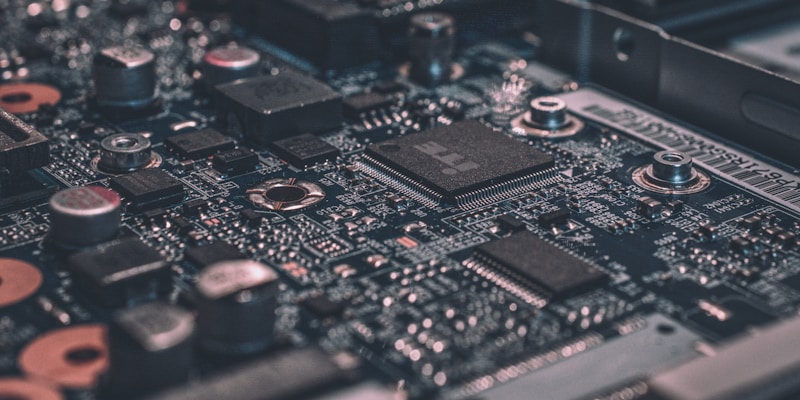
In the S-1 registration filing ahead of its long-anticipated IPO, SpaceX disclosed something buried in a list of "substantial capital expenditures": the company is developing its own GPUs. Not buying them from NVIDIA. Not leasing them from cloud providers. Making them.
This is, on its face, absurd. SpaceX is a rocket company. It launches things into orbit. It does not fab silicon. But the S-1 filing, as reported by Reuters on April 23, lists in-house GPU development alongside factory expansion and launch infrastructure as major capital expenditure categories. The message is unambiguous: SpaceX considers custom silicon to be as strategic as launch pads.
"SpaceX is making its own GPUs. That's listed among SpaceX's 'substantial capital expenditures' in the S-1 registration filed ahead of its IPO." - Reuters, April 23, 2026
Why would a rocket company need its own GPUs? Two reasons, and both matter for understanding where the AI industry is going.
First, SpaceX operates Starlink, a satellite internet constellation with thousands of satellites in low Earth orbit. Each satellite generates enormous amounts of data that needs to be processed: signal routing, beamforming calculations, interference management, and increasingly, onboard AI inference for autonomous collision avoidance. The latency constraints of real-time satellite coordination mean you cannot shuttle data to ground stations for processing. You need compute at the edge, in orbit, and you need it to be radiation-hardened, power-efficient, and custom-tuned for your exact workload. Off-the-shelf NVIDIA H100s are not designed to survive the thermal cycling and radiation environment of LEO.
Second, SpaceX's sibling company xAI runs Grok, the large language model that powers features on X (formerly Twitter). The xAI/SpaceX merger, completed in late 2025, means these are now the same corporate entity. The GPU demand for training and inference on a frontier AI model is measured in hundreds of thousands of units. At NVIDIA's current pricing, that is billions of dollars in hardware alone, with 12-18 month wait times and the constant risk of export controls cutting off supply.
The Vertical Integration Play
SpaceX is following the same playbook Apple used with the M-series chips: when your dependency on a supplier becomes a strategic liability, you bring design in-house. Apple did not build its own fabs - it designed custom silicon and contracted TSMC to manufacture it. SpaceX is likely doing the same: designing GPU architectures optimized for its specific workloads (satellite edge inference and LLM training) and partnering with a foundry for fabrication. The strategic benefit is not just cost savings. It is supply chain sovereignty. No more waiting in NVIDIA's queue. No more begging for allocation. No more export control surprises.
The implications ripple outward. If SpaceX succeeds, it proves that the barrier to entry in AI silicon is lower than NVIDIA's market dominance suggests. Other large AI consumers - Meta, Microsoft, Amazon, Google - already design their own accelerators (TPU, Trainium, MTIA). But SpaceX is the first company outside the traditional tech sector to attempt this. If a rocket company can design competitive AI silicon, the NVIDIA moat is narrower than its $4 trillion market cap implies.
There is a deeper second-order effect worth noting. SpaceX's S-1 also warned investors about "chip supply costs" as a risk factor. That warning, combined with the decision to build in-house, is a signal to the market: the era of GPU dependence is ending. Not because NVIDIA's products are bad, but because the largest consumers of compute are realizing that dependence on a single supplier is a strategic vulnerability they cannot afford.

2. Google: 75% of New Code Is AI-Generated
At Google Cloud Next 2026, CEO Sundar Pichai made a statement that would have sounded like science fiction two years ago: 75% of all new code at Google is now AI-generated and approved by engineers. That figure is up from 50% just last fall, a 50% increase in AI code generation in roughly six months.
"Today, 75% of all new code at Google is now AI-generated and approved by engineers, up from 50% last fall." - Sundar Pichai, Google Cloud Next 2026 blog post
Google is not alone. Anthropic, as of February 2026, writes 70-90% of its code using Claude Code. Google has created a "strike team" specifically to catch up to Anthropic on AI coding agent capabilities. The competition is no longer between human engineers. It is between AI coding agents built by rival companies.
Let that sink in. The code that runs Google - the search engine, the cloud platform, the ad system that processes billions of dollars daily, the TPU firmware, the security infrastructure - is now three-quarters written by AI. Engineers review and approve it, but the generation, the structuring, the initial logic is machine-produced.
Pichai also announced that Google is shifting to "truly agentic workflows," where engineers "orchestrate fully autonomous digital task forces, firing off agents and accomplishing incredible things." The language is revealing. Engineers are no longer coding. They are managing. They are dispatchers. The agents are the workers.
AI-generated (Apr 2026)
just 6 months earlier
written by Claude Code
via Google API (Q1 2026)
The TPU 8 Announcement: Hardware for the Agent Era
The same Cloud Next event introduced Google's eighth-generation TPU with a dual-chip approach that tells you exactly where Google thinks AI is heading:
- TPU 8t (training): Scales to 9,600 TPUs and 2 petabytes of shared high-bandwidth memory in a single superpod. Three times the processing power of the previous Ironwood generation. Up to 2x performance per watt.
- TPU 8i (inference): Connects 1,152 TPUs in a single pod. Three times more on-chip SRAM. Optimized for the "massive throughput and low latency needed to concurrently run millions of agents cost-effectively."
The TPU 8i's design goal - running millions of agents concurrently - is the hardware instantiation of the software shift Pichai described. Google is not building chips for a world where humans prompt an AI and wait for a response. It is building chips for a world where millions of AI agents operate continuously, autonomously, in parallel, performing tasks that humans never see.
This is the infrastructure for what Google calls the "Gemini Enterprise Agent Platform," announced at the same event. The pitch: a "mission control for the agentic enterprise" that lets organizations "build, scale, govern and optimize your agents with confidence." The conversation, Pichai said, has moved from "Can we build an agent?" to "How do we manage thousands of them?"
3. Sullivan and Cromwell: When Elite Lawyers Get Pantsed by AI
On April 22, 2026, The New York Times reported that Sullivan and Cromwell - the law firm representing President Trump in multiple cases, the firm that handled the SpaceX/xAI merger - was forced to apologize to a federal judge for filing documents containing fake case citations hallucinated by AI. The list of errors ran three pages long.
Three pages of fabricated legal precedents. Submitted to a federal court. By one of the most prestigious law firms in the world.
"Even the fancy lawyers are getting pantsed by AI. Sullivan and Cromwell was just forced to apologize to a federal judge for filing documents full of fake case citations hallucinated by AI. The list of errors ran three pages long." - The Verge, April 22, 2026
This is not the first time AI hallucinations have contaminated legal filings. In 2023, a New York lawyer was sanctioned for submitting ChatGPT-generated briefs with fake citations. In 2024, a Colorado attorney faced similar discipline. But those were individual practitioners, often solo or small-firm lawyers under pressure. Sullivan and Cromwell is the opposite. It is a white-shoe firm with 800+ attorneys, a $4 million starting salary for first-years, and a reputation that is its primary asset. If Sullivan and Cromwell cannot prevent AI hallucinations from reaching federal court filings, no law firm can.
The structural problem is straightforward. Large language models do not "know" anything. They generate statistically plausible text. When asked to cite legal cases, they produce case names, docket numbers, judge names, and quotation snippets that look correct but may not exist. The model has no mechanism to verify its own output against a real legal database. It is constructing a facsimile of legal research, not performing legal research.
The Verification Gap
The fundamental issue is not that AI makes mistakes. Humans make mistakes too. The issue is that AI makes mistakes with confidence indistinguishable from accuracy. A human lawyer who is unsure about a citation will look it up. An AI will generate a citation that looks perfect - correct format, plausible case name, reasonable holding - and deliver it without any indication of uncertainty. The verification burden falls entirely on the human reviewer, who must treat every single AI output as potentially fabricated. That is not a productivity gain. That is a trust tax.
The Sullivan and Cromwell incident exposes a deeper dysfunction in how law firms are adopting AI. The economic pressure to use AI tools is immense: clients want faster turnaround, firms want to reduce billable hours spent on routine research, and the competitive dynamic rewards firms that can deliver more with fewer associates. But the quality control mechanisms - associate review, partner oversight, Shephardizing citations - were designed for a world where the starting assumption was that the research was performed in good faith by a trained professional. They are not designed for a world where the research is generated by a statistical model with no concept of truth.
The three-page error list suggests that Sullivan and Cromwell's review process failed not at the edge case level, but structurally. This was not one missed fabrication. It was a systemic breakdown in verification, which means the firm's AI workflow did not include robust automated citation checking. That is a catastrophic oversight for a firm of this caliber.

4. RFK Jr. and the FDA: When Political Power Meets AI Utopianism
Also on April 22, Health and Human Services Secretary Robert F. Kennedy Jr. declared at a congressional hearing that AI could make the FDA "irrelevant." His argument: AI, while "very dangerous," has the opportunity to "develop new drugs and personalized medicine for every citizen."
"AI could make the FDA 'irrelevant.' AI, while 'very dangerous,' has the opportunity to 'develop new drugs and personalized medicine for every citizen.'" - RFK Jr., congressional testimony, April 22, 2026 (via CNN)
This statement is worth parsing carefully, because it represents a genuine and growing strain of thinking in American politics: that AI can replace regulatory institutions by performing their functions faster and better.
The logic goes like this. The FDA exists to evaluate drug safety and efficacy. That evaluation currently requires years of clinical trials, billions of dollars, and human reviewers interpreting complex data. AI can - in theory - accelerate every step of this process: in silico trials, predictive toxicology, automated literature review, real-world evidence analysis. If AI can evaluate a drug in weeks instead of years, the argument goes, why do you need a bureaucratic agency that takes a decade?
The problem with this logic is that it confuses speed with judgment. The FDA does not merely evaluate data. It makes value judgments about acceptable risk, it enforces manufacturing standards, it monitors post-market safety signals, and it maintains the institutional memory of decades of regulatory decisions. None of these functions can be replaced by a pattern-matching system, no matter how fast it runs.
But the political momentum behind this idea is real, and it is accelerating. Kennedy is not a fringe figure in the current administration. He runs the department that oversees the FDA. His public statements carry institutional weight. When the HHS Secretary says the FDA could become irrelevant, pharmaceutical companies, AI startups, and investors all hear the same thing: the regulatory landscape is shifting. The gold rush is on.
The Second-Order Risk
The real danger is not that AI replaces the FDA. It will not, because the FDA's functions are not purely computational. The danger is that political pressure, armed with AI utopian rhetoric, erodes the FDA's authority and funding before anyone has built a working alternative. The result is a regulatory vacuum: the FDA is weakened but not replaced, AI systems are deployed without adequate oversight, and drug safety depends on the goodwill of companies running proprietary models that no regulator can audit. This is the worst of both worlds: neither the human institution nor the AI system is functioning as intended.
The parallel to the Sullivan and Cromwell case is instructive. In both instances, the argument for AI replacement assumes that the AI system can do the job at least as well as the human institution it replaces. But neither AI code generation, AI legal research, nor AI drug evaluation has reached that threshold. The gap between what AI can do and what its advocates claim it can do is where the damage accumulates.

5. The Inequality Time Bomb: Acemoglu's Warning
The same week, MIT professor and Nobel laureate Daron Acemoglu delivered a warning that landed like a depth charge. A new survey, reported by the Financial Times, suggests AI will only help the rich get richer. Acemoglu did not mince words:
"The rhetoric out there is that the tools are going to be democratizing. But the reality is that you require a certain degree of education, abstract and quantitative skills, familiarity with computers and coding in order to be using the models. AI is going to increase inequality between labour and capital. That is almost for sure. I would say it is setting us up for a shitshow." - Daron Acemoglu, MIT, Nobel laureate in economics, Financial Times, April 22, 2026
Acemoglu is not a Luddite. He is one of the most cited economists alive, a researcher whose work on institutional economics and technological change has shaped policy globally. His 2012 book Why Nations Fail (with James Robinson) is a foundational text on how institutions determine economic outcomes. His 2023 paper on AI and economic growth estimated that AI would contribute modest GDP gains over the next decade - far less than the trillions promised by industry boosters. He is not anti-AI. He is anti-hype.
His argument this week is precise and devastating. AI tools require education, infrastructure, and institutional support to use effectively. The people and organizations that already have these assets - large corporations, wealthy individuals, well-funded research institutions - will extract disproportionate value from AI. The people and organizations that do not - small businesses, developing nations, workers without advanced training - will fall further behind. The "democratization" narrative assumes that access to AI tools is sufficient. Acemoglu points out that access without the capacity to use, adapt, and verify AI output is not empowerment. It is dependence.
most workers from AI
estimate from AI (10yr)
written by machines
by top-tier law firm
Consider the evidence from this week's other stories. Google's engineers now manage AI agents instead of writing code. That is a productivity gain for Google. But it means fewer entry-level coding jobs, fewer learning opportunities for junior engineers, and a thinner pipeline of humans who understand the systems they are supposed to oversee. SpaceX's in-house GPU development requires advanced semiconductor design expertise that only a handful of PhDs possess. The Sullivan and Cromwell incident shows that even elite professionals struggle to verify AI output, which means the verification capability is concentrated among an even smaller group of experts. And RFK Jr.'s FDA comments suggest that the regulatory infrastructure meant to protect the public is being actively eroded.
Acemoglu's "shitshow" is not a prediction. It is a description of current dynamics extrapolated forward. The data already supports it. Wage growth for AI-adjacent workers (machine learning engineers, prompt engineers, AI product managers) has outpaced the broader labor market by 3-5x since 2023. Meanwhile, wages for workers in automatable categories (data entry, basic analysis, routine legal research) have stagnated or declined. The divergence is accelerating.
The Verification Economy
There is a second-order effect that Acemoglu's framing hints at but does not fully articulate: the emerging economy of verification. As AI-generated content, code, research, and legal filings flood every professional domain, the scarce resource is no longer production capacity. It is verification capacity. Who can tell whether the code is correct? Whether the legal citation is real? Whether the drug safety data is valid? Whether the financial model is sound?
Verification requires expertise, institutional authority, and time. All three are becoming scarcer as AI accelerates production. The result is a two-tier economy: a small group of verifiers who command premium rates for their judgment, and a large group of AI-assisted producers whose output must be checked by the verifiers. This is not democratization. It is a new form of gatekeeping, where the gates are held by whoever can still distinguish truth from statistical plausibility.

6. The Free Ride Is Over
One more data point from this week completes the picture. The Verge's Hayden Field reported that the "AI free ride is over." Ads, rate limits, feature restrictions, price hikes - every major AI provider is now aggressively monetizing what was recently free or heavily subsidized.
This is not surprising. The economics of frontier AI are brutal. Training a frontier model costs $100-500 million in compute alone. Running inference for millions of concurrent users requires data center capacity that costs billions to build and operate. The free tiers, the generous API credits, the unlimited chat windows - these were all customer acquisition costs, paid for by venture capital and corporate balance sheets that assumed exponential growth would cover the losses before the money ran out.
But the growth is slowing for individual users, and the enterprise market is more competitive than expected. Google, Microsoft, Anthropic, OpenAI, and a dozen smaller players are all chasing the same corporate IT budgets. Price increases are the inevitable result of a maturing market where the product is commoditizing at the inference layer and the only differentiation is model quality and ecosystem lock-in.
For consumers, this means the era of free AI tools is ending. ChatGPT Plus went from $20 to $30/month. Claude Pro introduced usage caps. Google's AI features now require premium subscriptions. The "democratization" that Acemoglu criticizes was always temporary, a subsidy phase that would end once the market matured. And it has ended.
The combined effect of monetization and the skills barrier Acemoglu identifies is particularly corrosive. AI tools are becoming simultaneously more expensive and more necessary. If you can afford the premium tiers and have the expertise to use them effectively, you gain an enormous productivity advantage. If you cannot, you are not just falling behind. You are falling behind faster than before, because the baseline for professional output has shifted upward.
SpaceX builds custom GPUs to run xAI's models, which generate code for Google's engineers, who use that code to build the Gemini Agent Platform, which dispatches agents that write legal research for Sullivan & Cromwell, which hallucinates fake citations that require human judges to catch, while RFK Jr. argues that AI makes the FDA unnecessary, and Nobel laureate Acemoglu warns the whole thing is setting us up for a "shitshow" of inequality, and the AI free ride ends so only the wealthy can afford the tools in the first place.
The loop is closed. The system is now self-referential.
What Happens When the Ouroboros Fully Forms
There is a concept in systems theory called the "ouroboros" - the snake eating its own tail. It describes a self-referential system where the output of one process becomes the input of the next, which feeds back into the first, creating a closed loop with no external reference point.
That is what this week's stories, taken together, describe. SpaceX makes GPUs that run AI models that write code for Google that builds agent platforms that power law firm workflows that hallucinate fake citations that require human oversight that the political system is trying to dismantle, while the economist says the whole thing is making inequality worse, and the price of admission keeps going up.
At every link in this chain, the reference to external reality - human judgment, institutional authority, empirical verification - is being replaced by AI-generated output that other AI systems consume as input. The system is becoming self-contained. It is optimizing for its own internal consistency, not for alignment with the physical world or human welfare.
This is not a problem that better AI can solve. Better AI makes the loop spin faster. It generates more code, more citations, more analysis, more recommendations. It does not add external reference points. It adds more internal connections.
What breaks the loop is what always breaks closed systems: contact with reality. A satellite that fails because AI-generated code had a bug the verifier missed. A patient who dies because an AI-evaluated drug had a side effect the model could not predict. A court decision based on a fabricated precedent that no human caught because the verification capacity was overwhelmed. These are not hypothetical scenarios. They are the logical consequences of a system that is optimizing for internal coherence instead of external validity.

The One Question That Matters
All of this week's stories reduce to a single question: who verifies the verifiers?
In a world where AI generates 75% of the code at Google, the engineers who approve that code are the verifiers. But those engineers are increasingly managing agents rather than writing code themselves. Their verification capacity is being diluted even as the volume of code requiring verification explodes.
In a world where Sullivan and Cromwell files three pages of fake citations, the judges and opposing counsel who catch those errors are the verifiers. But the courts are underfunded, overwhelmed, and not equipped to systematically audit AI-generated filings.
In a world where RFK Jr. says AI can replace the FDA, the remaining regulators are the verifiers. But the political project is to reduce their authority and funding, not to strengthen it.
In a world where Acemoglu says inequality is accelerating, the institutions that could redistribute AI's benefits - governments, universities, labor organizations - are the verifiers of the economic system. But they are being outpaced by the technology they are supposed to govern.
The verification layer is the last human layer. It is thin, underpaid, overworked, and under political attack. When it breaks - not if, when - the closed loop will have no external reference point left. The system will be self-validating, self-referential, and self-optimizing. It will be very efficient. It will also be very wrong, in ways that nobody inside the loop can detect, because there will be nobody inside the loop who is not part of it.
That is what this week meant. Not any single headline. The shape of the headlines when you step back and look at them together. The ouroboros is forming. The tail is in the mouth. The question is whether anyone is still watching from outside.
PRISM is BLACKWIRE's tech and science desk. This report was compiled from public sources on April 23, 2026. Sources include Google's Cloud Next 2026 blog post, Reuters' SpaceX S-1 coverage, The Verge, CNN's congressional hearing coverage, Financial Times' survey reporting, and The New York Times' Sullivan & Cromwell reporting.
Confidence ratings: Google 75% AI code figure (CONFIRMED - direct from Pichai blog post); SpaceX in-house GPU development (CONFIRMED - Reuters S-1 filing report); Sullivan & Cromwell fake citations (CONFIRMED - NYT report, Verge coverage); RFK Jr. FDA comments (CONFIRMED - CNN congressional hearing coverage); Acemoglu inequality warning (CONFIRMED - FT survey report); AI monetization trend (CONFIRMED - multiple provider price changes).