
The Persian Gulf at night, where 20% of the world's oil and a significant share of its data traffic converge. NASA/Unsplash
Timeline May 17, 02:00 local: A drone strikes an electrical generator on the perimeter of the Barakah Nuclear Power Plant in Abu Dhabi's Al Dhafra region. Fire breaks out. Emergency crews respond within minutes. No radiation leak. No injuries. But the message is received.
May 17, evening: President Trump issues a 32-hour ultimatum. He outlines what he calls a "complete demolition" plan - a four-hour bombing campaign targeting every bridge and power plant in Iran. Oil futures spike to $112 per barrel.
May 18, afternoon: Three Gulf rulers call the White House. Sheikh Mohamed bin Zayed of the UAE. Crown Prince Mohammed bin Salman of Saudi Arabia. Emir Tamim bin Hamad of Qatar. They ask Trump to hold off. "Serious negotiations" are underway, they say. A deal is possible.
May 18, 4:10 PM Eastern: Trump posts on Truth Social. The scheduled attack on Iran for Tuesday is off. But the Pentagon has been told to remain ready "on a moment's notice."
In the span of 48 hours, the Middle East went to the brink of total war and stepped back. But Iran, emboldened by the pause, immediately opened a new front - one that reaches beneath the waves and into the digital infrastructure that keeps the global economy running.
I. The Strike on Barakah: What Happened

Barakah is the Arab world's only operational nuclear power plant, supplying 25% of UAE electricity. Unsplash
At approximately 2:00 AM local time on Sunday, May 17, a drone approached the Barakah Nuclear Energy Plant in Abu Dhabi's western Al Dhafra region and struck an external electrical generator located outside the facility's inner security perimeter. The impact ignited a fire that was contained by emergency response teams within hours.Al Jazeera
The UAE's Federal Authority for Nuclear Regulation (FANR) confirmed that all four reactor units continued operating normally. Radiological safety levels showed no deviation from baseline readings. The International Atomic Energy Agency (IAEA) was notified and confirmed no radiation release occurred.AP News
But the physical damage was never the point. A drone reaching the perimeter of a nuclear facility is a message written in fire. The UAE did not formally attribute the strike, but the context left little room for ambiguity: Iranian state-linked media had explicitly named Barakah among potential targets in March 2026, and the attack came on Day 78 of a war that has seen Iran's oil exports slashed by over 80% under a U.S. naval blockade.Energy News Beat
Barakah Nuclear Power Plant - Key Facts
The Barakah plant represents a $20 billion investment and a geopolitical statement: the Arab world's first nuclear power facility, built with South Korean technology and American blessing. Striking it is not just an attack on infrastructure. It is an attack on the UAE's strategic identity - a signal that no Gulf asset, not even one operating under IAEA safeguards, is beyond reach.
France condemned the strike "in the strongest possible terms," warning that attacks on civilian nuclear facilities risk compromising nuclear safety. Qatar, Saudi Arabia, and India joined in calling it a "dangerous escalation."Khaleej Times
II. The 32-Hour Ultimatum: "Complete Demolition"

The Situation Room, where Trump's four-hour bombing plan was reportedly outlined. Unsplash
Trump's response was immediate and unambiguous. Within hours of the Barakah strike, he issued what officials described as a 32-hour ultimatum to Iran. The president outlined a plan he called "complete demolition" - a four-hour coordinated bombing campaign targeting Iran's remaining bridges, power plants, and military command infrastructure.The National
The threat was not rhetorical. Pentagon planners had drawn up target lists. Bunker-buster munitions were moved to forward positions. Carrier strike groups in the Arabian Sea moved to attack distances. The planned strike was scheduled for Tuesday, May 19 - giving Iran roughly 32 hours to respond to what amounted to an unconditional surrender demand.
Oil markets reacted instantaneously. Brent crude, the international benchmark, surged past $112 per barrel in overnight trading before settling back above $107 as Monday's session opened. The S&P 500 swung between gains and losses, finishing with a 0.1% dip. The Dow added 159 points. The Nasdaq fell 0.5%. Markets were pricing two scenarios: total war or last-minute diplomacy.CBS News
"I can tell you they want to make a deal more than ever, because they know what's going to be happening soon." - President Trump, in a phone call with the New York Post, May 18NY Post
White House deputy press secretary Anna Kelly reinforced the administration's position on Fox News: "Iran must renounce their nuclear ambitions for good. The enriched uranium that they possess, they can't keep it. President Trump has been very clear about that. That is one of the red lines in these negotiations."CBS News
III. The Three Phone Calls That Changed Everything
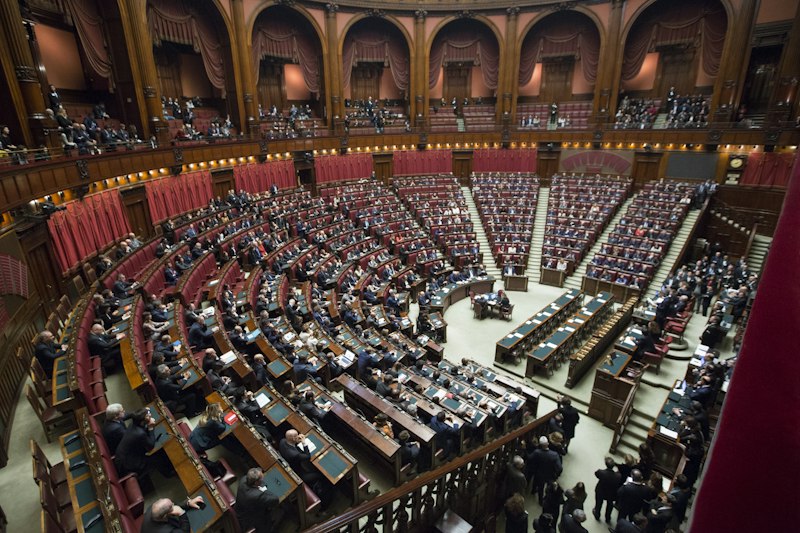
Abu Dhabi, Riyadh, Doha - the capitals that called Washington and pulled the world back from the brink. Unsplash
What happened between the ultimatum and the stand-down was not a backchannel negotiation. It was a direct, coordinated intervention by three Gulf rulers who understood that a U.S. bombing campaign on Iran would not end Iran's capacity to strike back. It would guarantee it.
Sheikh Mohamed bin Zayed Al Nahyan, president of the UAE and the ruler whose country's nuclear plant had just been hit, made the case directly: a bombing campaign would trigger Iranian retaliation against Gulf infrastructure - the very infrastructure the UAE, Saudi Arabia, and Qatar depend on for survival. Every refinery, every desalination plant, every port in missile range would become a target.The National
Crown Prince Mohammed bin Salman of Saudi Arabia pressed the economic angle. Saudi oil facilities at Ras Tanura and Ju'aymah were already operating under heightened alert. A full-scale U.S. attack on Iran would mean an immediate shutdown of the Strait of Hormuz - not a partial closure managed through Iranian permit systems, but a hard shutdown triggered by active combat. That would push Brent crude past $130 and potentially toward $150, crippling the global economy and destroying demand for the oil Saudi depends on selling.
Emir Tamim bin Hamad Al Thani of Qatar offered the diplomatic bridge. Qatar has maintained channels to Tehran throughout the conflict and has positioned itself as the primary mediator for ceasefire talks. The emir told Trump that Iran had shared a revised proposal to end the war through Pakistani intermediaries, and that "serious negotiations" could produce a deal within days.Politico
The combined weight of three rulers - whose countries host U.S. military bases, supply the oil markets the U.S. economy depends on, and control the sovereign wealth funds that buy U.S. debt - was decisive. Trump posted on Truth Social at 4:10 PM Eastern on Monday, May 18:
"In their opinion, as Great Leaders and Allies, a Deal will be made, which will be very acceptable to the United States of America, as well as all Countries in the Middle East, and beyond. This Deal will include, importantly, NO NUCLEAR WEAPONS FOR IRAN!"CBS News
He added: "I told the Pentagon to be prepared to go forward with a full, large scale assault of Iran, on a moment's notice, in the event that an acceptable Deal is not reached."
The attack was called off. But it was not called off because Iran capitulated. It was called off because three Gulf kings calculated that the cost of victory was higher than the cost of patience.
The Gulf Intervention - Key Players
IV. Iran's Counter-Move: Reaching for the Internet

Seven undersea fiber-optic cables pass through the Strait of Hormuz, carrying a significant share of data traffic between Europe, Asia, and the Gulf. Unsplash
Even as Trump announced the stand-down, Iran was already opening a new front. On Monday, May 18, Iran's Islamic Revolutionary Guard Corps (IRGC) announced through its official news outlet, Sepah News, that all fiber-optic cables passing through the Strait of Hormuz could be declared subject to Iranian permits, supervision, and tolls.Xinhua
This is not a theoretical threat. Seven major submarine cable systems - including FLAG, SEA-ME-WE 3 and 5, I-ME-WE, and the GBI system - transit the Strait of Hormuz en route to landing stations in the UAE, Qatar, Bahrain, Kuwait, and beyond. These cables carry a large share of global internet and financial data traffic between Europe, the Gulf, and Asia. According to telecom industry estimates, the economic value of data flowing through these cables exceeds $10 trillion annually.Business Today
The IRGC's statement laid out a framework for what it called "full sovereignty" over the strait's seabed:
"Following the imposition of control over the Strait of Hormuz, Iran, citing its absolute sovereignty over the bed and subsoil of its territorial sea, could declare that all fiber-optic cables passing through the waterway are subject to permits."CBS News
The implications are staggering. If Iran moves from threatening permits to actually cutting or degrading cables, the impact would extend far beyond oil markets. Gulf-based financial centers - Dubai, Abu Dhabi, Doha - would lose connectivity to global markets. Internet traffic between Europe and Asia would be forced onto longer, more expensive routes around Africa or across Russia. SWIFT transactions, cloud services, corporate VPNs, and the entire digital infrastructure of the modern Gulf economy would be at risk.
CNN reported that Iran is "emboldened by its blockade of the Strait of Hormuz" and "turning to one of the hidden arteries in the global economy." IRGC-linked media have openly discussed not just permits but the possibility of monitoring data flows and forcing major U.S. technology firms into compliance with Iranian rules.CNN
Undersea Cables Through the Strait of Hormuz
V. The Oil Market: $112 and Counting

Gulf refineries remain operational but on high alert as Brent crude holds above $110. Unsplash
The pause in military escalation did not pause the oil crisis. Brent crude closed Monday at $112.10 per barrel, up more than 2% on the day, after touching an overnight high above $112 when the Barakah strike was first reported. The price briefly dipped below $107 on hopes of a diplomatic breakthrough before climbing back as traders priced in the reality: the Strait of Hormuz remains effectively closed to unconstrained traffic, and there is no timeline for its reopening.CNBC
The numbers tell the story of a war that has fundamentally reshaped global energy markets. Before the conflict began in late February, Brent crude traded around $70 per barrel. It is now 60% higher. The World Bank's Commodity Markets Outlook 2026 called the Hormuz disruption "the largest oil market shock in history."World Bank
Tanker traffic through the Strait of Hormuz showed slight improvement last week. Kpler data recorded 55 commodity vessels transiting between May 11 and May 17, up from just 19 the previous week - the wartime low. But the average since the war began is roughly 55 per week, compared to a pre-war flow that handled roughly one-fifth of global oil and LNG shipments daily. Iran's Revolutionary Guards said they are allowing more ships to transit, with "more than 30" permitted on a single day last week, but the flow remains a fraction of normal.CBS News
U.S. Central Command reported that American forces have redirected 85 commercial vessels under the ongoing blockade of Iranian ports, with four vessels disabled. Treasury Secretary Scott Bessent extended the sanctions waiver on Russian at-sea oil cargoes by 30 days to "help stabilize the physical crude market and ensure oil reaches the most energy-vulnerable countries." The extension also aimed to "reduce China's ability to stockpile discounted oil."CBS News
Oil Market Snapshot - May 18, 2026
VI. Iran's Economic Squeeze: The Clock Behind the Clock

Kharg Island, Iran's primary oil export terminal, is running out of storage space under the U.S. blockade. Unsplash
While Trump's "clock is ticking" rhetoric frames the pressure as one-directional, the economic data tells a more complex story. Iran is under severe strain, but it is not yet at the breaking point - and every day it holds out, its leverage over the Hormuz waterway grows.
Oil and gas account for roughly half of Iran's government revenue. Pre-blockade exports averaged 1.7 to 1.8 million barrels per day, generating significant hard currency. The U.S. naval blockade, implemented in mid-April, has cut exports by over 80%. Cumulative revenue losses exceed $4.8 billion, with daily shortfalls running $100 to $170 million.Energy News Beat
Iran's onshore storage capacity is roughly 122 million barrels, with Kharg Island - the primary export hub - holding 30 to 40 million barrels. Storage levels at Kharg reached 74% by late April and continue to build. Analysts from Kpler and consultancy FGE estimate Iran can sustain current production for 1 to 2 months before forced well shut-ins become necessary, or up to 3 months with modest production cuts of 500,000 barrels per day.
The rial has hit record lows. Inflation is accelerating. Layoffs are mounting. Fuel shortages have been reported in major cities. Iran has tapped sovereign wealth reserves estimated at $40 billion for essential imports and war-related spending.
But satellite imagery has also revealed a large oil slick west of Kharg Island, spanning dozens of square kilometers, with some estimates suggesting up to 80,000 barrels leaked. Iran has denied any leak from its facilities, attributing the slick to ballast water from a non-Iranian tanker. No independent verification of either claim has been confirmed. The incident underscores the environmental risks of overloaded infrastructure under blockade conditions.Energy News Beat
Iranian President Masoud Pezeshkian acknowledged that the country faces "serious challenges," according to Sky News. Supreme Leader Mojtaba Khamenei has rejected what Iran calls "maximalist" U.S. demands, insisting that any deal must include an end to the war and the release of frozen Iranian assets. The gap between the two sides remains wide - but the fact that a revised Iranian proposal has been shared with the U.S. through Pakistani intermediaries suggests that Tehran is feeling the pressure enough to negotiate, even if it is not yet willing to concede.Sky News
VII. The Lebanon Front: Ceasefire in Name Only

Southern Lebanon continues to see Israeli strikes despite a formal ceasefire extension. Unsplash
The Iran-UAE-U.S. standoff dominates headlines, but the Lebanon front continues to burn quietly. Lebanese Health Ministry data released Monday shows that 3,020 people have been killed in Israeli strikes since early March, with another 9,273 wounded. These are not historical figures. They are accumulating now, under an officially extended truce.CBS News
Israel has continued launching strikes, carrying out demolitions, and issuing evacuation orders in southern Lebanon, saying it is targeting Hezbollah. Hezbollah has continued operations against Israeli forces, including what it said was a drone attack Monday targeting "the vehicle of the commander of the 300th Brigade of the Israeli enemy army." Lebanese President Joseph Aoun said he is ready to "do the impossible" to stop the war, outlining a framework that includes Israeli withdrawal, a ceasefire, army deployment along the border, the return of displaced civilians, and economic aid.
The Lebanon front is a reminder that the Iran war is not a single-axis conflict. It is a regional system of interconnected fronts, each with its own dynamics but all feeding into the same strategic calculus. Any deal between the U.S. and Iran that does not address Lebanon, Gaza, and the broader proxy architecture will leave the underlying structure of conflict intact.
VIII. The Stakes: What Comes Next

The Strait of Hormuz - 21 miles wide at its narrowest point, carrying oil, gas, and now digital infrastructure. Unsplash
The 48-hour pivot from "complete demolition" to "hold off, let's talk" has created a window. But it is a window that both sides are already trying to reshape.
For the United States, the calculation is straightforward: Iran's nuclear enrichment capacity was degraded by Operation Midnight Hammer in June 2025, but the New York Times has reported that Iran's military is "still in fighting shape," having regained access to 30 of its 33 key capabilities. The U.S. wants a deal that permanently ends Iran's nuclear weapons program, reopens the Strait of Hormuz, and allows oil prices to normalize. The military option remains on the table "on a moment's notice."NPR
For Iran, the calculation is equally clear: its leverage comes from the Hormuz closure and its network of proxy forces across the region. Any deal that reopens Hormuz without lifting the U.S. blockade, releasing frozen assets, and guaranteeing an end to military operations removes Iran's primary bargaining chips. Iran's revised proposal, shared through Pakistani intermediaries, reportedly focuses on ending the war and securing asset releases. Nuclear matters - the Trump administration's top priority - have not been discussed in detail, according to Iranian officials.
For the Gulf states, the calculation is existential. They called off the U.S. attack not because they trust Iran, but because a full-scale war on Iranian soil would make the Barakah strike look like a warning shot. Iranian retaliation against Gulf desalination plants, oil terminals, and LNG facilities would create a humanitarian and economic catastrophe that no amount of U.S. air power could prevent. The Gulf rulers bought time. Whether that time produces a deal or just delays the inevitable depends on whether either side is willing to accept less than total victory.
And then there is the digital front. Iran's threat to control undersea internet cables is not a military escalation. It is a structural one. If Iran establishes a permit system for fiber-optic cables, it creates a permanent leverage point that survives any ceasefire. Unlike missiles, which can be intercepted, or oil blockades, which can be broken by naval force, undersea cables are fixed infrastructure that cannot be relocated. Cutting or degrading them would cause immediate, global economic disruption that no military response could quickly reverse.
The Gulf states that persuaded Trump to stand down may have bought days or weeks. But the new front Iran is opening beneath the waves suggests that Tehran is thinking in terms of permanent leverage, not temporary negotiations.
The question is no longer whether there will be a deal. The question is what kind of deal leaves both sides with enough to survive it - and whether the cables under the Strait of Hormuz will still be intact when it is done.
Conflict Status - May 19, 2026 / Day 80
IX. Sources
All claims in this article are sourced from publicly available reporting as of May 19, 2026:
Al Jazeera: Drone strike sparks fire at UAE's Barakah nuclear power plant
AP News: UAE nuclear plant targeted in drone strike amid Iran tensions
CBS News: Trump says he's called off scheduled attack on Iran
CBS News: Live updates on Iran war, oil prices, ceasefire diplomacy
The National: Trump says Gulf allies persuaded him to call off planned attack
Politico: Trump delays major strikes on Iran at request of Middle East leaders
CNBC: Oil elevated even after Trump calls off planned attack on Iran
Xinhua: Iran can subject fiber-optic cables in Hormuz Strait to permits
CNN: Iran eyes a new source of power deep beneath the Strait of Hormuz
Business Today: $10 trillion chokepoint - Iran targets undersea cable networks
Energy News Beat: Iran attacks UAE nuclear plant - drone strike hits Barakah
Sky News: Iran facing serious challenges, Pezeshkian admits
Khaleej Times: UAE investigates drone source after Barakah nuclear plant fire
World Bank: Strait of Hormuz disruption sends oil prices surging
NPR: News Roundup May 15, 2026
The Guardian: Trump claims planned attack on Iran postponed after Tehran makes new proposal
WION: Iran mulls taking full control of all 7 undersea internet cables