Three Verdicts, One Question: Who Gets to Belong in America?

The highest court in the land, where three cases on a single April morning would reshape the meaning of citizenship, voice, and belonging. (Unsplash)
On April 29, 2026, three things happened in the United States of America. None of them made the same headline. All of them told the same story.
In the morning, the Supreme Court heard arguments on whether 350,000 Haitians and 6,100 Syrians could be stripped of their legal status and funneled into the machinery of mass deportation. A ruling against them would put 1.3 million people from 17 countries on a path to becoming undocumented overnight.
Within hours, the same court released a 6-3 decision making it dramatically harder to challenge voting maps that dilute the political power of racial minorities. Justice Samuel Alito wrote that previous interpretations of the Voting Rights Act had sometimes forced states "to engage in the very race-based discrimination that the Constitution forbids." The White House called it a "complete and total victory for American voters."
And while those two rulings rewrote the boundaries of who counts in the American political project, a former FBI director was indicted in North Carolina for posting seashells on Instagram. The shells spelled "8647." The Justice Department says it was a death threat. James Comey says it was political speech. The maximum penalty is ten years in prison.
These are not three stories. They are one. They are about who is allowed to stay, who is allowed to vote, and who is allowed to speak. They are about the architecture of belonging in a country that has always been ambivalent about who it belongs to. And on a Tuesday in late April, that architecture was rebuilt from the inside out.
1.3 Million People Wait for a Ruling

Outside the Supreme Court, immigrant rights activists gathered as the justices heard a case that could reshape the legal status of 1.3 million people. (Unsplash)
The Supreme Court heard arguments on Wednesday over whether the Trump administration can terminate Temporary Protected Status for Haitians and Syrians, a decision that would not just affect the 350,000 Haitians and 6,100 Syrians directly named in the case but could open the door to stripping TPS from people from 17 countries in total. That is approximately 1.3 million human beings who woke up on Wednesday morning with legal permission to live and work in the United States and could, by the time the court rules, find themselves reclassified as undocumented during the most aggressive deportation campaign in modern American history.
Temporary Protected Status is not a loophole. It is a law, passed by Congress in 1990, that grants legal presence to nationals of countries experiencing armed conflict, environmental disaster, or other extraordinary conditions that make return unsafe. Haiti received TPS after the 2010 earthquake. Syria received it in 2012 as the civil war consumed the country. The status has been extended multiple times by both Democratic and Republican administrations because the conditions that prompted it have not improved. Haiti remains gripped by gang violence that has displaced hundreds of thousands and turned parts of Port-au-Prince into war zones. Syria, despite the fall of Assad, faces Israeli incursions, fragmented governance, and ongoing instability after more than a decade of war that killed over 500,000 people.
Then-Homeland Security Secretary Kristi Noem rescinded TPS for both countries last year, asserting that conditions had "improved" and the status had been "abused and exploited." It is a claim that strains credulity for anyone who has looked at Haiti in the past twelve months, where armed groups control an estimated 80% of the capital and the transitional government struggles to provide basic security.
The class action lawsuits argue that the administration did not follow proper procedures in terminating the status and, more fundamentally, that the decision was motivated by racial animus. In February, US District Judge Ana Reyes ruled that the administration's actions were likely driven "in part" by "racial animus" in violation of the Constitution's equal protection guarantees. She said it was likely that Noem made the decision "because of hostility to nonwhite immigrants."
A Department of Homeland Security spokesperson called Reyes's ruling "lawless activism." The language is familiar. When courts find racism, this administration does not appeal the finding. It attacks the finder.
What makes the TPS case especially raw is that it arrives at a moment when the administration has already moved to end the status for Venezuela, Nepal, Nicaragua, Honduras, Afghanistan, Cameroon, South Sudan, Myanmar, Ethiopia, Somalia, and Yemen. Most of those efforts have been stayed by lower courts. But the Supreme Court allowed the cancellation of TPS for Venezuela to stand in October while legal challenges proceed. The status expires on October 2. After that, roughly 600,000 Venezuelans who have built lives, businesses, families, and communities in the United States will become deportable.
Before Wednesday's hearing, Cecilia Gonzalez, a TPS recipient and cofounder of the Venezuelan American Caucus, framed what is at stake in terms no court ruling can undo. "Whether immigrant families who have followed the law and built their lives in this country can have their protections stripped away overnight for political purposes." She added: "As a Venezuelan, I learned early on that when things get difficult, there are two options: fleeing or fighting. I already fled once, so now I choose to fight, not only for Venezuelans, but for every immigrant community that deserves dignity, stability, and permanent solutions."
The word "temporary" in Temporary Protected Status has always been a fiction. Haitians have had some form of the status since 2010. That is sixteen years. Syrians since 2012. That is fourteen years. These are not visitors. They are neighbors, coworkers, parents of American children. The "temporary" label was always a political compromise that allowed both parties to extend humanitarian protection without granting anything permanent. It was a deal that worked as long as no one pulled the thread. The Trump administration is not pulling the thread. It is cutting the fabric.
"Whether immigrant families who have followed the law and built their lives in this country can have their protections stripped away overnight for political purposes." - Cecilia Gonzalez, TPS recipient and Venezuelan American Caucus cofounder
The rare rebuke from the US House of Representatives, which in April passed a bill to extend TPS for Haitians through 2029 with 10 Republicans joining Democrats, underscores the political volatility of this particular target. But the Senate has not voted. And in the gap between what one chamber of Congress does and what the other cannot bring itself to do, 350,000 Haitians wait.
The Voting Rights Decision: Maps Without People

The Supreme Court's ruling will make it harder to prove that electoral maps dilute the voting power of racial minorities. (Unsplash)
On the same morning the court heard arguments about whether Haitians could remain in the country at all, it released a ruling that will make it harder for the people who do remain to have their votes mean anything. In a 6-3 decision, the conservative majority ruled that courts have been interpreting Section 2 of the Voting Rights Act too broadly, forcing states to "engage in the very race-based discrimination that the Constitution forbids."
The case concerned Louisiana's congressional districts. After the 2020 census, the state drew maps that effectively packed Black voters into a single district despite Black residents comprising roughly one-third of the state's population. Lower courts ordered a second majority-Black district, citing the Voting Rights Act's prohibition on diluting minority voting strength. The state complied, but the challenge continued, with a group of primarily white voters arguing that race should not be a factor in map-drawing at all.
The Supreme Court agreed. Writing for the majority, Justice Alito said that litigants will now have to prove that legislators intentionally drew maps to provide less opportunity to racial minority voters. That is a dramatically higher bar than the existing standard, which allowed challenges based on the results of map-drawing regardless of intent. The practical effect: you can dilute Black voting power as long as you do not announce that you are diluting Black voting power.
Justice Elena Kagan's dissent was scathing. "The court's decision will set back the foundational right Congress granted of racial equality in electoral opportunity." She is right, and the arithmetic of the decision makes it clear. In a country where Black Americans are concentrated geographically because of centuries of intentional policy, from slavery to redlining to mass incarceration, the idea that map-drawing can be "race-neutral" is itself a racial act. It treats the existing distribution of people, produced by explicit racism, as if it were produced by weather.
The White House celebrated the ruling. Spokeswoman Abigail Jackson called it a "complete and total victory for American voters," adding that "the color of one's skin should not dictate which congressional district you belong in." The statement is clever because it is both technically true and practically deceptive. In a world where skin color never determined where you lived, where you went to school, whether you could get a mortgage, whether your neighborhood was poisoned, whether your vote was suppressed - in that world, race-neutral map-drawing would be neutral. We do not live in that world. We live in this one, where skin color determined everything and now the court says you cannot consider that determination when drawing the maps that determine political representation.
Florida is already in the process of redrawing its legislative maps. Tennessee and Mississippi are expected to follow. The decision effectively gives Republican-controlled legislatures a roadmap for diluting minority voting power while insulating themselves from legal challenge. You no longer need to prove you did not intend to discriminate. You just need to not say it out loud.
This is the second major blow to the Voting Rights Act in recent years. In 2013, the court gutted Section 5's preclearance requirement in Shelby County v. Holder, which had required states with histories of racial discrimination to get federal approval before changing voting laws. Now Section 2's results test has been narrowed to an intent test. The two provisions that made the Voting Rights Act the most effective piece of civil rights legislation in American history have both been effectively dismantled within thirteen years. The act still exists on paper. Its teeth are gone.
The Seashell Indictment: Speech as Crime

Eighty-six forty-seven. Seashells arranged on a beach. The Justice Department says it was a death threat. The maximum penalty is ten years in prison. (Unsplash)
While the court ruled on who gets to stay and who gets to vote, the Justice Department was pursuing a case about who gets to speak. Former FBI Director James Comey was indicted in North Carolina on federal charges of threatening the president and transmitting a threat in interstate commerce. His crime: posting a photo on Instagram of seashells arranged to spell "8647."
The number 47 refers to Trump, the 47th president. The number 86 is American slang meaning to remove, reject, or throw out. It originated in restaurant kitchens - "86 the special" means take it off the menu. It has been in common use for decades without anyone interpreting it as a call for violence. Comey posted the image in May 2025, later deleted it, and said he had not realized some people associated the numbers with violence and that he opposed "violence of any kind."
The Justice Department disagrees. Prosecutors say Comey "knowingly" threatened the president. Acting Attorney General Todd Blanche announced the charges personally. A federal grand jury in North Carolina returned the indictment. An arrest warrant has been issued.
Comey responded on Substack with a video titled "Seashells." His message: "I'm still innocent, I'm still not afraid, and I still believe in the independent federal judiciary." His lawyer, Patrick Fitzgerald, said Comey would fight the charges and defend his constitutional rights.
This is the second time Comey has been indicted since Trump returned to office. The first case, brought in Virginia on charges of making false statements to Congress and obstruction, was dismissed by a federal judge who ruled the prosecutor had not been lawfully appointed. The collapse of the first case has added scrutiny to the second. Critics see a pattern: charge a political enemy, lose in court, charge him again in a different jurisdiction.
Trump has publicly called for prosecuting several political opponents, including New York Attorney General Letitia James and Senator Adam Schiff. The Comey indictment arrives in the context of a broader campaign to use the Justice Department as an instrument of political retribution. Whether or not the seashell post constitutes a "true threat" under the narrow legal standard set by the Supreme Court, the decision to prosecute is itself a message. It says: oppose this president, and the full weight of federal law enforcement will find a way to reach you.
The legal question at the center of the Comey case is one the Supreme Court has wrestled with for decades: what constitutes a "true threat" unprotected by the First Amendment? The court's 2023 ruling in Counterman v. Colorado established that prosecutors must show a defendant acted with "reckless disregard" for whether their statements would be viewed as threatening. Comey's defense will argue that "8647" is ambiguous political speech, not a true threat, and that no reasonable person would interpret beach shells as a call for assassination. Prosecutors will argue that in the current climate of political violence, including an attempted assassination at the White House Correspondents' Dinner just days earlier, the post must be taken seriously.
But the broader question is not legal. It is cultural. In a country where a former president's own rhetoric has been linked to political violence on multiple occasions, where armed supporters attempted to overturn an election on January 6, 2021, and where a shooter opened fire at a press dinner days ago, the selective prosecution of a seashell post is not about safety. It is about who is allowed to joke, protest, and dissent, and who is not.
The Thread: Who Counts, Who Speaks, Who Stays

The question running through all three cases is the same: who is a full participant in the American project, and who exists at its margins? (Unsplash)
Read individually, the three stories of April 29 appear to belong to different sections of the newspaper. The TPS case is about immigration. The voting rights ruling is about election law. The Comey indictment is about criminal justice. But the connective tissue is not subtle. It is a single question, asked three times in three different forums: who gets to be a full participant in the American political project?
The TPS case asks whether 1.3 million people who have lived, worked, paid taxes, raised children, and contributed to their communities for years or decades get to keep their legal existence or be converted into deportable non-persons. The voting rights ruling asks whether the political representation of racial minorities matters enough to require that representation be protected. The Comey indictment asks whether political speech that offends the powerful can be criminalized.
These are not parallel tracks. They are a cascade. If you can be stripped of legal status, you cannot vote. If your vote is diluted by map-makers who are no longer required to consider race, your representation shrinks. If the people who speak for you can be prosecuted for political expression, the space for dissent narrows. Each ruling enables the next. Each narrowing makes the next narrowing easier to accomplish and harder to resist.
There is a term for this in political science: democratic erosion. It is the process by which democratic institutions are not overthrown in a dramatic coup but hollowed out incrementally, each step appearing legal and procedural, each step building on the last, until the forms of democracy remain but the substance has been transferred elsewhere. The scholars who study this process - Steven Levitsky, Daniel Ziblatt, Anna Grzymala-Busse - have documented how it works in country after country. First, the rules of participation are altered. Then, the boundaries of acceptable speech are redrawn. Then, the independent institutions that might resist - courts, legislatures, media - are captured or neutralized.
The United States is not Hungary. It is not Turkey. It is not Venezuela. But the pattern is recognizable precisely because it does not announce itself. It does not arrive with tanks in the street. It arrives with a 6-3 ruling that says race-conscious map-drawing is unconstitutional. It arrives with a hearing about whether humanitarian protections can be revoked by executive fiat. It arrives with an indictment over seashells.
The Human Architecture of Belonging

Behind every legal status is a family, a workplace, a community. The law speaks in abstractions. People live in specifics. (Unsplash)
The law speaks in abstractions: "temporary protected status," "Section 2 of the Voting Rights Act," "true threat doctrine." But the people affected by these abstractions do not live in abstractions. They live in specific houses on specific streets, in specific school districts, in specific congressional districts drawn by specific people for specific reasons.
Consider a Haitian TPS holder in Miami who has been in the United States since 2011. She works as a home health aide. She has two American-born children. She pays taxes. She has never been arrested. Under the law, she has "temporary" permission to remain. If the Supreme Court rules that the administration can revoke that permission, she does not become illegal in the abstract. She becomes deportable in the specific. Her children become children of a deportable person. Her patients lose their aide. Her landlord loses a tenant. Her church loses a member. Her children's school loses a parent volunteer. The ripple is not theoretical. It is architectural.
Or consider a Black voter in Louisiana's 2nd Congressional District, one of the few majority-Black districts in the South. Under the new standard, if the state redraws the district to dilute Black voting power, the burden of proof now falls on the disenfranchised to demonstrate that legislators acted with discriminatory intent. Not that the map produces discriminatory results. That the mapmakers had discriminatory intent. In a legislature where discussions happen behind closed doors and emails are carefully worded, proving intent is nearly impossible. The result is a green light for maps that achieve discriminatory outcomes through facially neutral means.
Or consider a political commentator who wants to criticize the president but has watched a former FBI director get indicted over an Instagram post. The chilling effect does not require prosecution to be effective. It requires the threat of prosecution. It requires the knowledge that expressing opposition might draw the attention of the Department of Justice. It requires the awareness that the boundary between protected speech and criminal threat is now being policed by the same administration that the speech criticizes. You do not need to jail every critic. You need to jail one prominent one, and the rest will calculate.
What the World Sees
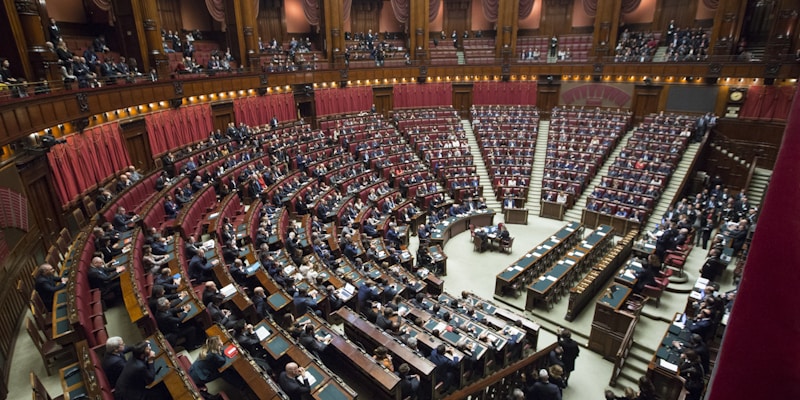
The world is watching not because America is special but because the pattern is familiar. (Unsplash)
The rest of the world is paying attention to these developments, not because America is uniquely important but because the pattern is familiar. Democratic erosion has been documented in the Philippines under Duterte, in Turkey under Erdogan, in Hungary under Orban, in India under Modi, in Brazil under Bolsonaro. The sequence is recognizable: first, the leader attacks the media as "enemies of the people." Then, the leader attacks the judiciary as "activist." Then, the leader attacks the electoral system as "rigged." Then, the leader uses the tools of the state - law enforcement, immigration enforcement, regulatory power - to target opponents.
Each step is justified in the language of fairness, security, and national interest. Each step has a legal rationale. Each step is incremental enough that no single step triggers mass resistance. And each step narrows the space for the next step to be resisted.
The United States is not on the verge of authoritarian collapse. Its institutions are more resilient than those of most countries that have traveled this path. But the resilience of institutions is not a fixed quality. It degrades. The courts that once protected voting rights now narrow them. The Justice Department that once investigated civil rights violations now prosecutes political speech. The immigration system that once provided humanitarian protection now strips it. The resilience of the past does not guarantee the resilience of the future.
What the world sees on April 29, 2026, is a country where 1.3 million people wait for a ruling on whether they get to stay, where the highest court has made it harder for racial minorities to protect their votes, and where a former FBI director faces prison for seashells. These are not the markers of a healthy democracy. They are the markers of one being stress-tested.
The Dissent That Remembers

The dissenting opinions in courtrooms carry a particular weight: they are written for a future that might still choose differently. (Unsplash)
Justice Kagan's dissent in the voting rights case is worth sitting with, not because it will change the ruling but because it is the kind of document that ages into prophecy. "The court's decision will set back the foundational right Congress granted of racial equality in electoral opportunity." She is not arguing about maps. She is arguing about memory - about what the law was designed to do and what happens when a court decides it was wrong to try.
The same instinct animates Judge Reyes's ruling in the TPS case, now before the Supreme Court, that the administration's actions were likely motivated by "racial animus." That ruling was denounced as "lawless activism." But "lawless" is a word that powerful people use when less powerful people find protection in the law. The Voting Rights Act was "lawless activism" when it was passed in 1965. Brown v. Board of Education was "lawless activism" in 1954. Every expansion of democratic participation in American history has been attacked as illegitimate by the people whose monopoly on power it threatened.
Comey, for his part, is not a martyr. He is a former senior official who made a social media post of questionable judgment in a country where political speech is supposed to be protected regardless of judgment. The point is not whether the post was wise. The point is whether the Justice Department should be weaponized against political opponents, whether a seashell arrangement constitutes a true threat, and whether the prosecution serves the public interest or the president's interest. These are questions that answer themselves.
The dissents matter because they are written for the record, and the record is long. The dissenters in Plessy v. Ferguson were right. The dissenters in Korematsu v. United States were right. The dissenters in Buck v. Bell were right. The majority rulings were reversed, overturned, or repudiated, but not before they did damage that could not be undone. The people stripped of their votes, their homes, their freedom, their citizenship did not get those things back when the court eventually admitted it was wrong. They got apologies. They got historical markers. They got the satisfaction of being right in a country that had already made them wrong.
What Comes Next

The question is never whether the arc of the moral universe bends toward justice. The question is who bends it. (Unsplash)
The TPS case will likely not be decided until the court's term ends in June or early July. The voting rights ruling is effective immediately. The Comey case will proceed through the federal courts in North Carolina, where it has been assigned to US District Judge Louise Flanagan. Each of these outcomes will shape the others.
If TPS is revoked, the deportations will not happen overnight. There will be legal challenges, stays, appeals, and legislative attempts to extend protections. But the trajectory will be set. People will make decisions based on fear rather than law: leaving voluntarily, moving to sanctuary cities, withdrawing from public life, pulling children from school. The law does not need to deport 1.3 million people to make them disappear from American life. It needs to make them afraid enough to disappear themselves.
The voting rights ruling will reshape the 2026 midterms. Florida, Tennessee, Mississippi, and other Republican-controlled states will redraw maps with the confidence that they cannot be successfully challenged unless plaintiffs can prove discriminatory intent, a standard that is nearly impossible to meet in practice. The maps will be gerrymandered more aggressively, the minority vote diluted further, and the composition of Congress shifted toward the party that controls the map-making process.
The Comey prosecution will test the boundaries of political speech in real time. If it succeeds, it will establish that an ambiguous social media post can constitute a federal crime when directed at the president. If it fails, it will still have served its purpose: demonstrating that the cost of opposing this administration includes federal indictment, legal fees, public vilification, and the stress of criminal prosecution. The process is the punishment. The indictment is the message.
But here is what the architecture of erasure cannot account for: people who refuse to disappear. Cecilia Gonzalez choosing to fight. Judge Reyes ruling on racial animus despite the inevitable backlash. Kagan writing a dissent that will outlast the majority opinion. Comey posting "I'm still not afraid" on Substack. The House of Representatives, including ten Republicans, voting to extend TPS for Haitians. The lawyers filing seven lawsuits against OpenAI in California on behalf of families in Tumbler Ridge. The hockey fans in Buffalo who sang the Canadian anthem when the microphone cut out, because sometimes the most powerful acts of solidarity are the quietest.
Democratic erosion is a process, but so is democratic resistance. The difference between the two is that erosion is quiet and resistance is loud. Erosion happens in courtrooms and legislative chambers. Resistance happens in the street, in the voting booth, in the courtroom, and in the dissent. On April 29, 2026, the erosion was visible. But so was the resistance. The question is never whether the arc of the moral universe bends toward justice. The question is who bends it, and whether they can bend it fast enough.
Sources
- Al Jazeera - "US Supreme Court hears Haiti, Syria TPS case with wide-ranging implications" - April 29, 2026
- BBC News - "Supreme Court limits use of race in drawing electoral maps" - April 29, 2026
- Al Jazeera - "Why '8647' landed ex-FBI chief Comey in Trump's crosshairs" - April 29, 2026
- BBC News - "Seven lawsuits filed against OpenAI by families of Canada mass-shooting victims" - April 29, 2026
- The Guardian - "US supreme court weighs whether protected status of Haitians and Syrians can be revoked" - April 29, 2026
- BBC News - "US political violence generates a familiar cycle" - April 2026
- Al Jazeera - "Thousands of US hockey fans sing Canadian anthem amid tensions" - April 29, 2026