Two Revolutions, One Generation: Gen Z Seizes Power While AI Erases Creative Livelihoods
In Kathmandu, a 35-year-old rapper just became prime minister after youth-led protests burned parliament to the ground. In Nairobi, a leaderless digital movement forced a president to withdraw his tax bill and exposed state-sponsored trolling operations. In Burbank, Marvel's visual development team - the artists who designed Iron Man's suit, who gave Wakanda its texture, who made every frame iconic - just got laid off, their work increasingly replaceable by generative AI. The same generation that is seizing political power across the Global South is watching its cultural and economic agency evaporate in the Global North. This is the paradox of 2026: never has a generation been so politically potent and so economically precarious at the same time.

Photo: Unsplash / Fredrik Ohlander
The Rapper Who Became Prime Minister
Balendra Shah - known across Nepal simply as "Balen" - took the oath of office on March 27, 2026, as Nepal's youngest prime minister at 35. He is also the first Madhesi, a person from the southern plains bordering India, to lead the Himalayan nation in decades. His path to power would be rejected by any screenwriter as too implausible: a structural engineer turned viral rapper turned mayor turned protest figurehead turned prime minister.
But Balen did not ride to power alone. He rode a wave that had been building for years and crested in blood.
In September 2025, Nepal's Gen Z-led anti-corruption protests erupted into violence. At least 76 people were killed. The parliament building and the Supreme Court were set ablaze. Then-Prime Minister K.P. Sharma Oli, 74, resigned. The army briefly took charge. An interim government formed with input from protest leaders, charged with holding elections within six months.
When those elections came on March 5, 2026, the result stunned the establishment. The Rastriya Swatantra Party (RSP), formed only in 2022, won 182 of 275 seats in the lower house - a nearly two-thirds majority. It was the first time since 1999 that any party secured a parliamentary majority. The old guard's game of musical chairs, where the same men rotated through the prime minister's office, was over.
Balen himself ran against Oli in the former leader's home district of Jhapa and won by almost 50,000 votes. A 35-year-old rapper defeated a 74-year-old political titan on his own turf.
"The game of musical chairs had been the murder of hope." - Ranju Darshana, 30, RSP candidate and teacher, speaking to Foreign Policy
The movement's success rested on digital infrastructure that bypassed traditional power networks. A Kathmandu Post investigation found that in the month before the election, more than half of political posts across popular Facebook pages were about the RSP. TikTok became a campaign tool. In villages where politicians once won votes through cash handouts and food distribution, residents recited RSP slogans they saw on Facebook: "Take other parties' money, but vote RSP!"
This was not a localized phenomenon. It was one front in a global wave.

Photo: Unsplash / Samuel Regan-Asante
Kenya's Digital Uprising: The Hashtag Parliament
Half a continent away, Kenya's Gen Z movement followed a different trajectory - one that reveals both the power and the peril of digital-first resistance.
It started with a Finance Bill. In June 2024, President William Ruto's government proposed steep tax hikes on essential commodities and digital services - targeting the exact generation that lives online. The #RejectFinanceBill2024 and #OccupyParliament hashtags went global. What followed was not a traditional protest movement. It was something unprecedented: a leaderless, tribeless, digitally coordinated uprising.
Kenyan Gen Z organized without hierarchy. No single leader could be arrested because there was no single leader. Lawyers formed rapid-response legal teams to bail out detainees. Doctors and medical students set up first-aid stations at protest sites. Tech-savvy activists built secure communication channels and real-time documentation systems that livestreamed police brutality past state censorship.
The protests achieved something concrete: President Ruto withdrew the Finance Bill. But the cost was staggering. Amnesty International documented at least 128 deaths, 3,000 arrests, and over 83 enforced disappearances across the 2024-2025 protest waves. The state's response revealed digital warfare capabilities that no one had fully mapped.
Kenya's Digital Suppression Playbook - Key Findings from Amnesty International
- State-sponsored troll networks of approximately 20 people, paid 25,000-50,000 KES ($190-$390) per day to push pro-government messages to trending on X
- Counter-hashtag campaigns: #RutoMustGo was met with #RutoMustGoOn in real time
- AI-generated pornographic images of women protesters used to shame and silence them
- Violent threats via direct messages across X, TikTok, Facebook, and WhatsApp
- Doxxing, body-shaming, and Islamophobic campaigns targeting specific activists like journalist Hanifa Adan
- Government denial despite evidence; Interior Cabinet Secretary Kipchumba Murkomen stated security agencies operate "strictly within the constitution"
The "527 bloggers" - named for their association with a government-affiliated network - became instruments of a coordinated digital suppression campaign. Young women faced particular brutality: misogynistic attacks, AI-generated pornographic images, doxxing, and body-shaming campaigns designed to silence their voices.
"Having strangers say things about you every single day, being targeted every single day, it took away the spark, the joy. It took away who I was." - Hanifa Adan, Kenyan journalist and human rights defender, speaking to Amnesty International
Yet the movement persists. The #NikoKadi ("I am available") campaign is now organizing youth voter registration for Kenya's 2027 elections. The Georgetown Journal of International Affairs published a detailed analysis in May 2026 calling the uprising "a new form of political mobilization" that "reimagines Kenyan citizenship and sovereignty in the twenty-first century." From street protests to ballot preparation, Kenya's Gen Z is attempting what Nepal achieved: turning digital dissent into institutional power.

Photo: Unsplash / Mika Baumeister
Africa's Generation in Revolt
Nepal and Kenya are not outliers. They are the leading edge of a continental and global wave. In 2025, youth-led protests swept through Nigeria, Ghana, Senegal, Uganda, and Mozambique. The CFR documented how these movements shared tactics, rhetoric, and digital infrastructure across borders in real time.
What distinguishes this wave from earlier protest cycles is structural. These are not unions or student organizations with hierarchical leadership that can be decapitated. They are networked movements that use social media as both organizational infrastructure and narrative weapon. When Kenya's government tried to arrest "leaders," there were none to find. When Nepal's old guard tried to dismiss the RSP as a social media fad, the party won 182 seats.
The Elephant, a Nairobi-based analysis platform, framed the shift in April 2026: "Often described as apathetic, hyperconnected, and politically disengaged, the young generation has, in recent years, overturned this perception by emerging as a potent political force across the continent."
But the path from protest to power is not guaranteed. Bangladesh's Gen Z movement also forced elections in 2026, but the established parties retained control, leaving youth activists without institutional leverage. Nepal succeeded where Bangladesh stumbled because the RSP managed to convert digital energy into ballot-box results. The lesson is stark: digital mobilization without institutional architecture burns bright and fast. The question for every movement in 2026 is whether they can build the house before the fire goes out.

Photo: Unsplash / Kelly Sikkema
While They Seize Power, AI Seizes Their Work
Here is the cruel arithmetic of 2026. The same generation that is toppling governments in Kathmandu and Nairobi is watching its economic foundation erode in Los Angeles, London, and Lagos. UNESCO's February 2026 report delivered a number that should stop anyone reading this: creators face projected global revenue losses of up to 24 percent by 2028. Musicians could lose a quarter of their earnings. Audiovisual creators face a 21 percent decline. These are not speculative projections. They are based on current adoption rates and market displacement data.
The Numbers: AI and Creative Livelihoods
- 24% - Projected revenue loss for music creators by 2028 (UNESCO)
- 21% - Projected revenue loss for audiovisual creators by 2028 (UNESCO)
- ~40% - Global jobs exposed to AI (IMF estimate)
- 300 million - Full-time jobs potentially exposed to automation (Goldman Sachs)
- 2% - Projected growth for graphic designers 2024-2034, mostly from churn not expansion (BLS)
- 1,000 - Disney layoffs in May 2026, including Marvel's visual development team
- 13-15 - Artists in Marvel's visual development team, largely eliminated
Disney laid off approximately 1,000 employees in May 2026, describing the move in the language that large companies now reach for automatically: "streamlining," "agility," "a more technologically enabled workforce." Among those cut was nearly the entire Marvel Studios visual development team - the people who designed the look of the most commercially successful film franchise in history. Andy Park, Marvel's director of visual development, left after 16 years. The team of 13 to 15 artists who created early character designs, concept art, and visual blueprints for the MCU was gutted.
Evangeline Lilly, who played Hope van Dyne/Wasp in the Ant-Man films, did not mince words on Instagram: "Shame on you." She accused Disney of replacing artists with AI, a charge the company has neither confirmed nor denied but that the timing and targeting of creative roles makes difficult to dismiss.
"AI won't replace artists. It will replace their rates." - Forbes, May 13, 2026
The Forbes assessment cut deeper than the headline suggested. The real shift is not replacement but unbundling. A role that used to be priced as a complete package - concepting, drafting, iterating, polishing - gets split into a fast, automated front half and a slower, human-controlled back half. Midjourney and DALL-E let one person generate hundreds of concepts in the time it once took a team to produce a handful. That compresses labor demand for early-stage visual work and forces re-pricing of entry and mid-level tasks. The Christie's moment still happened - the $432,500 sale of "Edmond de Belamy" in 2018 signaled institutional comfort with machine-made work. But the labor signal is downstream: when clients can generate infinite "good enough" options, they pay less for iteration and more for what resists automation - brief-to-output translation, high-stakes taste, and rights assurance.

Photo: Unsplash / Luke Peters
The "Draft Layer" Problem
Former Disney animator Tom Bancroft framed the layoff pattern as evidence of a broader structural shift in Hollywood: the move toward freelancers, AI tools, and uncertain creative employment. This is not just a Disney problem. The "Brave New World" report from the Independent Society of Musicians, published in January 2026, documented how generative AI is already costing creators their livelihoods across music, visual arts, and writing.
The pattern is consistent across industries. In music, "functional" content - stingers, background beds, endless variations - becomes nearly free to produce, eliminating paid hours for generating options. In writing, first drafts become cheap: pitches, outlines, marketing copy variants, dialogue passes. Labor shifts away from producing words and toward managing risk through prompting, selection, fact-checking, and brand alignment. In film and animation, synthetic production comes for the middle of the pipeline: storyboards, temp shots, background plates, voice placeholders, and localization.
Brian Merchant, writing in Blood in the Machine on May 9, 2026, laid out the visual arts crisis in four charts: declining opportunities, collapsing pay rates, increasing AI competition, and the widening gap between the small number of creatives who capture value at the top and the vast majority competing for scraps at the bottom. The Gallup organization confirmed that while creative work is changing, the arts are not disappearing entirely - but the economic model that sustained a middle class of working artists is.
The SAG-AFTRA 2023 TV/Theatrical agreement included consent and compensation rules for digital replicas and synthetic performers, an early attempt to prevent AI from quietly devaluing credits and fees. The 2023 WGA MBA treats AI-generated text as "not literary material" and requires disclosure when writers receive AI-generated content. These are band-aids on a structural wound.

Photo: Unsplash / Headway
The Global South Fights for Voice, The Global North Automates It Away
There is a bitter symmetry in the two stories unfolding simultaneously in 2026. In Nepal, a generation fought for the right to have a political voice - and won. In Kenya, a generation fought for the right to be heard at all, surviving state-sponsored digital violence, AI-generated revenge porn, and enforced disappearances. Across Africa and South Asia, young people are building new forms of citizenship from scratch.
Meanwhile, in the countries where those voices might find economic expression, the infrastructure of creative work is being disassembled. The graphic designers in Nairobi who designed protest posters could find their commercial rates collapsing as AI image generation undercuts their market. The musicians in Lagos whose soundtracks animate Nollywood films face competition from AI-generated "functional music" that costs nothing. The writers in Kathmandu who documented the revolution in real time on social media are watching entry-level content writing become a commodity.
The UNESCO report warned that generative AI could deepen inequality in creative industries, with the greatest impact falling on creators in developing economies who lack institutional protections, union representation, and legal recourse. A Kenyan freelancer on UpWork does not have SAG-AFTRA negotiating digital replica rights on their behalf. A Nepali graphic designer working for international clients does not have the WGA protecting their credit.
The global creative economy was already unequal before AI. Cultural goods trade reached $254 billion, but that revenue was concentrated in a handful of countries. AI does not flatten that hierarchy. It accelerates it. The IMF estimates that almost 40 percent of jobs globally are exposed to AI, but exposure is not distributed equally. Workers in countries with strong labor protections and union frameworks will negotiate terms. Workers everywhere else will adapt or be displaced.

Photo: Unsplash / Austin Schmid
What Nepal Got Right (And Why It Matters Everywhere)
Nepal's Gen Z revolution offers a template that other movements are studying closely. The RSP succeeded because it did three things simultaneously: it channeled digital energy into institutional architecture, it converted protest credibility into electoral legitimacy, and it offered a concrete alternative rather than just opposition.
Balendra Shah's personal trajectory encapsulates each of these. As mayor of Kathmandu, he built a track record of fighting corruption - demolishing illegal structures, curbing nepotism in school scholarships, picking fights with powerful interests. His viral fame was not manufactured; it was earned through visible, tangible action that young people could point to and say: "This is what different looks like."
The RSP's landslide was not just a protest vote. It was a generational recalibration. Nepal's old political parties operated through patronage networks that extended down to village level - cash handouts, food distribution, ethnic loyalty. The RSP had none of that infrastructure. What it had was something more powerful in 2026: algorithmic amplification and authentic grassroots enthusiasm that the old networks could not replicate.
But the question now is whether the RSP can govern. Expectations are sky-high. Young Nepalis who have left the country for work abroad hope Balen's government will create local jobs. Marginalized communities worry that the party's meritocratic approach could threaten hard-won protections. The window between election euphoria and governance reality is narrow. Bangladesh's Gen Z movement found that window and fell through it. Nepal's is still open, but barely.
Critically, Nepal's success also reveals the limits of digital-first politics. The RSP's lack of traditional party machinery - the very thing that made it an insurgent force - also means it lacks the grassroots organizational depth that sustains governance beyond the honeymoon period. Protesting is viral. Governing is local. The same Facebook and TikTok that spread RSP slogans cannot fix broken irrigation systems or negotiate trade agreements with India.
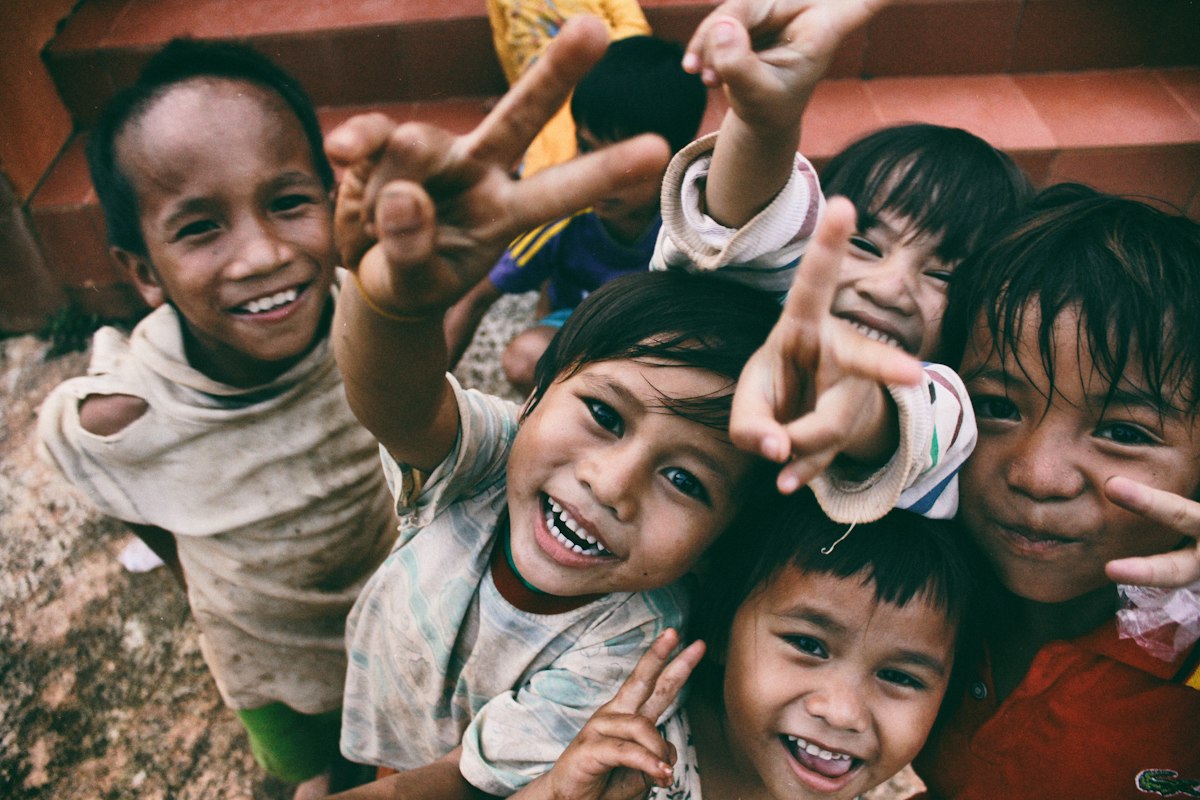
Photo: Unsplash / Rod Long
The Creative Class Has No RSP
This is where the parallel breaks down and the asymmetry becomes brutal. Nepal's Gen Z had a political problem and built a political movement to solve it. The creative class facing AI displacement has an economic problem and has built no equivalent movement. There is no RSP for illustrators. No Balen Shah for freelance writers. No viral mayor for composers whose "functional music" market has collapsed.
The structural reason is that AI displacement does not produce the kind of shared, visible crisis that galvanizes collective action. When police shoot protesters on live television, the injustice is visceral and immediate. When a freelance illustrator's rates drop 30 percent over two years because clients can now generate "good enough" concepts with Midjourney, the wound is slow, individual, and deniable. There is no burning parliament. There is no Finance Bill to reject. There is only the gradual, documented, data-confirmed erosion of an entire economic class.
The institutions that exist to protect creative workers were built for a different era. The WGA and SAG-AFTRA are American organizations representing workers in a specific industry. They have no jurisdiction over a Kenyan designer or a Nepali musician. UNESCO can publish reports warning of 24 percent revenue losses, but it cannot enforce labor standards across sovereign nations. The "Brave New World" report from the ISM can document the harm, but documentation is not protection.
What makes 2026 distinct is that two revolutions are happening to the same generation at the same time. The first is a revolution of political voice - young people across the Global South seizing power through digital organization and constitutional argument. The second is a revolution of economic erasure - the same generation's creative and professional agency being automated away by tools they did not build, do not control, and cannot negotiate with.
The first revolution is visible, dramatic, and inspiring. The second is invisible, gradual, and devastating. Together, they define a paradox: never has a generation been so politically potent and so economically precarious at the same time.

Photo: Unsplash / NASA
What Comes Next
Nepal's experiment in Gen Z governance is months old. Kenya's digital movement is evolving from street protests to voter registration. The UNESCO warning on creative revenue losses projects out to 2028. All of these timelines are converging.
If Nepal's RSP government succeeds - creating jobs, reducing corruption, delivering on promises - it becomes a proof of concept for every Gen Z movement from Lagos to Lima. If it fails, the disillusionment will be proportionate to the hope it generated. The difference between Nepal and Bangladesh is the difference between a generation that learns it can change the world and a generation that learns it cannot.
On the creative front, the key battlegrounds for the next two years are already visible. First, intellectual property regulation: the EU AI Act and various national frameworks are attempting to establish guardrails around training data and AI-generated content, but enforcement lags far behind deployment. Second, labor organization: creative workers in developing economies need institutional frameworks that do not exist yet. Third, economic adaptation: the "draft layer" model identified by Forbes means that mid-level creative work - the bread and butter of working artists - will continue to compress, pushing creatives toward either high-value specialization or entirely new career paths.
The through-line between these two revolutions is agency. The Gen Z movements in Nepal and Kenya are fighting for the right to have a voice in how they are governed. The creative workers facing AI displacement are fighting for the right to have a voice in how they earn a living. Both fights are about whether human beings get to participate in shaping the systems that shape them, or whether they get shaped by systems that do not need them.
In Kathmandu, Balen Shah took his oath of office. In Nairobi, Hanifa Adan continues her journalism despite state-sponsored attacks. In Burbank, Andy Park packed up 16 years of work and left the building. In UNESCO's Paris headquarters, a report warned that a quarter of musicians' revenue could vanish by 2028.
These are not separate stories. They are the same story, told in different registers, about the same generation, in the same year, facing the same fundamental question: who gets to decide what the future looks like, and who gets paid to draw it?
The answer to that question will not be found in any single country's election or any single industry's contract negotiation. It will be found in whether the generation that learned to topple governments with a hashtag can also build the institutions - political, economic, creative - that make agency durable instead of fleeting. Nepal proved it can be done. Kenya proved it comes at a cost. The creative economy is proving that the cost is still being calculated.
Two revolutions. One generation. The outcomes are not yet written. But the stakes could not be clearer.
Sources and Further Reading
- Foreign Policy: Nepal's Fresh Start Begins Now - RSP landslide and Balen Shah's rise
- Georgetown Journal of International Affairs: The Gen-Z Uprising in Kenya - Digital dissent and civic order analysis
- Amnesty International: Kenya authorities weaponized social media - State-sponsored trolling and digital suppression
- UNESCO: Creators face projected global revenue losses of up to 24% by 2028 - Flagship report on AI and creative economies
- Forbes: AI Won't Replace Artists - It Will Replace Their Rates - Task unbundling and creative labor economics
- Variety: Evangeline Lilly blasts Disney for Marvel layoffs, AI pivot
- The Elephant: Africa's Gen Z Awakening - Continental analysis
- Blood in the Machine: The AI-inflected crisis artists are facing, in 4 charts - Visual arts decline data
- NDTV: Balen Shah takes oath as Nepal's youngest PM at 35
- UN News: Artists face steep income decline due to AI, UNESCO finds