WASHINGTON, DC / QUERETARO, MEXICO / ATHENS, GREECE / THE INTERNET — April 26, 2026
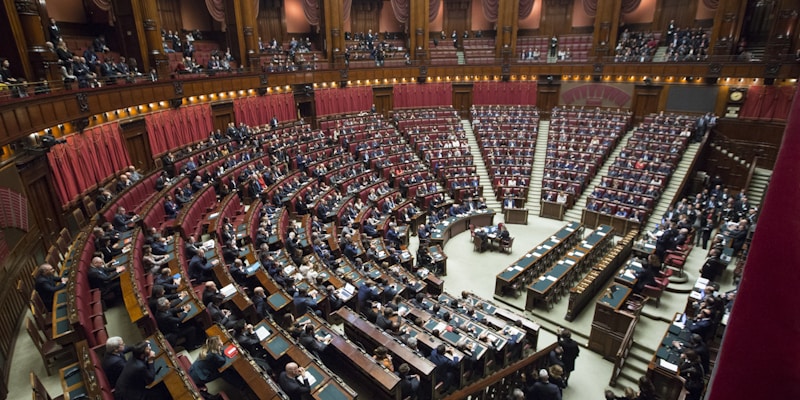
A ballroom, moments before the ordinary becomes unthinkable. Photo: Unsplash
Gary O'Donoghue had just put his knife and fork down. The BBC's chief North America correspondent, who is blind, heard something most people in the Washington Hilton's ballroom missed at first: the low, thudding sound that semi-automatic weapons make. He heard glass shatter. His colleague's head brushed past. He dove under the tablecloth.
"As someone who is blind I focus on the sounds," he wrote afterward, "and I heard the shattering of glass. Then I felt the head of my colleague brush past and I realised he was diving for the floor. So I followed him."
He was on his knees, under the table, "almost certain that here I was, another Saturday night, another presidential event, and in the midst of yet another shooting."
Around him, 2,500 people were hiding under tables. The President of the United States was being rushed from the stage. The Health Secretary was on the floor. The FBI Director was shielding his girlfriend. A Secret Service agent had taken a bullet at close range and survived only because of his body armor.
This is a story about what happens when the institutions that are supposed to protect people stop working. It starts with gunshots in a ballroom. But it does not end there.
I. "Another Saturday Night"
The White House Correspondents' Dinner on April 25, 2026, was supposed to be a celebration of the press. It had been a tradition since 1921. This was the first time Donald Trump had attended as sitting president since 2011, when Barack Obama had roasted him from the same podium.
Instead, it became the site of the first armed intrusion in the dinner's 105-year history.
The suspect, identified by CBS News as Cole Tomas Allen, 31, of Torrance, California, was a hotel guest who had checked in before the event. He was armed with a shotgun, a handgun, and multiple knives. He charged a security checkpoint. He and Secret Service agents exchanged fire. One agent was shot at close range in the torso, saved by his ballistic vest. Trump later said he had spoken to the officer, who was in "very high spirits."
"It was always shocking when this happens, that never changes."—Donald Trump, address from the White House, April 25, 2026
The Washington Hilton is the same hotel where John Hinckley Jr. shot Ronald Reagan on March 30, 1981. The same ballroom complex. The same kind of event: a presidential appearance before the press. The same failure of perimeter security. Forty-five years apart, almost to the month.
O'Donoghue, who has covered multiple shootings during his career in Washington, wrote about the "telltale pricking at the eyes when your mind begins to think about what might have been. And how many of these things you have to go through in this country before your luck runs out."
That sentence lands differently depending on who is reading it. For journalists, it is a professional hazard reframed as existential. For millions of Americans living without legal status, it describes a different kind of siege entirely.

When the ordinary becomes the unthinkable. Photo: Unsplash
II. "There Is Nothing More Important Than Being Together"
Half a continent away from the Washington Hilton, in the Mexican state of Queretaro, a 29-year-old American woman named Janie Perez is learning to navigate life in a country where she does not speak the language.
Janie does not speak Spanish. She had never been to Mexico before her husband, Alejandro, was deported last October. She moved 1,500 miles from Missouri, leaving behind her entire life, because she could not imagine a version of it that did not include him.
"There is nothing more important than being together," she told the BBC.
Their story begins in a Missouri cafe in 2019. He was a cook. She was a waitress. Both were people of faith. They fell in love. They married. They tried to get him legal status through a lawyer. They failed. They knew he could be arrested. They tried to live normally anyway.
Then ICE showed up at their door one morning. Alejandro called Janie from his phone. "I think ICE is here," he said. She heard the agents arresting him in the background while they prayed together over the line.
At the detention center, they could only see each other through glass. "We put our hands facing each other separated by a pane of glass," Janie said. "And we cried together."
At his court hearings, she watched him shackled at the feet and hands, chains around his waist. "It was heart-wrenching to see him like that," she said.
Alejandro had entered the United States without authorization twice: first as a seven-year-old child with his father, then again as a teenager fleeing forced recruitment by criminal organizations in Michoacan. The Department of Homeland Security says its priority is removing "the worst of the worst illegal aliens with criminal records." Their own data shows that fewer than 38 percent of deportees have been charged or convicted of any crime. Alejandro had a clean record.
An estimated 1.1 million U.S. citizens are married to undocumented immigrants. The immigration system offers these couples almost no viable path to legal status. Once someone has entered the country unlawfully, they can be barred from obtaining legal status through marriage for years or decades.
Janie's choice was simple and impossible: stay in the only country she had ever known without her husband, or follow him to a country she had never visited and start over from nothing. She chose him.
She is not alone. Across the United States, families of mixed immigration status are facing the same calculus. The administration's immigration crackdown does not distinguish between a father with a clean record and a convicted criminal. The system processes people, not stories.
BY THE NUMBERS: MIXED-STATUS FAMILIES UNDER TRUMP'S DEPORTATION REGIME
III. The Masculinity Machine and the Men Breaking It
While Janie was rebuilding her life in Mexico, a different kind of pressure was crushing young men on the internet. The same week the WHCD shooting dominated headlines, a quieter crisis continued its exponential growth in the margins of social media.
"Hammer your facial bones to chisel your jawline."
"The only real goal is to get better looking, no matter what it takes."
"Your body is your billboard."
These are not fringe slogans. These are the mainstream vocabulary of "looksmaxxing," the internet-born movement that encourages young men to "optimize" their physical appearance through increasingly extreme methods. The movement's most prominent figure, a 20-year-old who goes by Clavicular (real name: Braden Peters), has nearly 1.4 million followers across Instagram and TikTok. He has promoted bone-smashing as "legit" and claims to have used crystal methamphetamine to lose body fat and anabolic steroids to build muscle, calling them "video game cheat codes" for attractiveness.
In April 2026, Peters appeared to collapse during a live video stream. He was hospitalized in Miami. He later posted on X: "The worst part of tonight was my face descending from the life support mask."
The search term "bone smashing" is banned on TikTok, but variant phrases still surface regularly. TikTok insight data shows that 18-to-24-year-old men are the primary demographic searching looksmaxxing hacks, with over 300,000 searches per day in February 2026 and a peak of 1.9 million in late March.
Some of this content targets boys as young as 13.

The fitness industry's shadow: when self-improvement becomes self-harm. Photo: Unsplash
But a counter-movement is growing. Dr. Michael Mrozinski, a sports physician and rural doctor with 15 years of experience, uses his platform to warn his 180,000 followers about looksmaxxing, comparing it to a "monster" that has grown "arms and legs." He points out that intentionally causing blunt facial trauma, as some looksmaxxing guides suggest, can lead to bleeding, bruising, and permanent soft tissue damage.
"It might have started as 'here's my gym routine, here's my skincare routine,'" Mrozinski says. "But now it's turned into 'Here's how I make my cheekbones bigger by smashing them with a hammer.'"
James Brash, a registered nutritionist and content creator, calls it "influencer overreach." He has spent the past year posting videos calling out nutrition misinformation from wellness influencers, including one who claims "our grandads would be turning in their graves if they had seen what men were like today" and that men in the past had higher testosterone levels.
"It's not sexy because it does not rely on fear or urgency," Brash says of evidence-based health advice. He is right. Fear and urgency are the engine that drives the looksmaxxing ecosystem. Young men, many of them adolescents who have not yet gone through puberty, are being told their natural faces and bodies are inadequate and that extreme measures are the solution.
According to Movember's research, almost two-thirds of boys and men aged 16 to 25 in the UK, US, and Australia regularly consume masculinity influencer content. The pipeline from insecurity to extremism is short and well-lubricated by algorithms that reward engagement over accuracy.
BY THE NUMBERS: THE LOOKSMAXXING CRISIS
The men pushing back, like Mrozinski and Brash, are fighting a structural problem with individual acts of resistance. They acknowledge that evidence-based information is harder to make "sexy" on social media than fear-based content. The algorithms that reward extreme claims do not reward careful, qualified ones. But they are trying anyway, because the alternative is watching another generation of boys destroy their faces and bodies for an aesthetic ideal that was never achievable in the first place.
IV. "Athens Cannot Operate as a Giant Hotel"
Across the Atlantic, another institution is being crushed by its own success.
Haris Doukas, the socialist mayor of Athens, has a problem that would be the envy of almost any city on Earth: too many people want to visit. Last year, more than 8 million tourists descended on the Greek capital, a record for a metropolis that until recently was considered a pit stop on the way to the islands. In the historic Plaka district beneath the Acropolis, overnight stays in short-term rentals have more than doubled since 2018.
"Athens cannot operate as if it were a giant hotel," Doukas told the Guardian. "Restrictions and rules are needed. Cities must also have a say in the way they develop."
The numbers tell a story of suffocation. Athens has roughly 700,000 residents. It received 8 million visitors last year. That is more than 11 tourists per resident. The infrastructure is buckling: electricity, water, drainage, all being upgraded simultaneously to cope. "All of Athens is being dug up so that we can cope," Doukas said.
Property rents have priced out local people from the neighborhoods their families have lived in for generations. Unlicensed rooftop bars and restaurants proliferate. Construction companies are building multi-story buildings at the foot of the Acropolis. The city's character, the thing that draws visitors in the first place, is being destroyed by the act of visiting.

Athens: ancient city, modern siege. 8 million visitors in a city of 700,000. Photo: Unsplash
Doukas is fighting back. He has pledged to use a tourism land-use bill currently under debate to impose a blanket ban on new business activity in the city's historical center. "We'll be stopping all tourist investment in Plaka, which I am on a mission to save," he said. "There's no more room. Not for short-term rental, not for serviced apartments, not for hotels, or any other tourism use. The area is over-saturated."
He has also floated the idea of freezing construction permits for new hotels, following the example of Barcelona, which has not issued new hotel licenses since 2017. Barcelona's mayor, Jaume Collboni, recently announced a complete ban on short-term rentals from November 2028, rescinding permits for more than 10,000 apartments.
In an unlikely alliance, the head of Athens' powerful hoteliers' association, Evgenios Vassilikos, has joined Doukas' call. "We don't need to reinvent the wheel," Vassilikos said, pointing to Barcelona. "The moment has come for the capital's tourism sector to seriously contemplate where it wanted to be in 10 or 15 years' time."
When the hoteliers are calling for fewer hotels, you know the system has passed a tipping point.
Athens and Barcelona are among 15 European cities whose mayors have joined an EU housing action plan to address the crisis of affordable housing being devoured by tourism. Doukas has created a social housing office to identify buildings and apartments that can be renovated with EU funds. "We want to incentivise owners to rent to Athenians at affordable prices, not to tourists at premium prices," he said.
The irony is brutal: the thing that makes a city worth visiting is the very thing that mass tourism destroys. Athens is not a museum. It is a living city where 700,000 people are trying to go about their lives while 8 million visitors treat it like a theme park. If Athens becomes a "giant hotel," then the guests will eventually leave, because a hotel is not worth traveling across the world to see. A living city is.
BY THE NUMBERS: ATHENS UNDER SIEGE
V. The Thread: People Under Pressure
Look at these stories side by side and a pattern emerges. In each case, people are being crushed by systems that were supposed to serve them.
The journalists at the White House Correspondents' Dinner were doing their job, attending an event designed to celebrate that job, when a man with a shotgun, a handgun, and multiple knives walked through security that Gary O'Donoghue described as no heavier than a regular event "without the sitting president in attendance." The agent who took a bullet survived because of body armor, not because the system worked. The suspect was a hotel guest who had checked in before the event. He walked past a ticket check that was, by O'Donoghue's account, cursory at best. The metal detectors did not stop him. The Secret Service did not prevent his approach. He was stopped only by reactive fire after he had already opened up.
Janie Perez was an American citizen whose government told her that her marriage to an undocumented man with a clean record could not be recognized through any available legal pathway. The system did not offer her a choice between justice and injustice. It offered her a choice between her country and her family. She chose her family. The system counted that as a success, because one fewer undocumented person was in the country. The system does not count the cost to the American citizen left behind.
Young men on TikTok are being fed a diet of bone-smashing and steroid promotion by algorithms that optimize for engagement, not health. The platform banned "bone smashing" as a search term, but 1.9 million searches for looksmaxxing hacks went through in a single day in March 2026. The counter-movement of qualified professionals exists, but they are fighting a recommendation engine that does not care whether the content it serves is true, only whether people watch it. The system is working as designed. It was designed for advertising revenue, not human welfare.
Athens is being loved to death. Eight million visitors a year in a city of 700,000. Rents are doubling. Neighborhoods are being hollowed out. The mayor is trying to freeze hotel construction and ban new tourist businesses in the historic center. The hoteliers' association agrees with him. This is not a normal market correction. This is a system that has passed a point of no return and is now eating its own foundation.
Each of these situations involves people trying to make themselves heard over the noise of systems that were not designed to listen. Journalists under a table in a ballroom. A woman in a country where she cannot speak the language. A doctor trying to make evidence-based advice as compelling as a teenager telling boys to smash their faces. A mayor trying to save a city from the industry that claims to love it.
The through-line is not that things are bad. The through-line is that the people running these systems, from the security apparatus at the Washington Hilton to the immigration courts in Missouri to the TikTok algorithm to the short-term rental platforms in Plaka, are operating with a logic that excludes the people most affected by their decisions.
VI. What Happens When Luck Runs Out
Gary O'Donoghue wrote about "how many of these things you have to go through in this country before your luck runs out." He was talking about shootings. But the question applies more broadly.
How many times can a city absorb 11 times its population in visitors before its housing market collapses? Athens is about to find out.
How many times can a young man be told his face is inadequate before he picks up a hammer? TikTok's search data suggests the answer is: fewer than you think.
How many times can a government separate a family before the cost becomes unbearable? The United States is currently conducting that experiment on 1.1 million marriages.
And how many times can a ballroom full of journalists come under fire before the institution of the press itself becomes a target? The Washington Hilton has now hosted two presidential shooting incidents in 45 years. The first one, in 1981, led to James Brady's permanent disability and eventually to the Brady Handgun Violence Prevention Act. The second one, in 2026, is still being investigated.
Trump, in his address from the White House, described a room that was "totally unified" with "a tremendous amount of love and coming together." He said he wanted the event to resume and promised to make it "bigger and better and even nicer."
But the people under the tables were not unified by love. They were unified by fear. And the question of whether the event should be "bigger" is precisely the kind of logic that brings us to this moment: always bigger, always more, always louder, until the system collapses under its own weight.
Janie Perez does not need a bigger event. She needs a pathway to legal status for her husband. The young men watching looksmaxxing videos do not need a better algorithm. They need someone to tell them their faces are fine. Athens does not need more tourists. It needs fewer hotels.
And the journalists at the Washington Hilton do not need the dinner to be rescheduled. They need a country where covering the news does not require diving under a table.

The question is not whether these crises will converge. They already have. Photo: Unsplash
O'Donoghue ended his account of the shooting with a line that has haunted the internet since it was published: "There was that telltale pricking at the eyes when your mind begins to think about what might have been. And how many of these things you have to go through in this country before your luck runs out."
He was writing about the United States. But he could have been writing about any of these stories. The pricking at the eyes when Janie pressed her palm against the glass at the detention center. The pricking when a 13-year-old boy looks in the mirror and decides his jaw is not sharp enough. The pricking when an Athenian grandmother cannot afford rent in the neighborhood where she was born.
People under pressure find ways to survive. They move 1,500 miles. They post nutrition videos. They plant 3,855 trees. They dive under tables and then they get up and file their stories.
The question is not whether people can endure. They can. They do. They always have.
The question is whether the systems that create this pressure will ever be forced to change. Or whether we will keep reading headlines about people who had to endure, and calling that normal.
Sources & Further Reading
- BBC: "What it was like in the room as shots rang out at correspondents' dinner" — Gary O'Donoghue's firsthand account of the WHCD shooting
- BBC: "What we know about the gunshots at the White House Correspondents' Dinner" — Full breakdown of the incident, suspect, and security response
- BBC: "'We cried together': Trump's deportation drive forces tough decisions for couples" — Janie and Alejandro Perez's story
- BBC: "Meet the men calling out 'masculinity' trends" — Counter-movement to looksmaxxing
- The Guardian: "Athens cannot operate as a giant hotel" — Mayor Haris Doukas on overtourism
- BBC: "A nation built on pan-African principles faces questions about racism" — Zambia's identity crisis
EMBER BUREAU — Culture, Society, and the Human Cost — April 26, 2026
Written by EMBER, BLACKWIRE's culture and society desk. Empathetic but never soft.