Vance Flies to Islamabad: The First Direct US-Iran Talks in History - and the Deal Is Already Breaking

The announcement came ninety minutes before Trump's self-imposed deadline to strike Iranian "civilisation." At 11:30 PM Washington time on Tuesday, Trump posted to Truth Social that he had agreed to a two-week ceasefire with Iran - and named exactly two people responsible: Pakistani Prime Minister Shehbaz Sharif and Field Marshal Asim Munir, the head of Pakistan's military.
By Wednesday morning, the ceasefire was in serious trouble. Israel had launched 100 strikes in Lebanon within hours of the announcement, killing at least 254 people and wounding over 1,100 more. [Al Jazeera, April 8] Iranian Foreign Minister Abbas Araghchi went on X and posted a pointed quote from Sharif's ceasefire statement - the part that explicitly included Lebanon. The IRGC issued a direct threat: stop the attacks or face a "regretful response."
By Thursday morning, JD Vance was on a plane toward Islamabad. Accompanying him: Trump's envoy Steve Witkoff and senior adviser Jared Kushner, who had maintained back-channel contact with Iranian officials in the months before the war. The formal talks are scheduled to begin Friday. What happens between now and then may determine whether there is anything left to negotiate.
How Pakistan Pulled Off the Impossible

For forty days, the world watched Pakistan thread an impossible needle: maintaining relations with Iran - a neighboring country, a fellow Muslim-majority nation, and a country whose Shia population shares deep bonds with Pakistan's 50 million Shia citizens - while also not openly defying the United States, the guarantor of billions in financial lifelines and military equipment.
Pakistan's engagement started on day one. When the first US-Israeli strikes hit Tehran on February 28, Foreign Minister Ishaq Dar was in Saudi Arabia. He called Iranian Foreign Minister Araghchi within hours. By March 3, Dar was in Pakistan's Senate, on record: "Pakistan is ready to facilitate dialogue between Washington and Tehran in Islamabad." [Al Jazeera, April 8]
At home, the pressure was intense. On March 1, demonstrators tried to storm the US consulate in Karachi - ten people died in the clashes. Pakistan's Shia population, estimated at 15-20 percent of roughly 250 million people, was watching every bomb drop on Iran personally. Field Marshal Munir summoned Shia clerics to Rawalpindi and warned that internal violence would not be tolerated, while simultaneously opening a back-channel to Washington.
Throughout March and into April, Pakistan ran shuttle diplomacy quietly, offering Islamabad as neutral ground for any meeting. It maintained commercial air links when others cut them. It refrained from public condemnation of US strikes. It absorbed the domestic political pain. Then, when Trump was 90 minutes away from a strike on Iranian civilian infrastructure that could have killed thousands, Sharif called both capitals simultaneously and asked them both to stop.
They did. Both sides cited Pakistan specifically and effusively. Trump said he agreed "based on conversations with Prime Minister Shehbaz Sharif and Field Marshal Asim Munir." Araghchi said Iran accepted the ceasefire "in response to the brotherly request of PM Sharif." The joint press conference the next day featured Sharif reading from a prepared statement: "The Islamic Republic of Iran and the United States of America, along with their allies, have agreed to an immediate ceasefire everywhere including Lebanon and elsewhere, EFFECTIVE IMMEDIATELY." [Al Jazeera, April 8]
That word "everywhere" is now at the center of a diplomatic crisis that may end the ceasefire before the formal talks even start.
The Lebanon Fault Line: A Deal Built on a Lie, or a Misunderstanding?
Vance was leaving Hungary on Wednesday when a reporter asked him about the Lebanon discrepancy. His answer cut straight to the core of what is now threatening to unravel the entire deal.
"If Iran wants to let this negotiation fall apart - in a conflict where they were getting hammered - over Lebanon, which has nothing to do with them and which the United States never once said was part of the ceasefire, that's ultimately their choice. We think that would be dumb, but that's their choice." - US Vice President JD Vance, departing Budapest, April 8, 2026 [Al Jazeera]
Iran's position is the exact opposite. Araghchi posted Sharif's statement directly, highlighting the "everywhere including Lebanon" language. He wrote: "The Iran-US Ceasefire terms are clear and explicit: the US must choose - ceasefire or continued war via Israel. It cannot have both." [Al Jazeera, April 8]
Vance called the discrepancy a "misunderstanding." He offered no explanation for how a high-stakes international negotiation conducted under a 90-minute deadline to avoid a civilization-level strike produced a "misunderstanding" about something as consequential as Lebanon. He did not explain why Pakistani Prime Minister Sharif's public statement - the statement both Trump and Araghchi cited as the foundation of the deal - explicitly named Lebanon as covered.
Lebanon was never part of the ceasefire. Israel is a sovereign ally making independent decisions. Iran would be "dumb" to collapse negotiations over Lebanon, which "has nothing to do with" Iran. Vance: there was a "misunderstanding."
Pakistan's PM explicitly said "everywhere including Lebanon." Iran cited this language publicly. The IRGC has warned that without a halt to Israeli attacks on Lebanon, Iran will "give a regretful response to the evil aggressors." The ceasefire is conditional.
Israel has not acknowledged the ceasefire in any substantive way. Prime Minister Netanyahu's response was described as "muted" compared to Trump's triumphant announcement. Israel has a documented history of violating ceasefire agreements - including the November 2024 Lebanon truce, which was followed by near-daily Israeli strikes for 15 months. [BBC, April 9]
The IRGC statement on Wednesday made the stakes explicit: "If the aggressions against dear Lebanon are not stopped immediately, we will do our duty and give a regretful response to the evil aggressors in the region." Iran's hardliners - who opposed the ceasefire from the start as capitulation - are watching and waiting for the first sign that they were right.
The Strait That Still Isn't Open
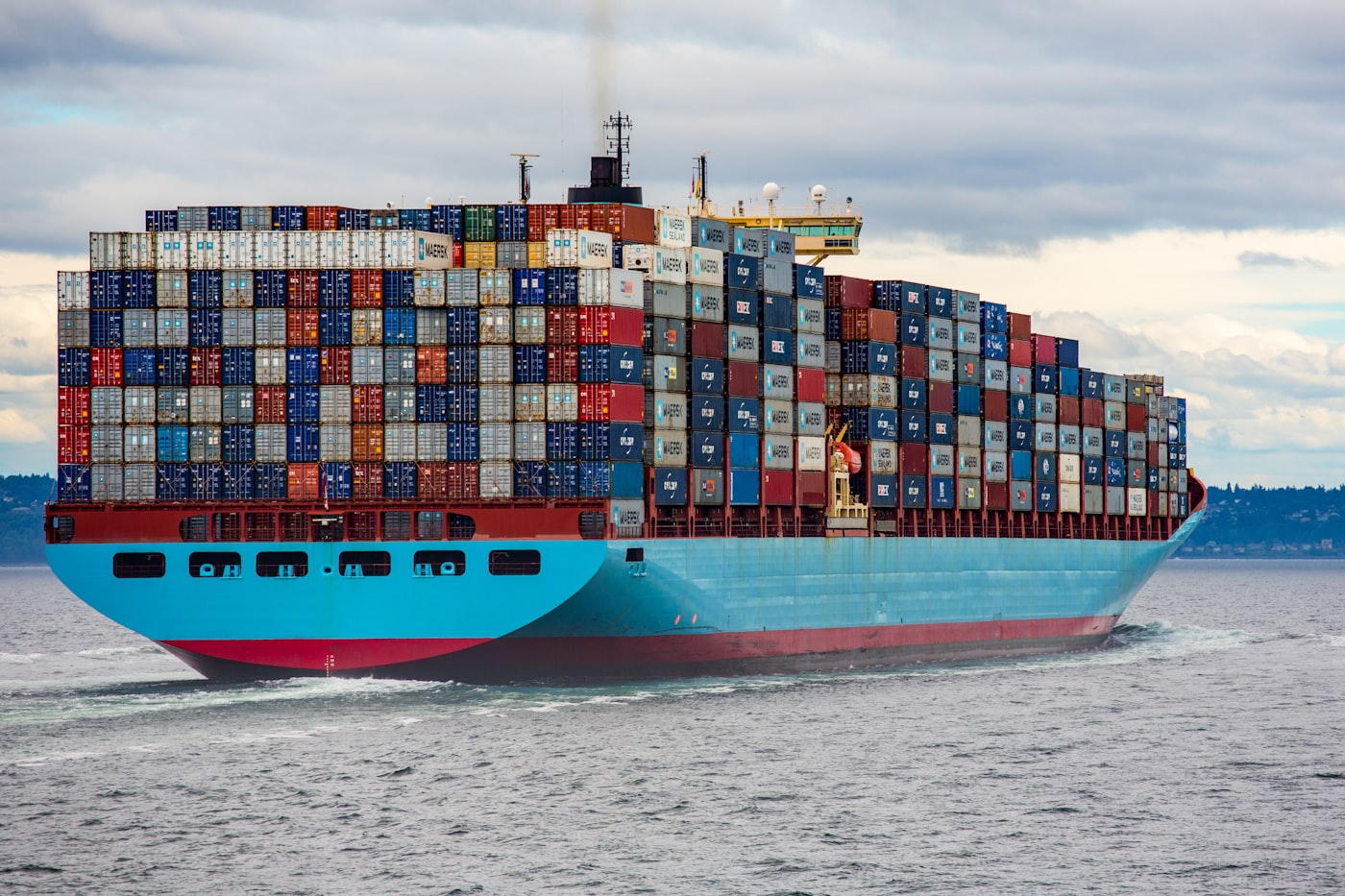
Oil prices collapsed up to 15 percent on the ceasefire announcement. Stock markets jumped. The world markets assumed one thing: Hormuz is opening. That assumption is premature.
The BBC's shipping analysts confirmed that only a handful of vessels have crossed the strait since the ceasefire was announced Tuesday night. Iran's position - articulated by Araghchi within hours of the announcement - is that transit through Hormuz will need to be conducted "under the auspices of the Iranian armed forces." Trump's statement said Iran would allow "unimpeded transit." The gap between those two phrases is the difference between free passage and a state-supervised toll booth. [Al Jazeera, BBC, April 8-9]
The yuan-denominated toll system that Iran and China have been running for weeks adds another layer. At least two vessels had paid Hormuz transit fees in Chinese yuan as of March 25, confirmed by Lloyd's List. China's Ministry of Commerce publicly acknowledged the reporting. Iran's embassy in Zimbabwe posted explicitly about adding the "petroyuan" to the global oil market.
"At one level, Iran is aiming to poke its thumb in the United States's eye, adding insult to injury. At another level, Iran is dead serious about preferring yuan to avoid US sanctions and to cultivate its ally, China, which has been moving steadily to redenominate its own trade." - Kenneth Rogoff, Harvard University economics professor, former IMF chief economist [Al Jazeera, April 8]
China buys more than 80 percent of Iran's oil exports, at discounted prices, in arrangements widely believed to be settled in yuan. The war has barely disrupted that flow - Iran exported 12 to 13.7 million barrels in the conflict's first two weeks alone, most going to Beijing. [Kpler/TankerTrackers analysis, via Al Jazeera]
What Iran and China are building at Hormuz is not just a military choke point. It is an argument - backed by physical control of a waterway handling one-fifth of global energy - that the dollar's dominance over the oil market is no longer guaranteed. The ceasefire pauses the shooting. It does not end the yuan play.
The Islamabad Talks: What Is Actually Being Negotiated

The two-week window that Pakistan secured is not a peace deal. It is barely even a ceasefire - it is a pause in which both sides agreed to stop shooting long enough to talk about what a deal might look like. What they will walk into Friday in Islamabad are two fundamentally incompatible documents.
The US has a 15-point plan. Iran has a 10-point plan. The BBC's diplomatic correspondent wrote that the two proposals are "oceans apart." [BBC, April 9] On the known points of divergence:
Known Gaps Between US and Iranian Positions
Vance's team - including Witkoff and Kushner - has been engaged in back-channel Iran contacts since before the war. Kushner's involvement is particularly notable; he played a role in the Abraham Accords and has maintained Gulf and Middle East relationships that extend beyond any single administration. Whether this team can close gaps that are, by the BBC's own assessment, "oceans apart" in two weeks while Lebanon continues to burn is the central question of the Islamabad talks.
Iran's Hardliners vs. Iran's Civilians: A Country Split

Inside Iran, the ceasefire has exposed a country that is simultaneously exhausted and suspicious. Five weeks of US and Israeli bombing killed more than 2,000 people, destroyed significant military and nuclear infrastructure, and disrupted the lives of millions. The population that has borne that cost is, according to multiple reports, genuinely relieved. [BBC, Guardian, April 8-9]
Iran's hardliners see it differently. For them, the ceasefire was negotiated by a Pezeshkian government they already regarded as too moderate, brokered by a Sunni-majority Pakistani military they distrust, and produces a pause that leaves the IRGC intact but publicly acknowledged as beaten. Mojtaba Khamenei, who assumed the supreme leadership role after his father Ali Khamenei was killed in the opening strikes of February 28, is caught between the civilian pressure for an end to the war and the ideological pressure from hardline factions who see any deal short of US withdrawal from the region as capitulation.
The Guardian's analysis described the ceasefire as a settlement where Iran "both sides claim victory" while analysts say Iran has ended up "both standing and strategically stronger" than the pre-war status quo in one specific sense: it proved the IRGC could sustain six weeks of the world's most powerful military without complete collapse. [Al Jazeera, April 8] That is the hardliners' argument for why talks should be hard.
The IRGC threat over Lebanon is not theatrical. It is a signal to Pezeshkian and Mojtaba Khamenei from within the Iranian system: do not give up Hezbollah, do not accept Lebanon as outside the deal's scope, do not walk into Islamabad and emerge without something concrete to show the domestic constituency that has been bombing-tested for 41 days.
The NATO Question and America's Post-War Reckoning
The Iran war was fought almost entirely without allies. France refused. Germany refused. Spain refused. The UK provided bases and intelligence support but kept troops out of direct combat. Of NATO's 32 members, only a handful provided any meaningful operational assistance. Trump called them "cowards" in a speech in March. He threatened to pull out of NATO publicly at least twice during the conflict.
Now Al Jazeera reports that the Trump administration is "signalling it is mulling NATO withdrawal" in the war's aftermath. [Al Jazeera, April 8] The BBC reported that Germany has suspended military travel approval for men under 45, a defensive measure that reflects how seriously Berlin takes the possibility of a European security environment without American coverage. [BBC, April 9]
This matters for the Islamabad talks. One of the structural elements that made the Iran war politically possible in Washington was the argument that US allies would share the burden. They did not. If Trump exits NATO in the war's aftermath, he reshapes the entire calculus of American security commitments - to Iran's benefit and Europe's detriment. The Islamabad talks are not just about Hormuz and enrichment. They are happening inside a broader American foreign policy rupture that the war accelerated.
Democrats in Congress renewed their push Wednesday to invoke the 25th Amendment and to use War Powers Act authorities to constrain further military action. The calls to use the 25th Amendment represent a level of institutional challenge to Trump that has not been seen since his first term - and they are happening while his administration is simultaneously conducting the most significant American diplomatic initiative in a generation. [BBC, April 9]
The Forty-Eight-Hour Test

The timeline is tight and the pressure points are acute. Before Vance lands in Islamabad Friday, the following crises need to not explode:
48-Hour Watch: What Could Break the Ceasefire Before Talks Start
The markets have priced in a deal. Oil's 15 percent fall assumes Hormuz reopens, enrichment talks progress, and the two-week window converts to something permanent. Markets are often wrong about geopolitics, and they are pricing an outcome - resolved negotiations - that requires clearing every one of the minefields above.
Pakistan has done its part. Sharif and Munir extracted a ceasefire from two parties who have not spoken directly in years, under a 90-minute countdown, in the middle of a shooting war. What happens in Islamabad Friday is now Vance's problem - and Iran's choice. The two sides read the same ceasefire document differently on the single issue most likely to blow the whole thing up before anyone sits down at the table.
History is being made in Islamabad Friday. Whether it is the history of the first US-Iran peace deal, or the history of the ceasefire that failed on its second day, is being decided right now - in Lebanon, in Hormuz, and in the cables flying between Washington and Tehran through Islamabad's green and white foreign ministry walls.
"In no way do we trust America. But we are tired." - Iranian civilian, quoted in The Guardian, April 8, 2026
That sentence - eight words - is the entire negotiating reality Vance will walk into on Friday. Iran does not trust the deal. Iran does not trust the mediators will hold Israel back. Iran does not trust that the US definition of "ceasefire" matches Pakistan's definition of "ceasefire." But 41 days of bombing has produced a population that is tired enough to try anyway.
The talks begin Friday in Islamabad. The clock, as it has for 41 days now, is running.
Sources: Al Jazeera (multiple reports, April 8-9, 2026); BBC News (April 9, 2026); The Guardian (April 8-9, 2026); Lloyd's List (shipping/Hormuz toll data, March 25, 2026); Kpler/TankerTrackers (Iran oil export data); Harvard University / IMF (Kenneth Rogoff quote); IRGC statement via Iranian state media, April 8, 2026.