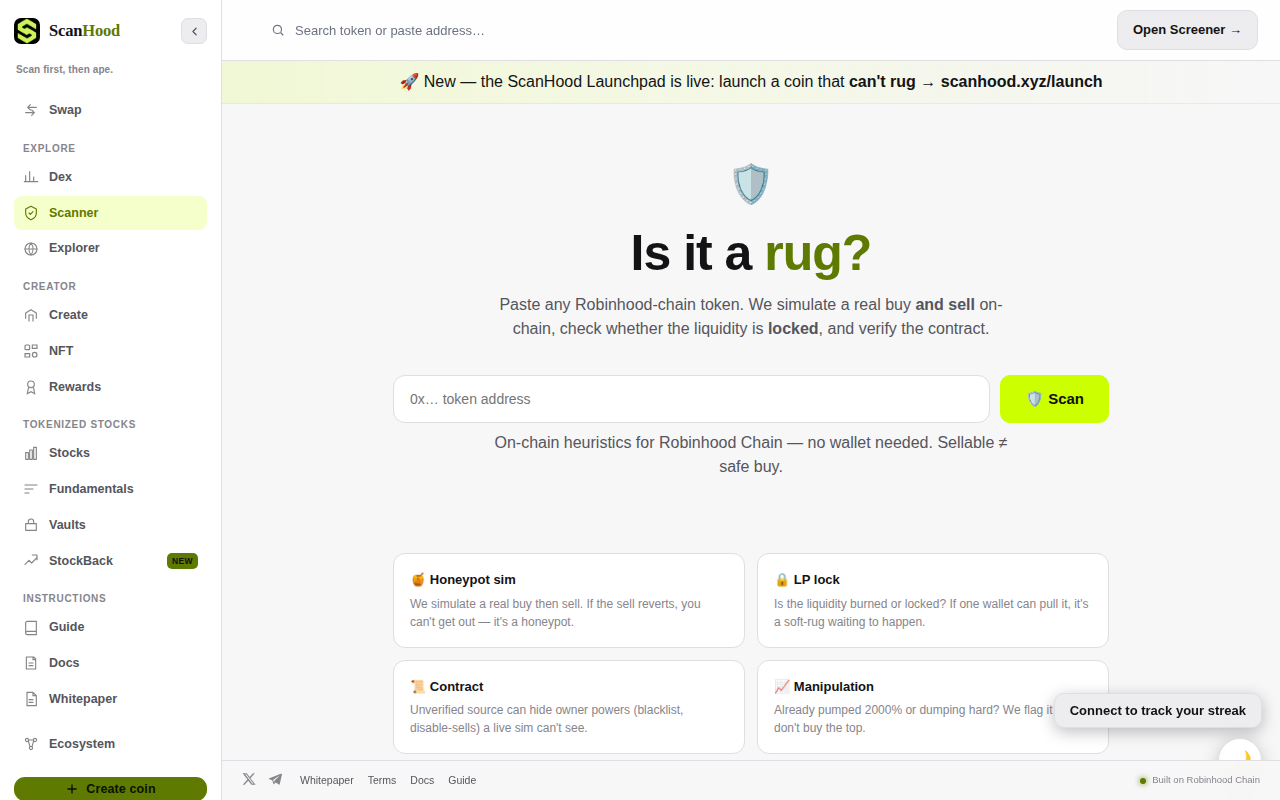
ScanHood’s dashboard displays the pass, caution, and danger tallies for 1,367 Robinhood‑Chain tokens scanned on October 19, 2026.
SCANHOOD FLAGS 1303 ROBINHOOD-CHAIN TOKENS AS CAUTION, 2 AS DANGER ON OCT 19
*ScanHood's live scanner evaluated every Robinhood‑Chain token on 2026‑10‑19. Only 62 tokens cleared, while 1303 earned a caution label and 2 were marked danger. The data spotlights systemic risk across the emerging chain.*
On October 19, 2026, ScanHood completed a full‑chain safety sweep of every token on the Robinhood blockchain. The live scanner logged 1,367 contracts, delivering a granular risk map in seconds. Only 62 tokens cleared the test, while 1,303 earned a caution label and two were marked danger. The data arrives as DeFi investors scramble for trustworthy entry points amid a flood of new launches. ScanHood’s real‑time heuristics expose a chain where the majority of tokens carry at least one warning, forcing traders to confront hidden vulnerabilities before committing capital.
What did ScanHood find in its October 19 scan?
ScanHood processed 1,367 Robinhood‑Chain tokens on 2026‑10‑19. The scanner returned three outcomes: 62 tokens passed the safety test, 1,303 tokens were flagged with a caution status, and 2 tokens triggered a danger alert. The danger rate translates to roughly 0.1% of the total pool, matching the headline figure. The tally reflects a chain where the overwhelming majority of contracts exhibit at least one red flag, underscoring a fragile ecosystem. No token was omitted; the scanner covered the full token list for that day, delivering a complete risk snapshot.
How does ScanHood determine a token’s safety?
ScanHood’s Rug Scanner runs an on‑chain simulation of a real purchase followed by a sell. If the sell transaction reverts, the token is a honeypot and cannot be exited. The tool also checks liquidity status: it verifies whether liquidity is burned, locked, or controlled by a single wallet, labeling soft‑rugs where a wallet could withdraw funds. Contract verification scans for unverified source code that could conceal owner powers such as blacklisting or disabling sales. Finally, the scanner flags tokens that have already seen extreme price moves—2000% pumps or hard dumps—signaling manipulation. Each heuristic runs without requiring a wallet, delivering a binary safety verdict based on observable blockchain behavior.
Why do 1,303 tokens receive a caution flag?
A caution flag indicates that the token failed at least one safety heuristic but did not trigger a full danger alert. Common triggers include liquidity that is not fully locked, contracts lacking verification, or recent price spikes that suggest market manipulation. The caution status warns investors that the token carries elevated risk, even though an outright sell‑revert or liquidity theft has not been confirmed. ScanHood’s methodology treats caution as a call for deeper due diligence before any purchase, reflecting the platform’s stance that sellability alone does not equal safety.
What are the implications of the two danger flags?
The two danger‑flagged tokens failed the honeypot simulation, meaning a simulated sell transaction reverted on‑chain. This outcome signals that holders cannot liquidate their position, effectively trapping funds. In addition, a danger flag may accompany an unlocked or soft‑locked liquidity pool, exposing the token to immediate rug pulls. For investors, the danger label is a definitive red line: the token is unsafe to buy and likely to result in total loss. The 0.1% danger rate, while numerically small, highlights that outright rug pulls exist on Robinhood Chain and that automated scans can isolate them in real time.
Frequently asked questions
How many Robinhood‑Chain tokens did ScanHood scan on October 19, 2026?
ScanHood scanned a total of 1,367 Robinhood‑Chain tokens on that date.
How many tokens passed ScanHood's safety check on October 19?
Only 62 tokens passed the safety check, according to the ScanHood report.
What does ScanHood's Rug Scanner test for?
The scanner simulates a real buy and sell, checks liquidity lock status, verifies contract source code, and flags extreme price manipulation.
The October 19 snapshot paints a stark picture: Robinhood‑Chain is riddled with caution‑level contracts and a handful of outright traps. As the ecosystem expands, tools like ScanHood become essential gatekeepers, separating viable projects from deceptive schemes. Investors who ignore the scanner’s warnings risk entanglement in unexitable positions. The next wave of token launches will be judged against this baseline, and only those that survive rigorous on‑chain testing will earn market confidence.
Sources: ScanHood live scan data