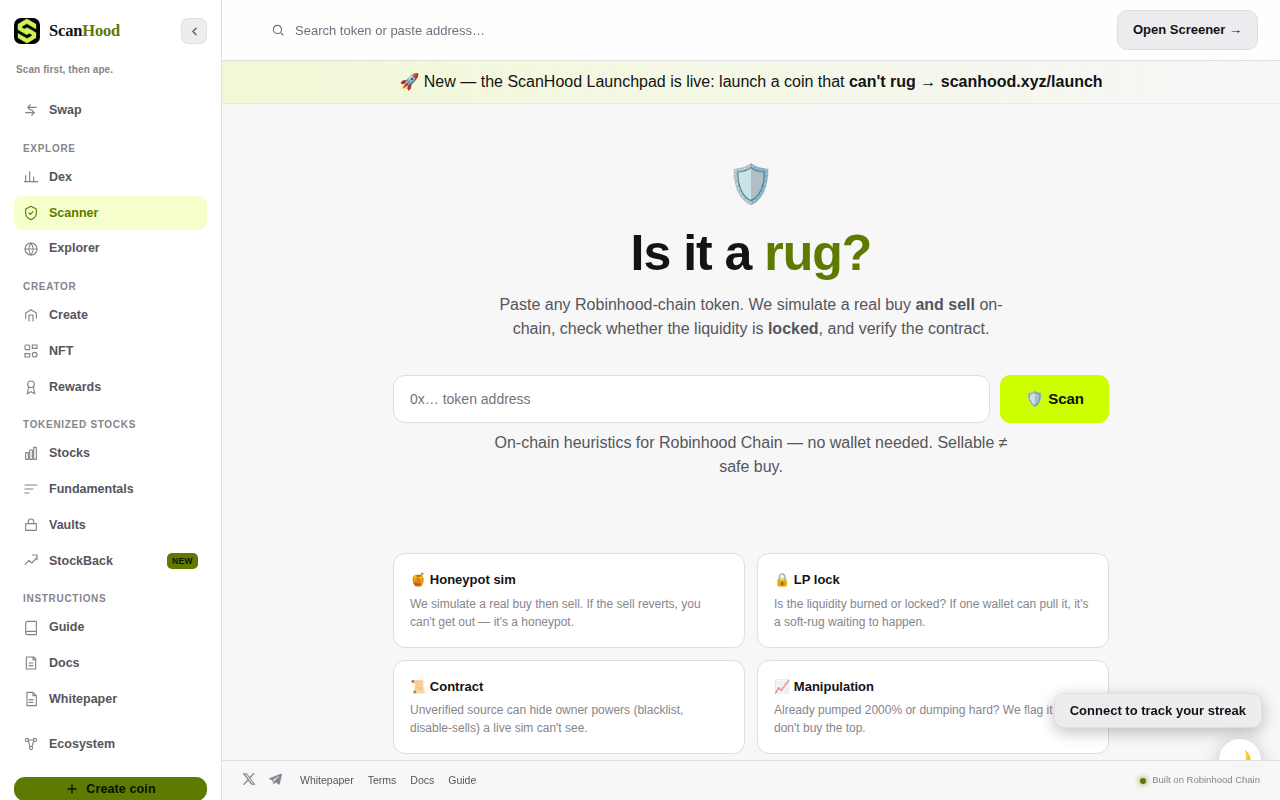
ScanHood’s live scanner listed seven Robinhood-chain tokens on Nov 6, 2026, each receiving a caution flag for potential rug risks.
SCANHOOD FLAGS ALL 7 ROBINHOOD-CHAIN TOKENS WITH CAUTION ON NOV 6
*On November 6, 2026 ScanHood’s live scanner evaluated seven Robinhood‑chain tokens and flagged every one with caution. The tally shows zero passes and a 0.0% failure rate, underscoring systemic risk for investors.*
On November 6, 2026, ScanHood’s live scanner ran a full safety sweep of the Robinhood Chain. Seven tokens entered the scanner’s on‑chain heuristics. The result: none cleared the test, all received a caution flag, and the dashboard recorded a 0.0 % failure rate for the Rug Check. ScanHood’s platform simulates a real purchase and sale, inspects liquidity lock status, and probes contract verification. Its mandate is blunt: flag honeypots, soft‑rugs, and manipulation before investors commit capital. The latest tally underscores a market awash with risk, even as the service rolls out a new launchpad promising “coins that can’t rug.”
What did ScanHood detect on November 6, 2026?
The scanner logged seven Robinhood‑chain tokens. The dashboard showed zero passes, seven caution flags, and zero danger flags. The overall failure metric read 0.0 % for the Rug Check, meaning no token outright failed the automated test, yet every token triggered a caution. The caution label signals that the simulated buy‑sell cycle, liquidity lock check, or contract audit raised red flags. No token earned a clean bill of health, leaving investors with a stark warning across the board.
Why does a caution flag matter to investors?
A caution flag is not a binary pass/fail; it flags potential vulnerabilities. ScanHood’s engine flags honeypot behavior when a simulated sell reverts, flags liquidity that is not burned or securely locked, and flags contracts lacking verification that could conceal owner powers. Each of these conditions can trap funds or enable a soft rug. The platform’s caution label tells traders that while the token did not outright fail the test, the risk profile is high enough to merit avoidance. In a market where rapid pumps can inflate prices 2000 % before a dump, such warnings are critical.
How does ScanHood’s on‑chain simulation work?
Users paste any Robinhood‑chain token address; the tool runs a live buy simulation, then attempts a sell. If the sell transaction reverts, the token is classified as a honeypot. Simultaneously, the scanner checks whether liquidity is burned or locked, identifying wallets that could pull funds. It also scans contract source verification status, flagging hidden owner powers. Manipulation signals, such as extreme price spikes, are highlighted. The process requires no wallet connection, delivering a transparent risk snapshot in seconds. The result is a concise flag—pass, caution, or danger—based on observable on‑chain behavior.
What does ScanHood’s new launchpad promise for token creators?
Alongside the scanner, ScanHood announced a live launchpad that promises to “launch a coin that can’t rug.” The service integrates the same heuristics used in the scanner, requiring creators to meet liquidity lock, contract verification, and sellability criteria before listing. By embedding these safeguards at launch, the platform aims to reduce the pool of caution‑flagged tokens. The rollout signals a shift toward pre‑emptive security rather than post‑mortem warnings. For the Robinhood Chain ecosystem, it could raise the baseline safety of new projects, though the November 6 scan shows existing tokens still fall short of that standard.
Frequently asked questions
How many Robinhood-chain tokens did ScanHood scan on 2026-11-06?
ScanHood scanned seven Robinhood-chain tokens on November 6, 2026.
What was the pass/fail outcome of the ScanHood rug check on that day?
The scan recorded zero passes, seven caution flags, zero danger flags, and a 0.0% failure rate for the Rug Check.
What does a "caution" flag indicate in ScanHood’s report?
A caution flag signals potential issues such as honeypot behavior, liquidity lock concerns, unverified contracts, or manipulation, prompting investors to avoid the token.
The November 6 snapshot paints a grim picture: every Robinhood‑chain token examined triggered a caution, and none cleared the safety net. ScanHood’s data forces investors to confront a market riddled with hidden traps. As the launchpad rolls out, the onus shifts to developers to meet stricter standards. Until then, the scanner’s caution flags remain a stark reminder: sellable does not equal safe. Traders who ignore the warning risk being caught in the next soft rug.
Sources: ScanHood live scan data (https://scanhood.xyz/scanner/)