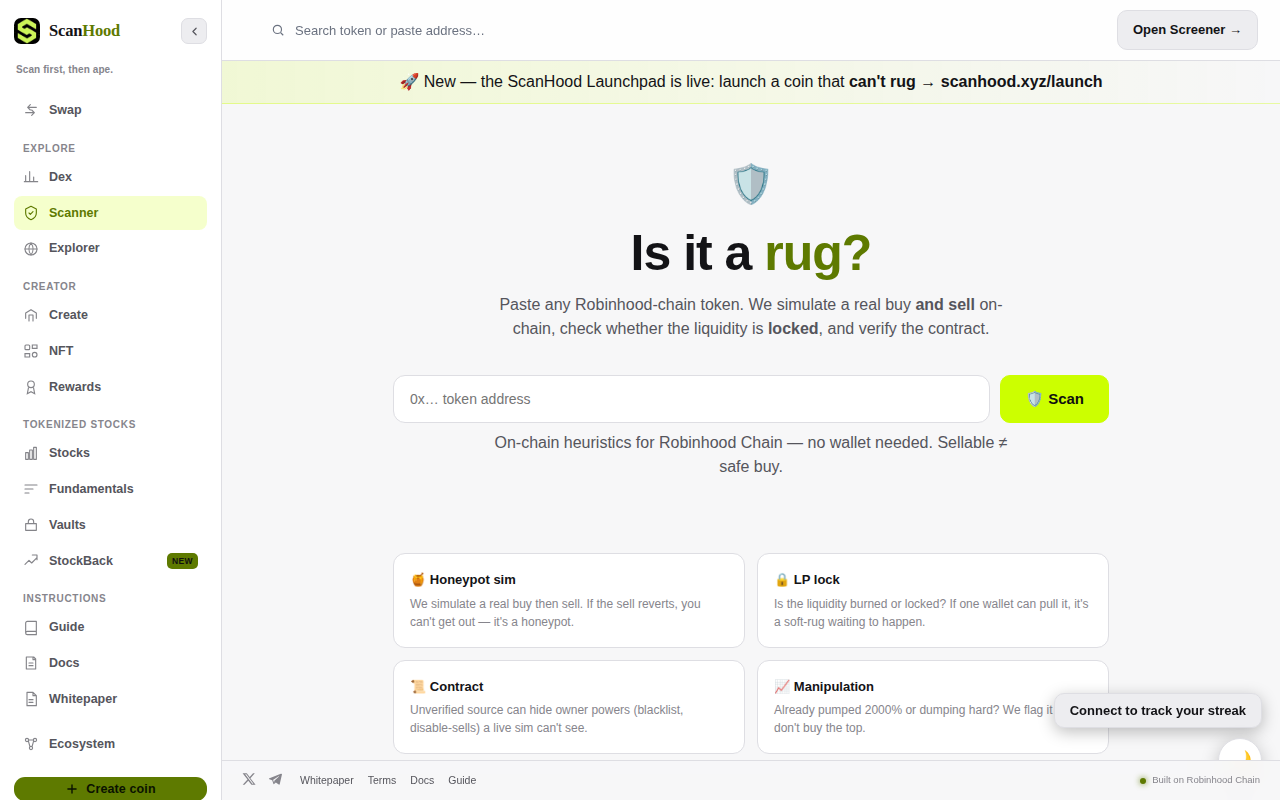
ScanHood’s live scanner categorized 272 tokens as passed, 826 as caution, and 113 as danger on October 20, 2026.
SCANHOOD FLAGS 9.3% OF 1211 ROBINHOOD-CHAIN TOKENS AS RUG RISKS
*On October 20, ScanHood scanned every Robinhood‑Chain token in circulation. 272 passed, 826 earned a caution flag, and 113 were marked DANGER. The data shows a 9.3% failure rate on the platform’s rug‑check, underscoring systemic risk in the ecosystem.*
The DeFi surge on Robinhood Chain has drawn a flood of new tokens, but safety remains elusive. On 2026-10-20, ScanHood delivered a full‑chain audit, scanning every token on the network and publishing a stark risk breakdown. Investors received a clear snapshot: 272 tokens passed, 826 earned caution, and 113 were flagged DANGER. The platform’s rug‑check failure rate sits at 9.3%, a tangible metric of vulnerability in an otherwise opaque market.
ScanHood’s live scanner operates without wallet access, simulating real‑world trades to expose honeypots, liquidity traps, and contract backdoors. Its methodology combines on‑chain heuristics, liquidity lock status, and manipulation detection to separate sellable tokens from those that could trap capital. The data underscores a pressing need for rigorous vetting before any purchase on the Robinhood Chain.
What did ScanHood’s October 20 scan reveal about Robinhood‑Chain tokens?
ScanHood processed 1,211 Robinhood‑Chain tokens on 2026-10-20. Of those, 272 tokens cleared every safety metric and were marked as passed. A large majority, 826 tokens, triggered a caution flag, indicating potential but not definitive risk. The platform flagged 113 tokens as DANGER, the highest risk tier, suggesting honeypot behavior, unlocked liquidity, or malicious contract code. Overall, 9.3% of the tokens failed the rug check, a figure that translates directly into investor exposure to possible rug pulls on the chain.
How does ScanHood determine a token’s rug risk?
ScanHood runs an on‑chain simulation that mimics a real purchase and subsequent sale of any Robinhood‑Chain token. If the simulated sell transaction reverts, the token is classified as a honeypot, meaning investors cannot exit their position. The scanner also inspects liquidity status, checking whether liquidity is burned, locked, or controlled by a single wallet—a soft‑rug indicator. Contract verification is performed to expose hidden owner powers such as blacklisting or disabling sells. Finally, the tool flags tokens that have experienced extreme price manipulation, like 2,000% pumps, to warn against buying at a peak.
Why does a caution flag matter for investors?
A caution flag, assigned to 826 tokens in the latest scan, signals that a token exhibits one or more risk factors without meeting the full criteria for DANGER. These may include partially locked liquidity, unverified contracts, or modest price manipulation. While not an outright ban, the flag advises investors to conduct deeper due diligence before committing capital. In a market where sellability does not equal safety, the caution tier serves as an early warning, potentially averting losses that could arise from hidden owner controls or future liquidity withdrawals.
What options does ScanHood offer to token creators?
ScanHood has launched a dedicated Launchpad that allows developers to issue new coins with built‑in safeguards. The platform promises that tokens launched through the service cannot be rug‑pulled because they must pass the same rigorous buy‑sell simulation, LP‑lock verification, and contract audit before deployment. By integrating these checks at launch, creators can market their projects as “rug‑proof,” appealing to risk‑averse investors. The Launchpad is live at scanhood.xyz/launch and represents a proactive step toward reducing fraud on the Robinhood Chain.
Frequently asked questions
What percentage of Robinhood‑Chain tokens failed ScanHood’s rug check on 2026-10-20?
9.3% of the 1,211 tokens scanned failed the rug check.
How many tokens passed ScanHood’s safety scan on that day?
272 tokens passed the safety scan.
What does ScanHood label as DANGER?
ScanHood flagged 113 tokens as DANGER, indicating high risk such as honeypot behavior or unlocked liquidity.
The October 20 scan paints a sobering picture: risk is pervasive, and caution flags dominate the token landscape. As the Robinhood Chain continues to attract developers, tools like ScanHood become essential gatekeepers, separating legitimate projects from those poised to rug. Investors who ignore these signals risk losing capital to contracts that cannot be sold. Ongoing vigilance and reliance on transparent scanners will be the only defense against a market that rewards speed over safety.
Sources: ScanHood live scan data (https://scanhood.xyz/scanner/)