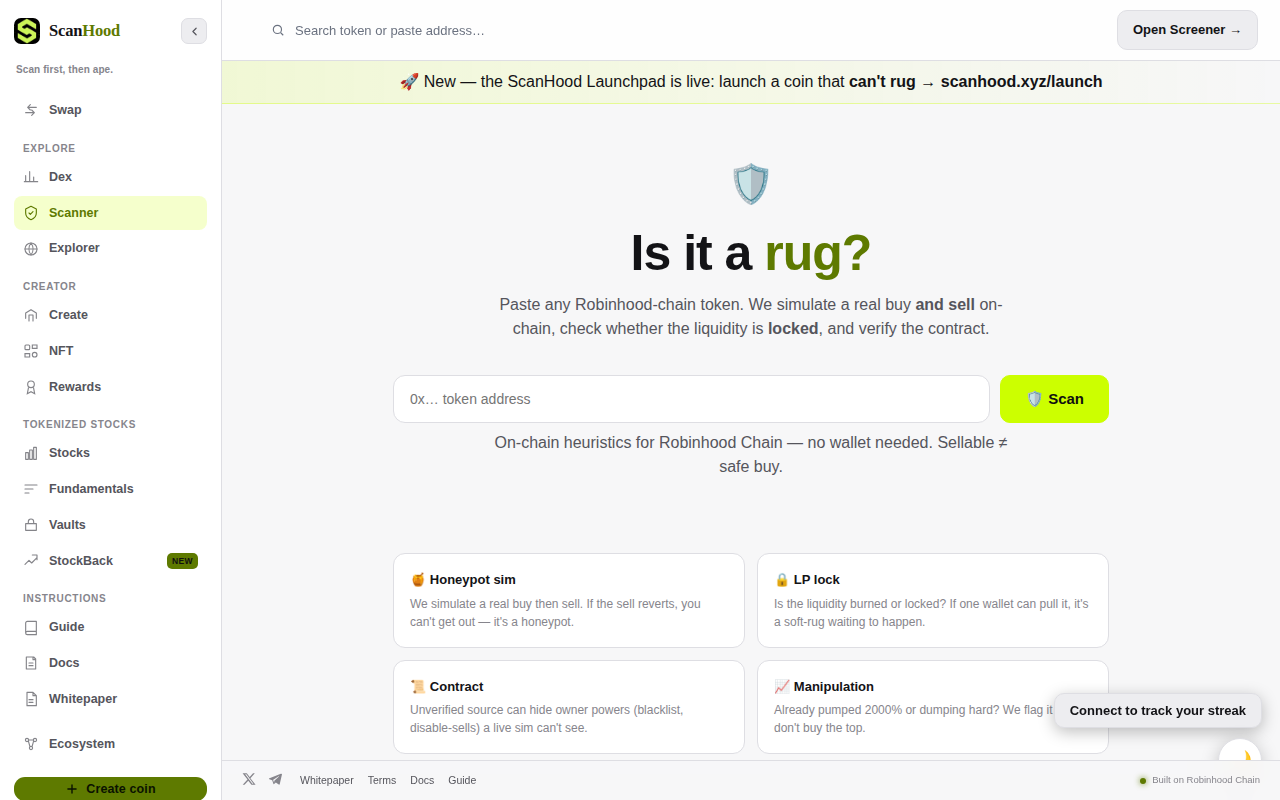
ScanHood’s live scanner flagged 48 tokens as danger and 388 as caution on Nov 16, highlighting the prevalence of rug risk on Robinhood Chain.
SCANHOOD FLAGS 8.1% OF 589 ROBINHOOD-CHAIN TOKENS AS RUG RISKS
*On November 16, ScanHood’s live scanner evaluated 589 Robinhood‑Chain tokens. 8.1% failed the Rug Check, while the majority received caution warnings. The data underscores a volatile landscape for investors on the chain.*
On November 16, ScanHood released its daily safety‑scan tally for Robinhood‑Chain tokens. The live scanner evaluated 589 tokens, delivering a stark picture: 8.1% failed the Rug Check, while the remainder split between safe passes and caution warnings. In a market where new tokens launch daily, such real‑time diagnostics are essential for investors seeking to avoid costly exits. ScanHood’s methodology simulates a genuine buy and sell on‑chain, checks liquidity locks, and inspects contract integrity, offering a multi‑layered view of token health. The data set provides a baseline for risk assessment, highlighting that even on a single day, a significant portion of the ecosystem carries hidden danger.
What did the ScanHood scan reveal on Nov 16?
ScanHood processed 589 Robinhood‑Chain tokens on 2026‑11‑16. Of those, 153 passed the safety simulation, 388 were flagged with a caution status, and 48 received a danger label. The danger and caution flags together represent 8.1% of the total tokens that failed the Rug Check. The breakdown shows that roughly two‑thirds of the tokens scanned raised red flags, indicating widespread risk across the ecosystem. The scanner’s live data provides a snapshot of token health at a single point in time, offering investors a concrete metric to gauge exposure before committing capital.
How does ScanHood determine a rug risk?
The platform runs an on‑chain buy‑then‑sell simulation. If the simulated sell reverts, the token is marked a honeypot, meaning investors cannot exit. It also checks liquidity status: locked or burned liquidity passes, while a single wallet that can withdraw liquidity triggers a soft‑rug warning. Contract verification scans for hidden owner powers such as blacklisting or disabling sales, which a live simulation cannot detect. Finally, the scanner flags tokens that have already seen extreme price moves—2000% pumps or hard dumps—signaling possible manipulation. Each heuristic contributes to a composite risk score that informs the pass, caution, or danger label.
Why does a caution flag matter for investors?
A caution flag signals that a token passed the basic sell simulation but still exhibits warning signs. These may include partially locked liquidity, unverifiable contract code, or recent price spikes that suggest market manipulation. Investors seeing a caution label should treat the token as high‑risk, performing deeper due diligence before buying. The distinction between caution and danger is crucial: danger denotes an immediate, non‑recoverable loss scenario, while caution warns of potential vulnerabilities that could become fatal under adverse market conditions. Ignoring caution flags has historically led to significant investor losses across DeFi platforms.
What options does ScanHood offer to avoid rug pulls?
Beyond scanning, ScanHood launched a dedicated launchpad that promises to deploy coins that cannot rug. The launchpad integrates the same on‑chain heuristics at deployment, ensuring liquidity is locked and contracts are verified from day one. Users can also submit any Robinhood‑Chain token to the scanner without a wallet, receiving an instant risk assessment. By coupling real‑time simulation with contract analysis, the platform equips traders with actionable data to sidestep hazardous tokens. The service positions itself as a preventative layer, aiming to reduce the prevalence of rug pulls on emerging blockchain ecosystems.
Frequently asked questions
How many Robinhood-chain tokens failed ScanHood's Rug Check on November 16?
8.1% of the 589 tokens scanned failed the Rug Check, according to ScanHood's live data.
What does a danger flag indicate in ScanHood's report?
A danger flag means the token failed the sell simulation or liquidity is unprotected, signaling an immediate, non‑recoverable loss risk.
Can users launch a token that can't rug using ScanHood?
Yes, ScanHood's new launchpad integrates its safety heuristics to deploy coins with locked liquidity and verified contracts, aiming to prevent rug pulls.
The ScanHood snapshot reveals a chain riddled with caution and danger signals. As DeFi projects proliferate, tools that surface on‑chain risk in real time become non‑negotiable for prudent capital allocation. Investors who ignore these alerts risk entrapment in honeypots or liquidity drains. By leveraging ScanHood’s scanner and its launchpad safeguards, market participants can demand higher standards of transparency and lock‑in safety before committing funds. The next wave of token launches will be judged not just by hype, but by the hard data ScanHood delivers.
Sources: ScanHood live scan data (https://scanhood.xyz/scanner/)