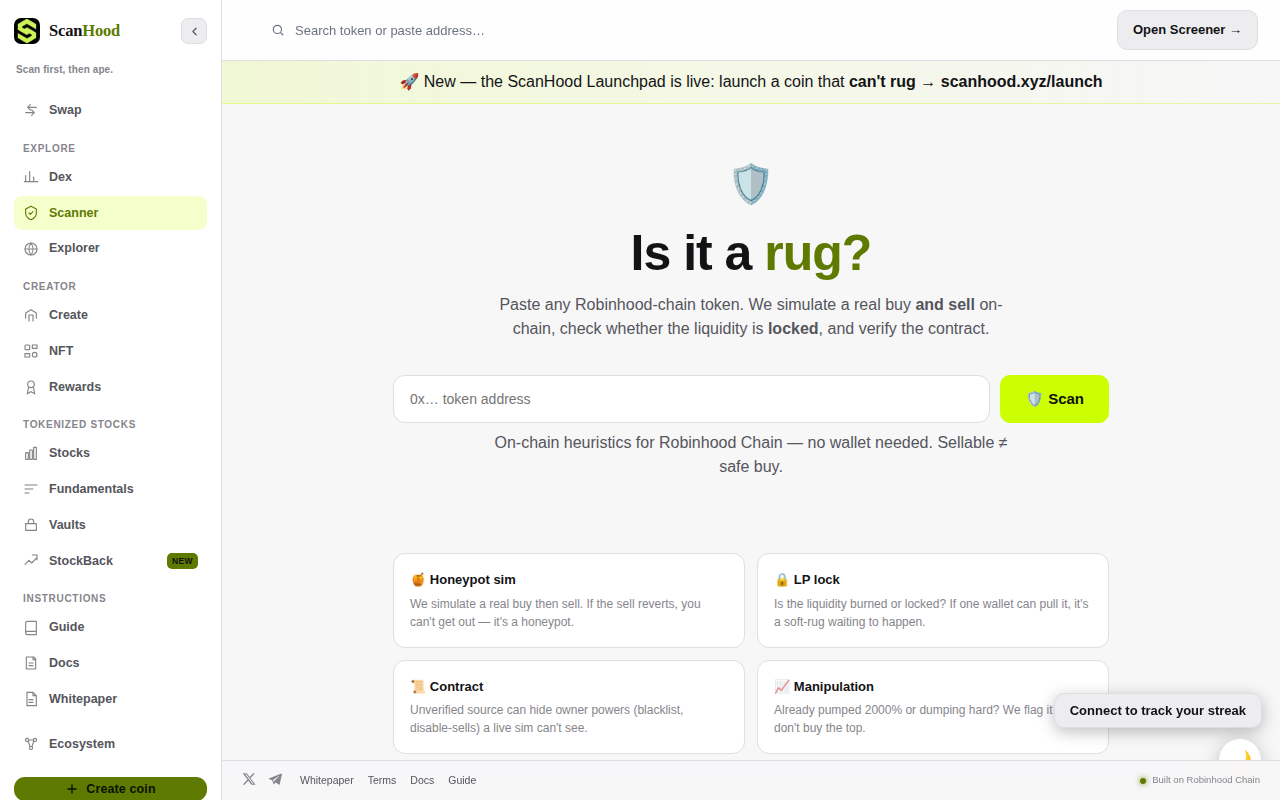
ScanHood’s live scan on Nov 10, 2026 flagged 621 tokens for caution and 50 for danger out of 888 examined.
SCANHOOD FLAGS 5.6% OF 888 ROBINHOOD-CHAIN TOKENS AS RUG RISKS
*ScanHood's live scanner evaluated 888 Robinhood‑Chain tokens on Nov 10, 2026. Only 217 passed unflagged, while 5.6% triggered a rug‑check failure. The split reveals a market awash with caution‑level risk and a non‑trivial danger pool.*
ScanHood’s live scanner posted a stark snapshot of the Robinhood‑Chain token landscape on November 10, 2026. Out of 888 tokens examined, only 217 cleared every safety hurdle, while the rest triggered caution or danger alerts. The data underscores a market saturated with projects that may appear legitimate but hide critical vulnerabilities.
Investors navigating DeFi on Robinhood‑Chain now face a clear metric: 5.6% of tokens failed the rug check, meaning a sell transaction would revert and lock funds. The scanner’s breakdown—217 passed, 621 caution, 50 danger—offers a granular view of where risk concentrates, forcing traders to question every token’s underlying safety before committing capital.
What did ScanHood’s November 10 scan reveal?
On 2026-11-10 ScanHood processed 888 Robinhood‑Chain tokens. The scanner classified 217 tokens as passed, meaning no immediate red flags. A majority, 621 tokens, received a caution flag, indicating potential issues that merit further scrutiny. Fifty tokens were marked DANGER, signaling high‑risk characteristics such as possible honeypot behavior or unlocked liquidity. Overall, 5.6% of the tokens failed the rug check, a metric that isolates the most vulnerable projects from the broader pool.
Why does a 5.6% failure rate matter to investors?
A 5.6% failure rate translates to roughly one in twenty tokens that cannot be safely sold after purchase. For investors, that risk is not abstract; a failed rug check means the simulated sell transaction reverts, trapping capital. The presence of 50 DANGER flags compounds the threat, as those tokens likely have soft‑rug vectors such as unlocked liquidity or owner‑controlled blacklists. The caution pool, while not outright failures, still warns of possible manipulation or inflated price spikes that could reverse sharply.
How does ScanHood determine a token’s risk level?
ScanHood runs an on‑chain honeypot simulation: it attempts a real buy followed by a sell. If the sell reverts, the token is flagged as a honeypot. It then checks liquidity status—whether the LP is burned, locked, or controlled by a single wallet. Contract verification follows; unverified contracts can hide owner powers like blacklisting or disabling sells. Finally, the scanner looks for price manipulation signals, such as 2000% pumps, to flag tokens that may be primed for a dump. Each heuristic contributes to the pass, caution, or danger label.
What tools does ScanHood offer to prevent future rugs?
Beyond the daily scanner, ScanHood launched a Launchpad that lets creators deploy coins pre‑vetted against rug checks. The platform requires no wallet for scanning, lowering entry barriers for due diligence. Users can paste any Robinhood‑Chain token address to run the full suite of simulations and checks instantly. By exposing liquidity lock status, contract verification, and manipulation flags, ScanHood equips traders with actionable data before capital is committed, aiming to shrink the pool of dangerous tokens over time.
Frequently asked questions
How many Robinhood-Chain tokens did ScanHood scan on 2026-11-10?
ScanHood scanned 888 Robinhood-Chain tokens on that date.
What percentage of the scanned tokens failed the rug check?
5.6% of the tokens failed the rug check.
How many tokens were flagged as DANGER in the ScanHood report?
Fifty tokens were flagged DANGER.
The ScanHood report sends a warning shot through the Robinhood‑Chain ecosystem. With a measurable failure rate and a sizable caution pool, the onus shifts to developers to lock liquidity and verify contracts, and to investors to demand transparent audits. As the launchpad gains traction, the next wave of tokens may arrive pre‑screened, potentially lowering the danger count and restoring confidence in this fast‑moving DeFi corridor.
Sources: ScanHood live scan data (https://scanhood.xyz/scanner/)