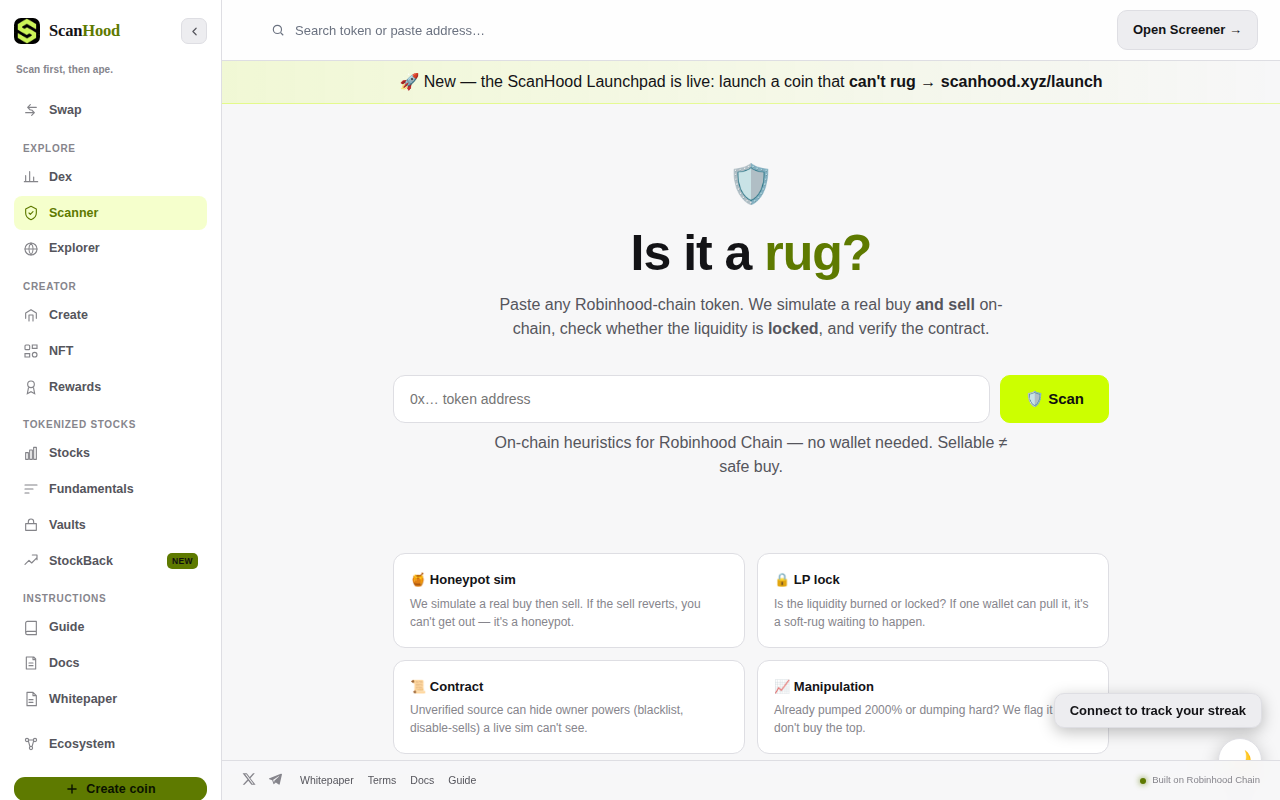
ScanHood’s live scanner tallied 87 safe tokens, 365 cautions, and 27 danger alerts from 479 Robinhood-Chain contracts on November 7, 2026.
SCANHOOD FLAGS 5.6% OF 479 ROBINHOOD-CHAIN TOKENS AS RUGS
*ScanHood’s live scanner processed every Robinhood‑Chain token on 2026‑11‑07. 87 passed, 365 raised caution, 27 flagged danger. 5.6 % failed the Rug Check, exposing investors to honeypot traps.*
On November 7, 2026, ScanHood’s live scanner processed every Robinhood‑Chain token listed on its platform – a total of 479 contracts. The tool simulated real buys and sells, checked liquidity locks, and inspected contract verification in a single on‑chain pass. The results are stark: 87 tokens cleared all checks, 365 raised caution flags, and 27 were marked DANGER. Even more concerning, 5.6 % of the scanned tokens failed the Rug Check, meaning a sell transaction would revert and trap investors. ScanHood’s data underscores how many new projects on the Robinhood chain still expose users to honeypot and liquidity‑pull risks. The scanner’s launchpad, announced alongside the daily report, promises a “coin that can’t rug,” but the numbers reveal a market still riddled with vulnerability.
How many Robinhood-Chain tokens failed ScanHood’s rug check on 2026-11-07?
The ScanHood report shows that 5.6 % of the 479 tokens scanned failed the Rug Check. A failed check means the simulated sell transaction reverted, trapping any buyer. Of the total, 27 tokens earned a DANGER flag, the highest risk category. The remaining 365 tokens were marked caution, indicating potential issues such as soft‑rugs or unverified contracts. Only 87 tokens passed every test, confirming both sellability and liquidity security. The failure rate, while numerically modest, translates into dozens of contracts that could lock investors’ funds permanently.
What does a “caution” flag indicate in ScanHood’s report?
A caution flag signals that the token triggered at least one risk heuristic without reaching the DANGER threshold. ScanHood checks liquidity lock status, contract verification, and price manipulation signals. If liquidity is not fully locked or the contract source is unverified, the scanner raises caution. The tool also flags tokens that have already seen extreme price swings, such as 2000 % pumps, which may precede a dump. Caution does not guarantee a rug pull, but it warns investors that the token lacks one or more safety guarantees present in the 87 fully passed contracts.
How does ScanHood simulate a honeypot scenario?
The scanner performs an on‑chain buy simulation followed immediately by a sell simulation. If the sell transaction reverts, the contract is classified as a honeypot. This behavior indicates that the token’s code blocks outgoing transfers, effectively trapping any holder. The honeypot test is separate from liquidity checks; a token can pass the LP‑lock test yet still be a honeypot. By reproducing a real trader’s experience, ScanHood exposes contracts that appear tradable on the surface but are engineered to deny exits.
Can developers bypass ScanHood’s checks with hidden code?
ScanHood flags contracts with unverified source code because hidden owner powers—such as blacklisting addresses or disabling sells—can be concealed. While the live simulation catches overt sell reverts, it cannot see dormant functions that could be activated later. The scanner therefore marks such contracts with caution or danger, depending on the severity of the hidden powers. This approach warns users that even if a token currently sells, future code paths may enable a soft‑rug or a complete liquidity pull.
Frequently asked questions
What percentage of Robinhood-Chain tokens failed the Rug Check on 2026-11-07?
5.6 % of the 479 tokens scanned failed the Rug Check, indicating a sell transaction would revert.
How many tokens were flagged as DANGER in the ScanHood report?
27 tokens received a DANGER flag, marking them as high‑risk for rug pulls or honeypots.
What new service did ScanHood launch alongside its daily safety scan?
ScanHood launched a Launchpad that promises to let creators issue coins that cannot be rugged.
The ScanHood snapshot paints a sobering picture of the Robinhood‑Chain ecosystem. While a majority of tokens only raise caution, the presence of 27 danger alerts and a measurable rug‑failure rate signals that investors cannot rely on surface‑level hype. The new Launchpad may raise the bar for future projects, but until developers adopt verifiable contracts and immutable liquidity locks, the risk landscape will remain hostile. Vigilance, not optimism, will protect capital in this volatile DeFi frontier.
Sources: ScanHood live scan data (https://scanhood.xyz/scanner/)