ScanHood's live scanner flagged 31 tokens as danger and 530 as caution out of 792 examined on November 9, 2026.
SCANHOOD FLAGS 3.9% OF 792 ROBINHOOD-CHAIN TOKENS AS RUGS
*ScanHood's live scanner evaluated 792 Robinhood‑Chain tokens on 2026‑11‑09. Only 231 passed, while 530 raised caution and 31 were marked danger. The 3.9% failure rate signals a growing risk for investors on the chain.*
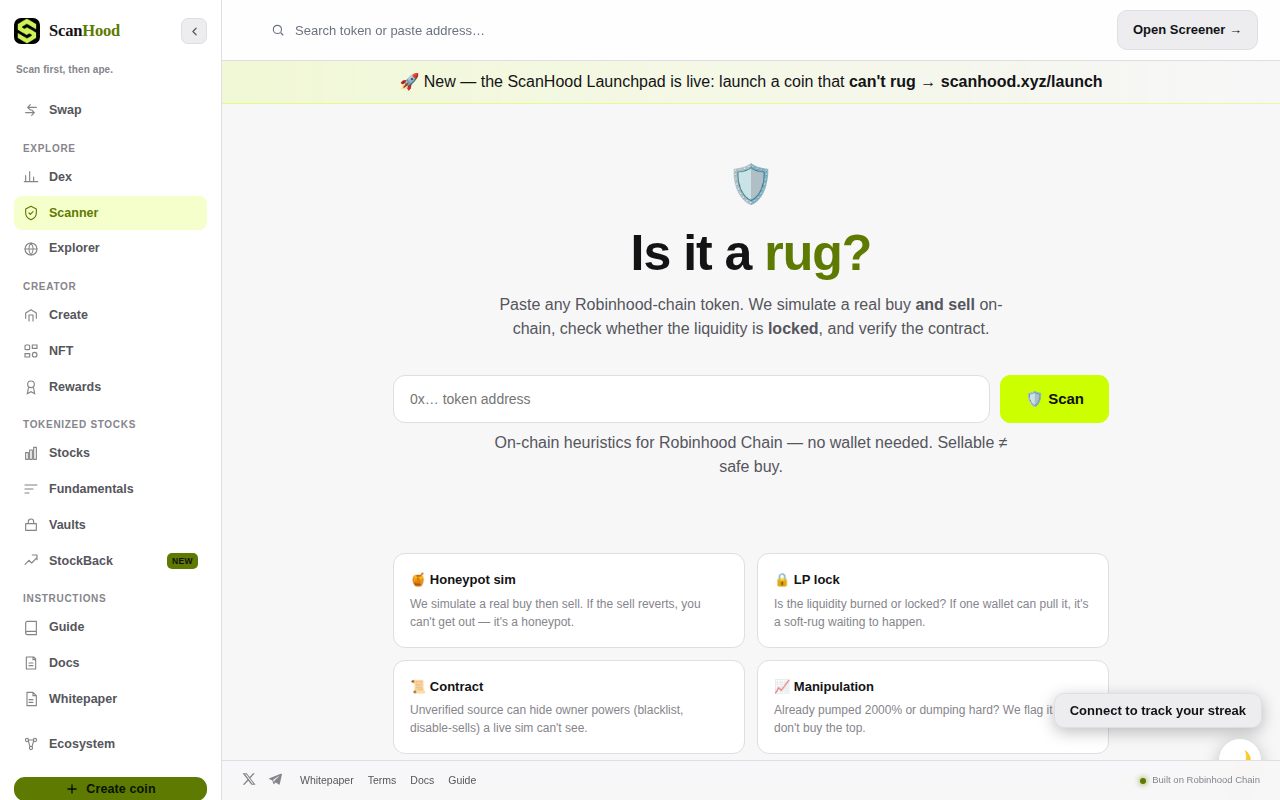
ScanHood's live scanner delivered a stark snapshot of Robinhood‑Chain token health on November 9, 2026. Out of 792 tokens examined, only 231 earned a clean pass. The majority—530—were marked caution, and 31 were flagged DANGER, indicating a high probability of a rug pull. The 3.9% failure rate may appear modest, but each danger token represents a potential trap for unwary investors. ScanHood's methodology simulates real buys and sells, checks liquidity locks, and verifies contract transparency, offering a granular view that simple price charts cannot provide. The data arrives as the platform launches a new launchpad promising rug‑proof token creation, signaling a push toward higher security standards on the chain. For traders and developers alike, the numbers demand immediate attention.
How many Robinhood‑Chain tokens failed ScanHood's Rug Check?
On 2026‑11‑09 ScanHood processed 792 tokens on the Robinhood chain. The platform's heuristics flagged 31 tokens as DANGER, indicating a high likelihood of a rug pull. An additional 530 tokens received a Caution label, warning of potential liquidity or contract issues. Only 231 tokens cleared the scan, earning a PASS status. The 3.9% failure rate—derived from the 31 danger flags—highlights that a non‑trivial slice of new tokens cannot be trusted without deeper due diligence. Investors relying on surface metrics risk exposure to honeypots or soft‑rugs that the scanner is designed to expose.
What does ScanHood's simulation reveal about token safety?
ScanHood runs an on‑chain buy‑then‑sell simulation for each token. If the sell transaction reverts, the token behaves as a honeypot—buyers cannot exit. The tool also checks liquidity status: locked or burned liquidity passes, while a single wallet with pull rights triggers a soft‑rug warning. Contract verification is another layer; unverified contracts may conceal owner powers such as blacklisting or disabling sales. By combining these heuristics, ScanHood provides a multi‑dimensional safety score that separates merely sellable tokens from genuinely secure assets. The platform emphasizes that sellability does not equal safety, urging users to heed caution flags before committing capital.
Why does the new ScanHood Launchpad matter?
The ScanHood Launchpad, announced alongside the daily scan report, promises to let creators launch coins that cannot rug. By integrating the same simulation and liquidity‑lock checks at launch, the platform aims to pre‑emptively block malicious contracts. This move could raise the baseline security for new Robinhood‑Chain projects, reducing the pool of tokens that would later appear in the danger list. If adopted widely, the launchpad could shift developer incentives toward transparent, verifiable code, potentially lowering the overall rug‑pull incidence on the chain.
What are the broader implications for DeFi investors?
The scan data underscores a volatile environment on Robinhood‑Chain, where over two‑thirds of tokens raise red flags. For DeFi participants, the numbers demand stricter vetting beyond price charts. The 31 danger tokens represent immediate loss risk, while the 530 caution tokens warrant deeper contract analysis. The presence of a live scanner and launchpad suggests an emerging infrastructure to police token safety, but adoption remains voluntary. Investors who ignore these tools may face irreversible losses, especially as the platform flags tokens that have already pumped 2000% before dumping. The trend points to a market where technical safeguards become as essential as market signals.
Frequently asked questions
How many Robinhood‑Chain tokens did ScanHood scan on 2026‑11‑09?
ScanHood scanned 792 Robinhood‑Chain tokens on 2026‑11‑09.
What percentage of tokens failed ScanHood's rug check?
3.9% of the scanned tokens failed the rug check.
How many tokens were flagged as danger by ScanHood?
31 tokens were flagged DANGER in the ScanHood report.
The ScanHood report paints a sobering picture: a sizable share of Robinhood‑Chain tokens carry hidden risks. As the launchpad rolls out, the onus shifts to creators to embed safety from day one and to investors to demand it. Ignoring the scanner's warnings invites loss; heeding them could reshape the chain's risk profile. The next wave of token launches will be judged not just by hype, but by whether they survive ScanHood's rigorous rug check.
Sources: ScanHood live scan data, https://scanhood.xyz/scanner/