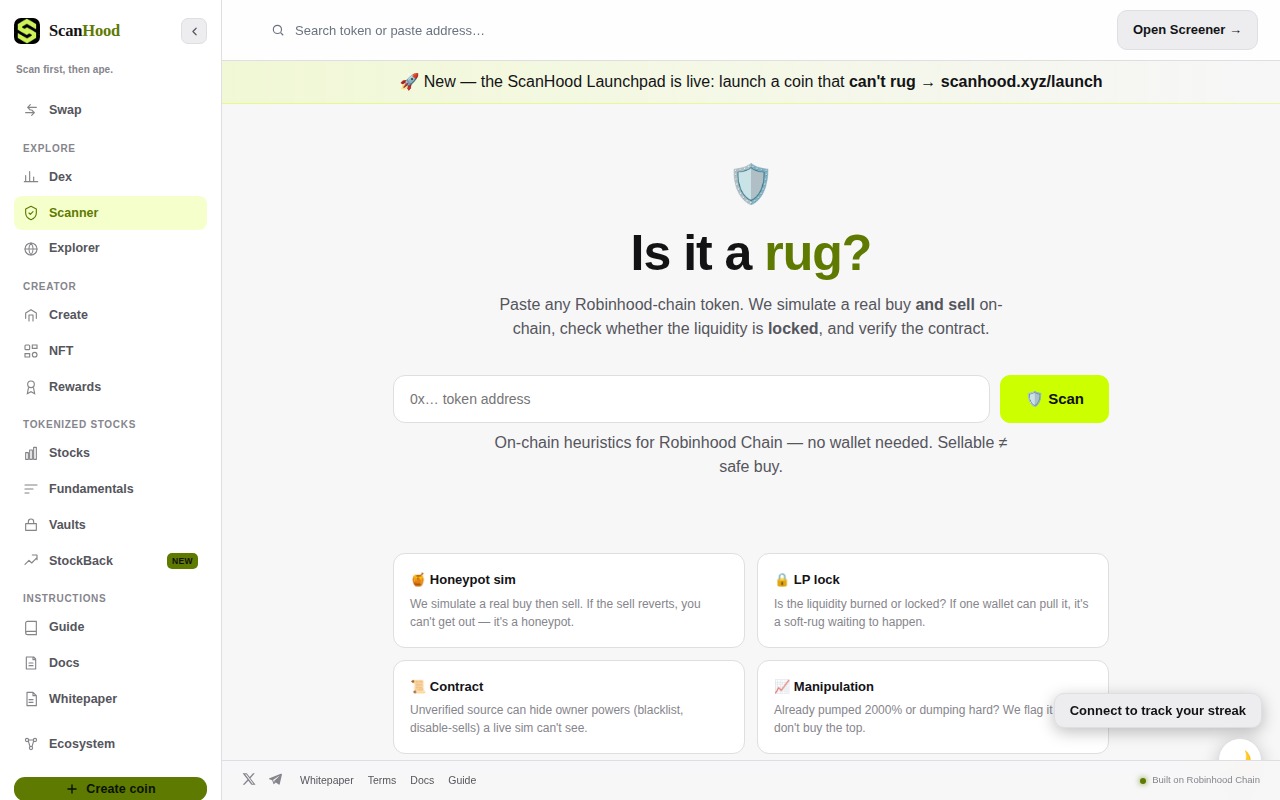
ScanHood’s live scanner flagged all five Robinhood-chain tokens on 2026-11-22, with no passes recorded.
SCANHOOD FLAGS 4 OF 5 ROBINHOOD-CHAIN TOKENS AS CAUTION, 1 AS DANGER
*ScanHood’s live scanner flagged every token it examined on 2026-11-22. Zero passed, four raised caution, and one triggered a danger alert. The results underscore the acute risk on the Robinhood chain.*
On 2026-11-22 ScanHood released its daily safety‑scan tally for the Robinhood chain. The live scanner examined five tokens and returned a grim verdict: zero passed, four flagged caution, and one flagged DANGER. The platform simulates real‑world buys and sells, checks liquidity locks, and verifies contract sources, offering a hard look at on‑chain risk. Investors relying on the Robinhood ecosystem now have a clear, data‑driven warning that every token in this sample carries significant danger.
What did ScanHood find on the Robinhood chain on 2026-11-22?
The ScanHood live scanner processed five Robinhood-chain tokens on 2026-11-22. Its on‑chain heuristics simulated real buys and sells, checked liquidity locks, and inspected contract verification. The output was stark: none of the tokens cleared the safety check. Four were marked with a caution flag, indicating potential liquidity or contract issues. One token earned a DANGER label, suggesting a high probability of a rug pull or honeypot scenario. The scanner’s verdict leaves investors with no safe entry point among the batch.
Why did 20.0% of the tokens fail the rug check?
ScanHood’s rug‑check algorithm flags a token as failed when the simulated sell transaction reverts or when liquidity can be withdrawn by a single wallet. In this batch, one token—representing 20.0% of the sample—triggered a sell‑revert, classifying it as a honeypot. The remaining four tokens did not fail outright but raised caution due to soft‑rug indicators such as unverified contracts or unlocked liquidity. The split reveals that while outright honeypots are rare, softer rug mechanisms are pervasive.
How does ScanHood’s caution flag differ from the danger flag?
A caution flag signals that a token exhibits one or more risk factors: unverified source code, liquidity that is not locked, or owner powers that could be abused. It warns investors that the token is not safe but does not confirm an immediate rug. The danger flag, by contrast, is reserved for tokens that actively block sell orders in the simulation, indicating a honeypot that traps buyers. In the latest scan, four tokens fell under caution, while a single token earned the danger designation.
What does this scan mean for Robinhood‑chain investors?
Investors face a landscape where every token examined on 2026-11-22 failed to meet basic safety criteria. The absence of any passed token suggests systemic weaknesses in contract verification and liquidity management on the Robinhood chain. Caution‑flagged tokens could still be vulnerable to future manipulation, while the danger‑flagged token is effectively a trap. The data urges traders to demand verified contracts, locked liquidity, and transparent ownership before committing capital.
Frequently asked questions
How many tokens did ScanHood scan on 2026-11-22?
ScanHood scanned five Robinhood-chain tokens on that date.
What percentage of the scanned tokens failed the rug check?
Twenty point zero percent of the tokens failed the rug check.
How many tokens were flagged as danger?
One token was flagged DANGER, while four were flagged caution.
The ScanHood snapshot paints a stark reality for Robinhood‑chain participants. With no safe token in the latest batch, the onus shifts to developers to adopt verifiable contracts and locked liquidity, and to investors to demand transparency. Until the ecosystem addresses these systemic flaws, the risk of rug pulls and honeypots will remain a daily threat.
Sources: ScanHood live scan data